
 Image 1 of 4
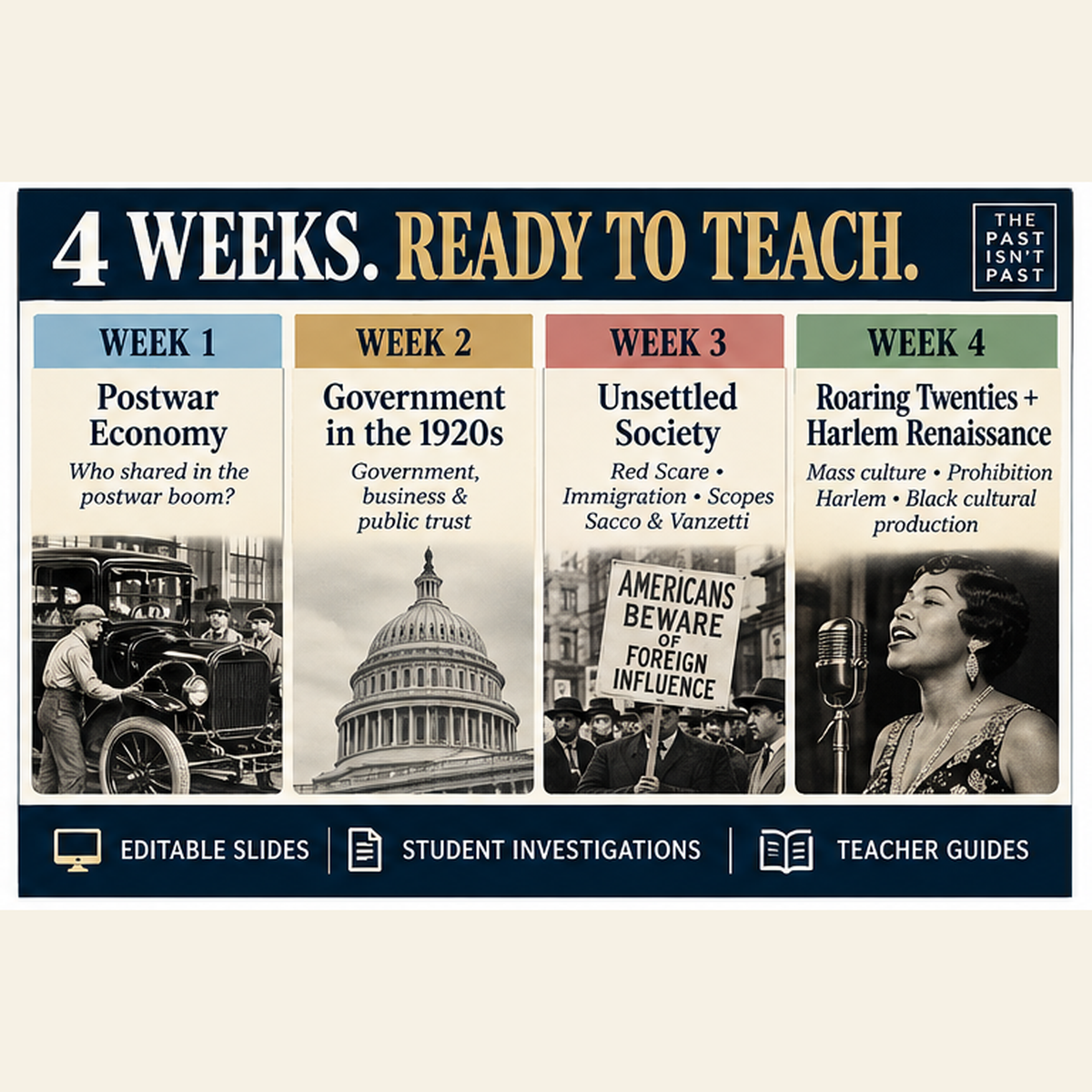 Image 2 of 4
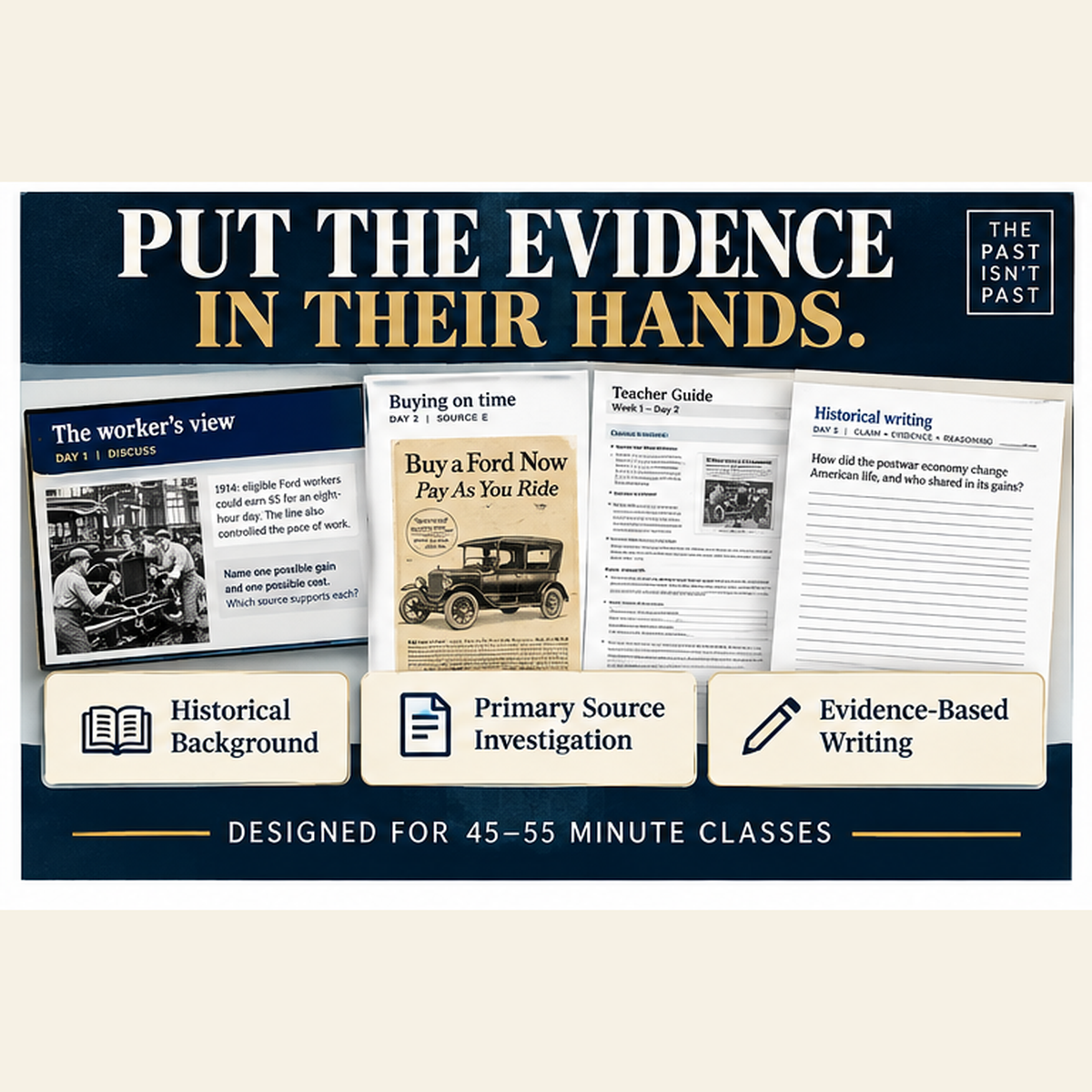 Image 3 of 4
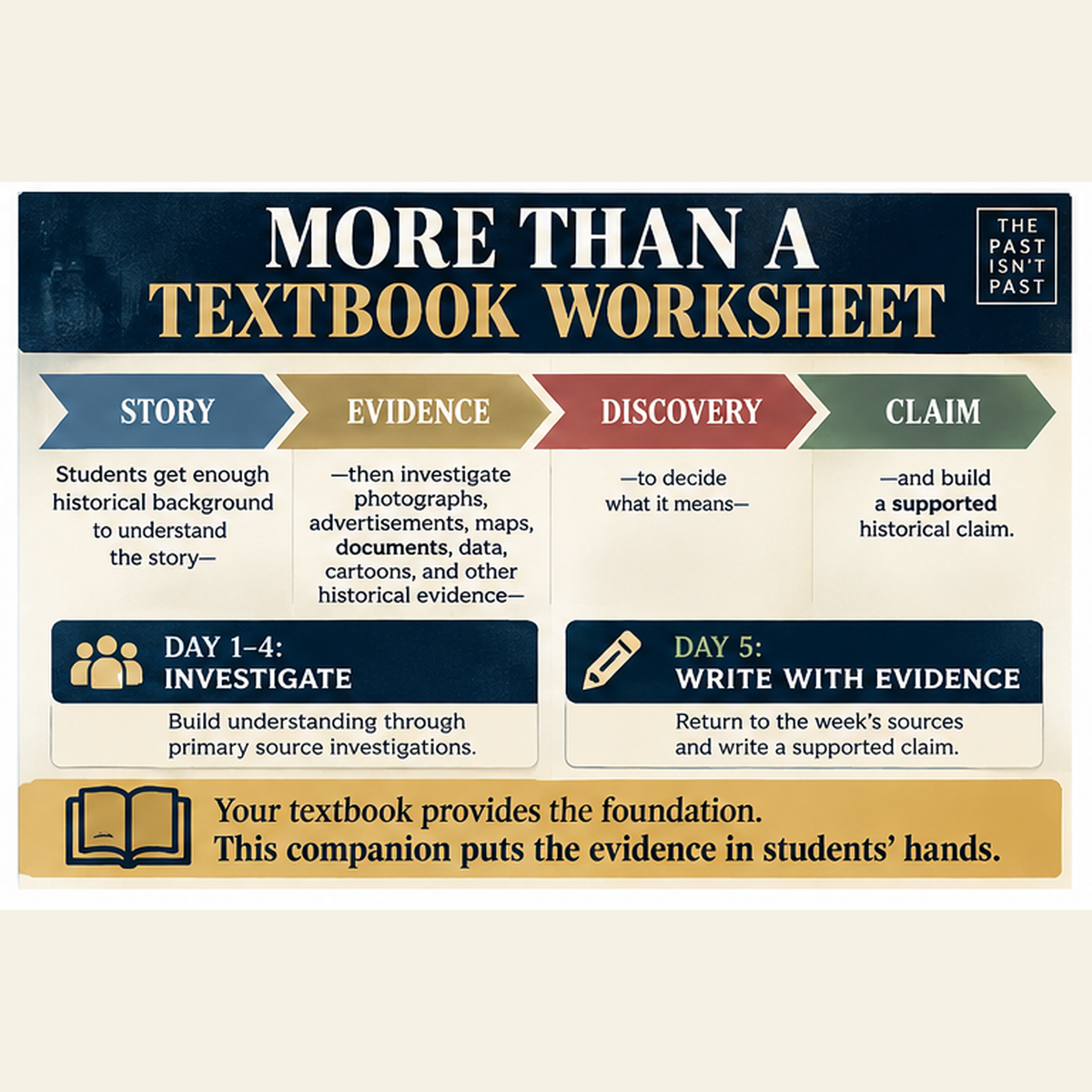 Image 4 of 4
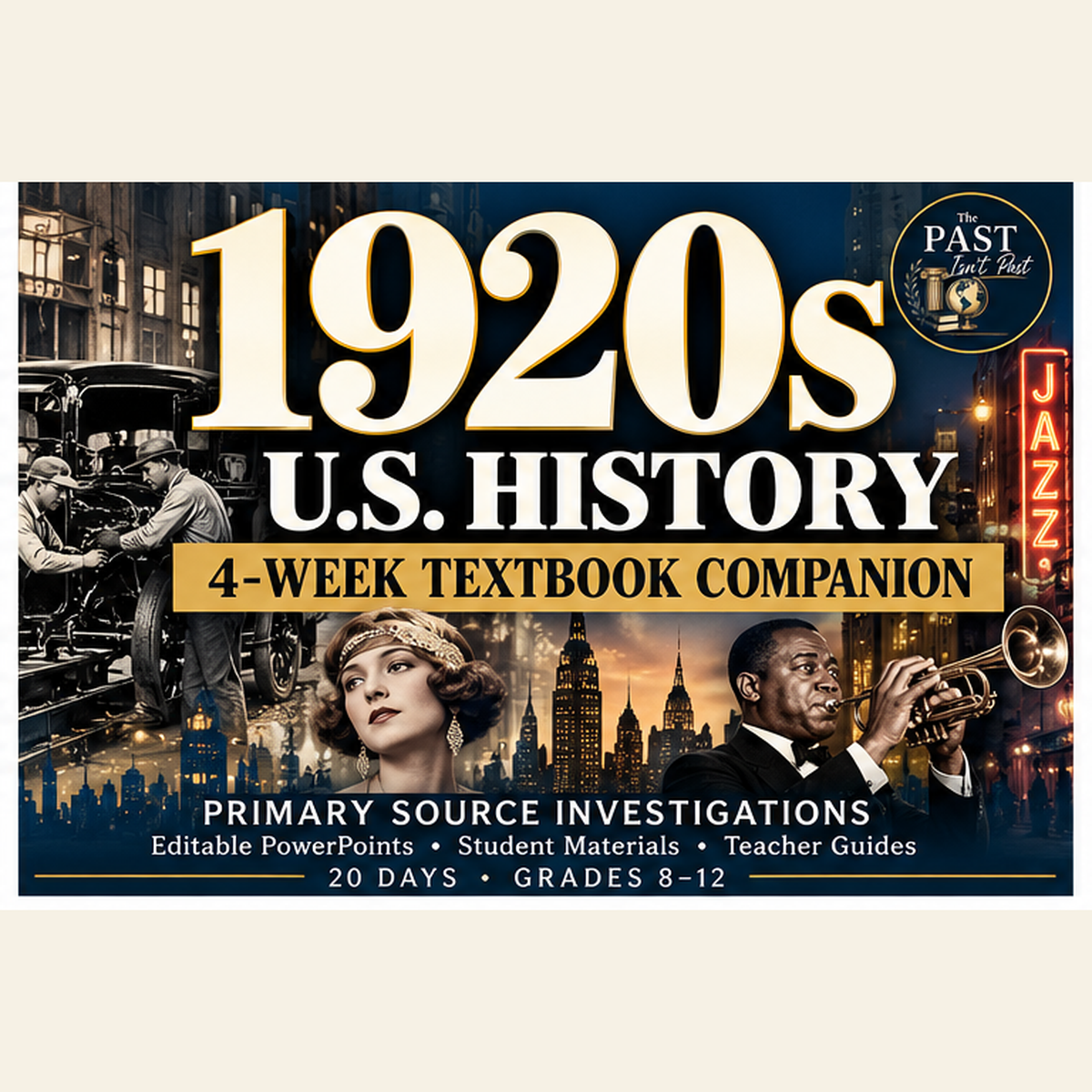
Turn your 1920s textbook unit into four weeks of historical investigation.
This ready-to-teach U.S. History companion gives students the background they need to understand the history—and then puts real historical evidence in their hands.
Across four weeks, students investigate the postwar economy, government and public trust, social conflict, Prohibition, mass culture, the Harlem Renaissance, and more through photographs, advertisements, political cartoons, maps, documents, data, and other historical evidence.
Instead of completing another textbook comprehension worksheet, students ask questions, compare evidence, identify source limitations, make connections, and build historical claims.
Each week follows a consistent classroom rhythm: Days 1–4 build historical understanding through evidence-based investigations. Day 5 asks students to return to the week's evidence and write a supported historical claim.
THE 4-WEEK UNIT INCLUDES:
Week 1 — The Postwar Economy
Students investigate mass production, automobiles, advertising, credit, changing communities, and the uneven benefits of 1920s prosperity.
Week 2 — Government in the 1920s
Students examine “normalcy,” government and business, Teapot Dome and public trust, and American involvement in international affairs.
Week 3 — An Unsettled Society
Students investigate the First Red Scare, immigration restriction, the Scopes Trial, and the Sacco and Vanzetti case while considering how fear and rapid change shaped American society.
Week 4 — The Roaring Twenties + Harlem Renaissance
Students examine Prohibition, radio and mass culture, changing images of women, the Great Migration, Harlem, and Black cultural production while questioning who created the new culture of the 1920s and who could participate in it.
WHAT'S INCLUDED
Each of the four weeks includes an editable classroom PowerPoint, projected-slides PDF, printable Student Investigation Packet, and detailed Teacher Guide.
That's 16 ready-to-use classroom files covering approximately 20 class periods.
Teacher guides include historical background, instructional guidance, source context, likely student observations, discussion support, differentiation, writing guidance, and source information—so teachers have the context they need without conducting hours of additional research.
DESIGNED FOR REAL CLASSROOMS
Materials are designed around approximately 45–55 minute periods and primarily for Grade 10 U.S. History, with flexibility for Grades 8–12.
The unit emphasizes historical thinking while remaining accessible to students who are encountering these topics for the first time.
Students move from:
Historical Story → Question → Evidence → Interpretation → Claim
The textbook provides a shared foundation.
This companion puts the evidence in students' hands.
Turn your 1920s textbook unit into four weeks of historical investigation.
This ready-to-teach U.S. History companion gives students the background they need to understand the history—and then puts real historical evidence in their hands.
Across four weeks, students investigate the postwar economy, government and public trust, social conflict, Prohibition, mass culture, the Harlem Renaissance, and more through photographs, advertisements, political cartoons, maps, documents, data, and other historical evidence.
Instead of completing another textbook comprehension worksheet, students ask questions, compare evidence, identify source limitations, make connections, and build historical claims.
Each week follows a consistent classroom rhythm: Days 1–4 build historical understanding through evidence-based investigations. Day 5 asks students to return to the week's evidence and write a supported historical claim.
THE 4-WEEK UNIT INCLUDES:
Week 1 — The Postwar Economy
Students investigate mass production, automobiles, advertising, credit, changing communities, and the uneven benefits of 1920s prosperity.
Week 2 — Government in the 1920s
Students examine “normalcy,” government and business, Teapot Dome and public trust, and American involvement in international affairs.
Week 3 — An Unsettled Society
Students investigate the First Red Scare, immigration restriction, the Scopes Trial, and the Sacco and Vanzetti case while considering how fear and rapid change shaped American society.
Week 4 — The Roaring Twenties + Harlem Renaissance
Students examine Prohibition, radio and mass culture, changing images of women, the Great Migration, Harlem, and Black cultural production while questioning who created the new culture of the 1920s and who could participate in it.
WHAT'S INCLUDED
Each of the four weeks includes an editable classroom PowerPoint, projected-slides PDF, printable Student Investigation Packet, and detailed Teacher Guide.
That's 16 ready-to-use classroom files covering approximately 20 class periods.
Teacher guides include historical background, instructional guidance, source context, likely student observations, discussion support, differentiation, writing guidance, and source information—so teachers have the context they need without conducting hours of additional research.
DESIGNED FOR REAL CLASSROOMS
Materials are designed around approximately 45–55 minute periods and primarily for Grade 10 U.S. History, with flexibility for Grades 8–12.
The unit emphasizes historical thinking while remaining accessible to students who are encountering these topics for the first time.
Students move from:
Historical Story → Question → Evidence → Interpretation → Claim
The textbook provides a shared foundation.
This companion puts the evidence in students' hands.