
 Image 1 of 4
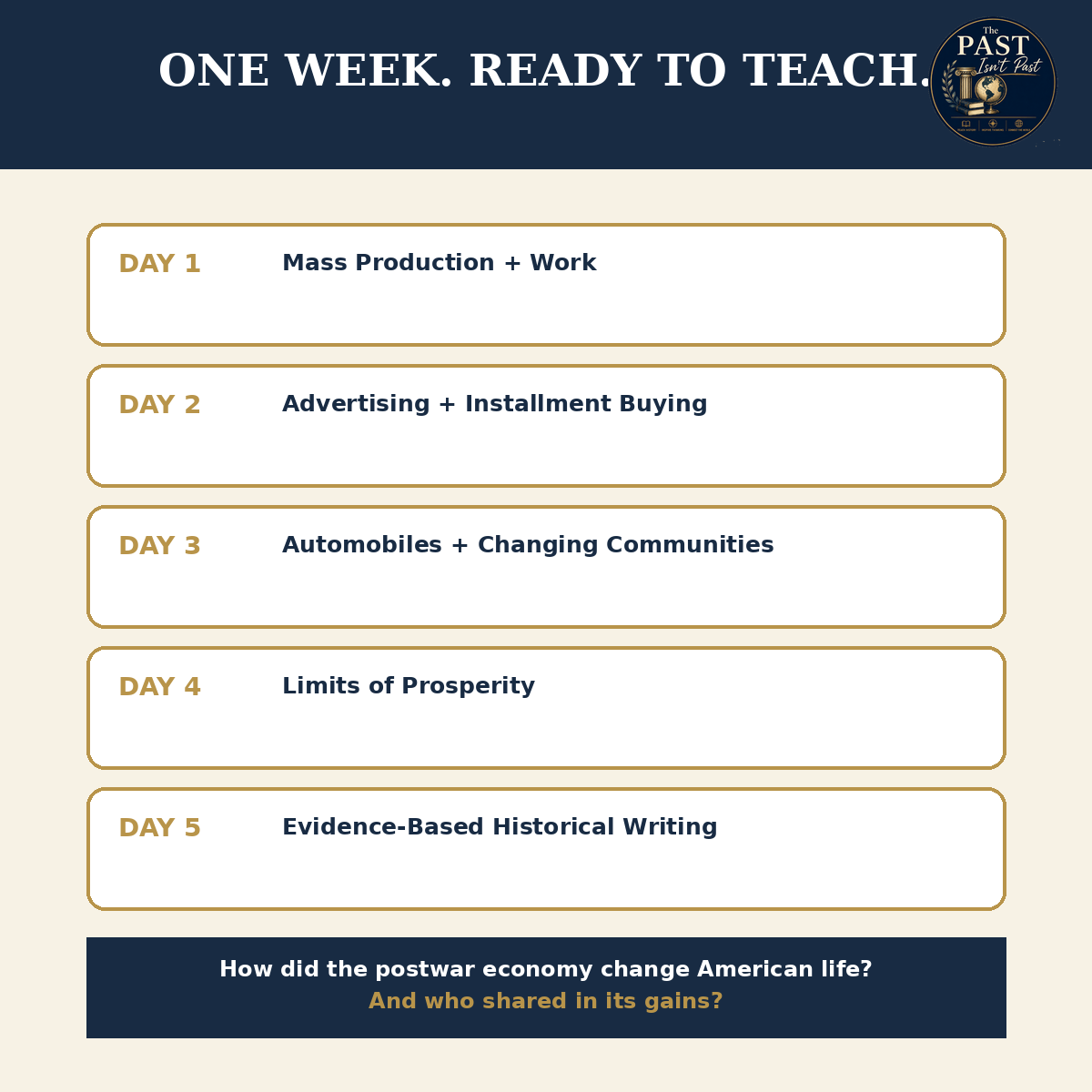 Image 2 of 4
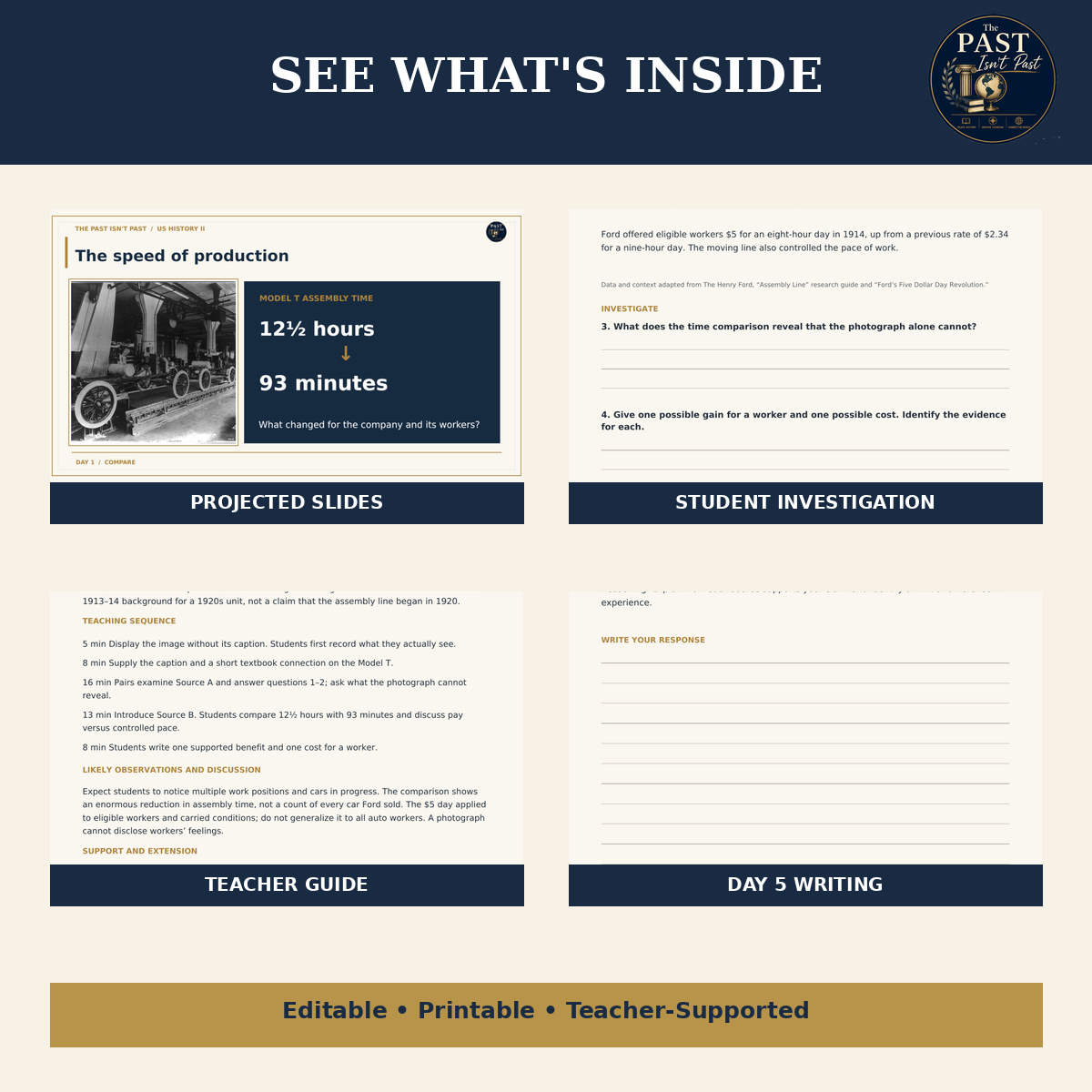 Image 3 of 4
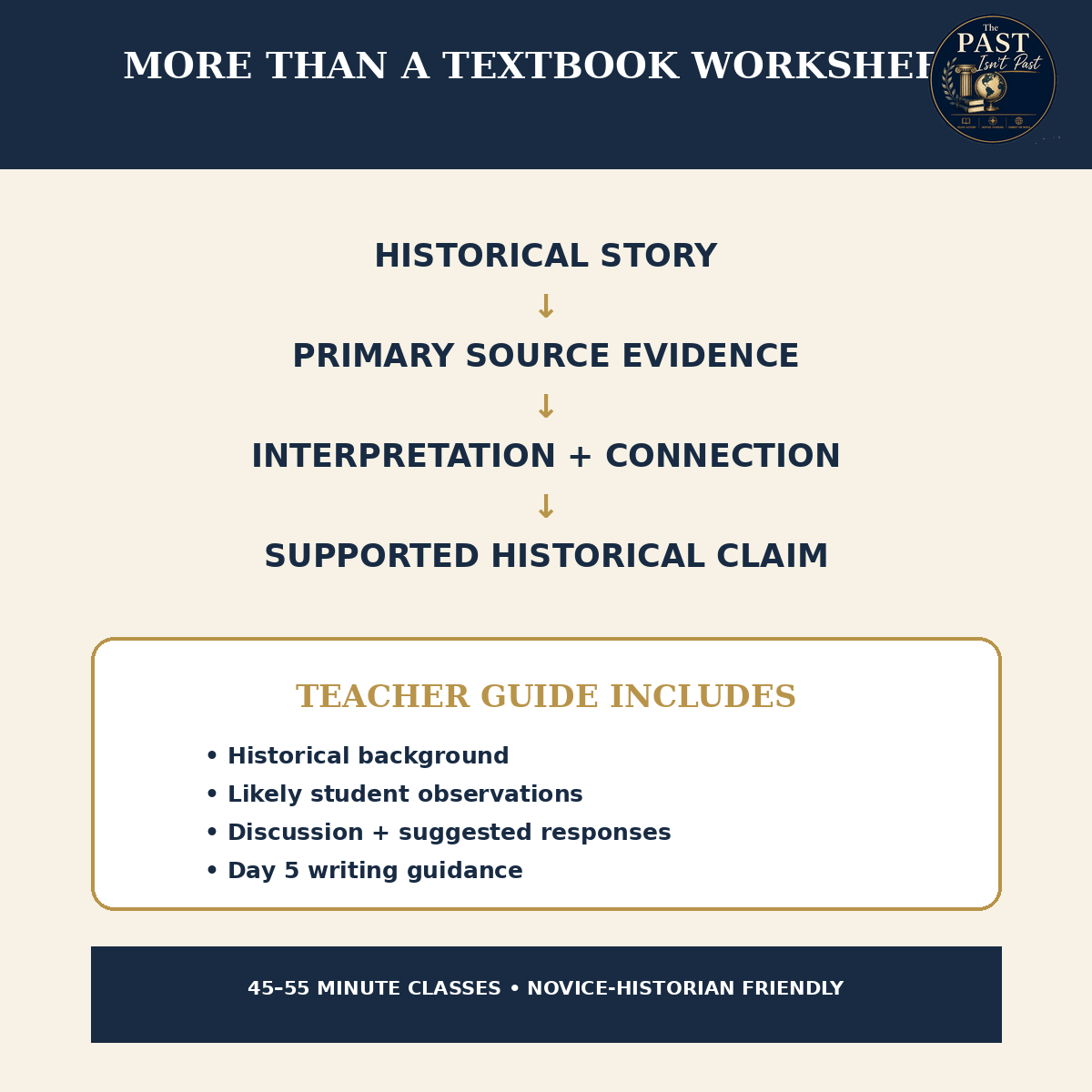 Image 4 of 4
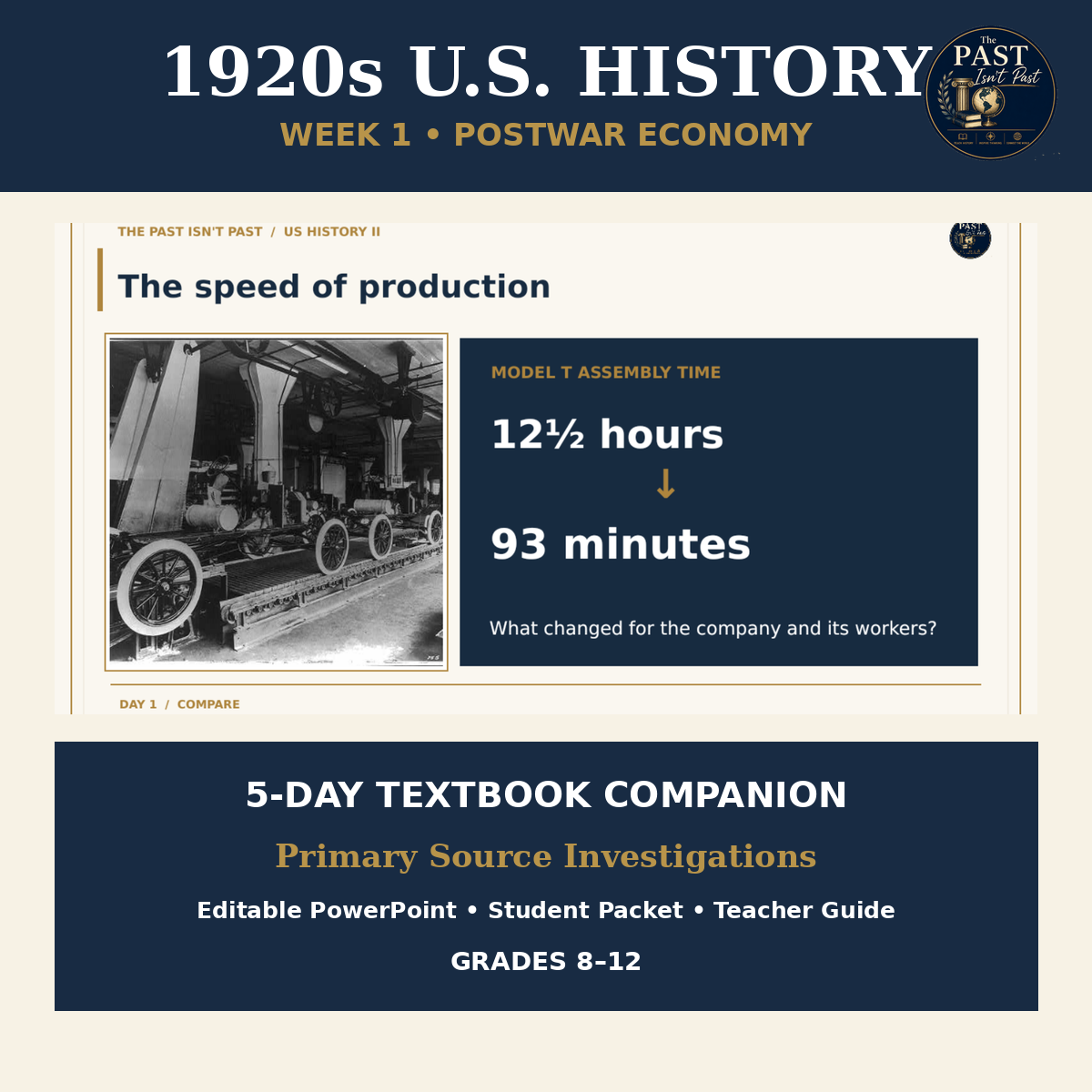
1920s Postwar Economy — 5-Day Primary Source Investigation
Turn your textbook’s 1920s postwar economy chapter into a five-day historical investigation.
This ready-to-teach U.S. History companion gives students the background they need to understand the economic changes of the 1920s, then puts historical evidence in their hands. Students investigate mass production and work, advertising and installment buying, automobiles and changing communities, and the limits of prosperity before using evidence from the week to write a supported historical claim.
Essential Question:
How did the postwar economy change American life, and who shared in its gains?
What Students Investigate
Day 1 — Mass Production and Work
Students examine evidence from automobile production to consider how mass production changed work and manufacturing.
Day 2 — Advertising and Installment Buying
Students investigate how businesses encouraged Americans to buy and how new ways of purchasing goods affected consumer life.
Day 3 — Automobiles and Changing Communities
Students use historical evidence to explore how growing automobile ownership changed mobility, businesses, and communities.
Day 4 — Limits of Prosperity
Students complicate the familiar story of the “Roaring Twenties” by examining agricultural decline and considering whose experiences may be missing from evidence of prosperity.
Day 5 — Evidence-Based Historical Writing
Students return to evidence from across the week, select their strongest sources, and construct a supported response to the essential question.
What’s Included
✓ Editable classroom PowerPoint
✓ Projected-slides PDF
✓ Printable Student Investigation Packet
✓ Detailed Teacher Guide
✓ Primary-source and historical evidence activities
✓ Historical background and source context
✓ Suggested responses and likely student observations
✓ Discussion and differentiation guidance
✓ Evidence-based writing support
The Teacher Guide is designed so teachers have the historical context and instructional support they need without spending hours doing additional research.
Because these are inquiry-based investigations, many questions allow more than one defensible answer. Rather than a rigid answer key, the Teacher Guide provides likely observations, suggested responses, source limitations, example claims, and guidance for evaluating students’ historical reasoning.
Designed for Real Classrooms
The week is designed around approximately 45–55 minute class periods and is centered on Grade 10 U.S. History, with flexibility for Grades 8–12.
Students move through a consistent historical-thinking process:
Historical Story → Question → Evidence → Interpretation → Claim
Use the investigations alongside your existing U.S. History textbook or curriculum. The textbook provides students with a shared foundation; these lessons give them the opportunity to work with evidence and think like historians.
Need more than one week?
This resource is also included in the complete 4-Week 1920s U.S. History Textbook Companion Bundle, covering the Postwar Economy, Government in the 1920s, an Unsettled Society, the Roaring Twenties, and the Harlem Renaissance.
Approximately 5 class periods | Grades 8–12 | Editable + Printable
1920s Postwar Economy — 5-Day Primary Source Investigation
Turn your textbook’s 1920s postwar economy chapter into a five-day historical investigation.
This ready-to-teach U.S. History companion gives students the background they need to understand the economic changes of the 1920s, then puts historical evidence in their hands. Students investigate mass production and work, advertising and installment buying, automobiles and changing communities, and the limits of prosperity before using evidence from the week to write a supported historical claim.
Essential Question:
How did the postwar economy change American life, and who shared in its gains?
What Students Investigate
Day 1 — Mass Production and Work
Students examine evidence from automobile production to consider how mass production changed work and manufacturing.
Day 2 — Advertising and Installment Buying
Students investigate how businesses encouraged Americans to buy and how new ways of purchasing goods affected consumer life.
Day 3 — Automobiles and Changing Communities
Students use historical evidence to explore how growing automobile ownership changed mobility, businesses, and communities.
Day 4 — Limits of Prosperity
Students complicate the familiar story of the “Roaring Twenties” by examining agricultural decline and considering whose experiences may be missing from evidence of prosperity.
Day 5 — Evidence-Based Historical Writing
Students return to evidence from across the week, select their strongest sources, and construct a supported response to the essential question.
What’s Included
✓ Editable classroom PowerPoint
✓ Projected-slides PDF
✓ Printable Student Investigation Packet
✓ Detailed Teacher Guide
✓ Primary-source and historical evidence activities
✓ Historical background and source context
✓ Suggested responses and likely student observations
✓ Discussion and differentiation guidance
✓ Evidence-based writing support
The Teacher Guide is designed so teachers have the historical context and instructional support they need without spending hours doing additional research.
Because these are inquiry-based investigations, many questions allow more than one defensible answer. Rather than a rigid answer key, the Teacher Guide provides likely observations, suggested responses, source limitations, example claims, and guidance for evaluating students’ historical reasoning.
Designed for Real Classrooms
The week is designed around approximately 45–55 minute class periods and is centered on Grade 10 U.S. History, with flexibility for Grades 8–12.
Students move through a consistent historical-thinking process:
Historical Story → Question → Evidence → Interpretation → Claim
Use the investigations alongside your existing U.S. History textbook or curriculum. The textbook provides students with a shared foundation; these lessons give them the opportunity to work with evidence and think like historians.
Need more than one week?
This resource is also included in the complete 4-Week 1920s U.S. History Textbook Companion Bundle, covering the Postwar Economy, Government in the 1920s, an Unsettled Society, the Roaring Twenties, and the Harlem Renaissance.
Approximately 5 class periods | Grades 8–12 | Editable + Printable