
 Image 1 of 4
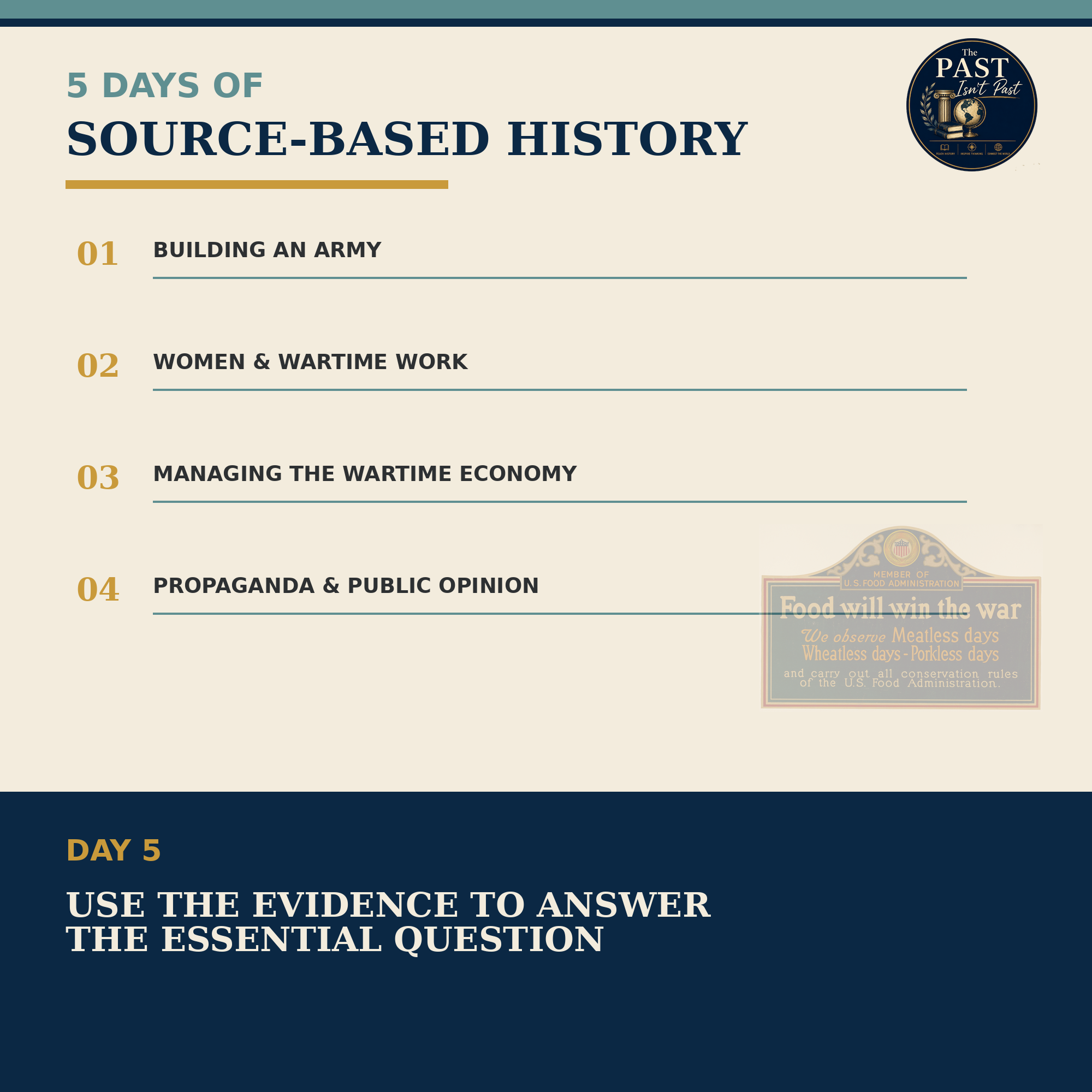 Image 2 of 4
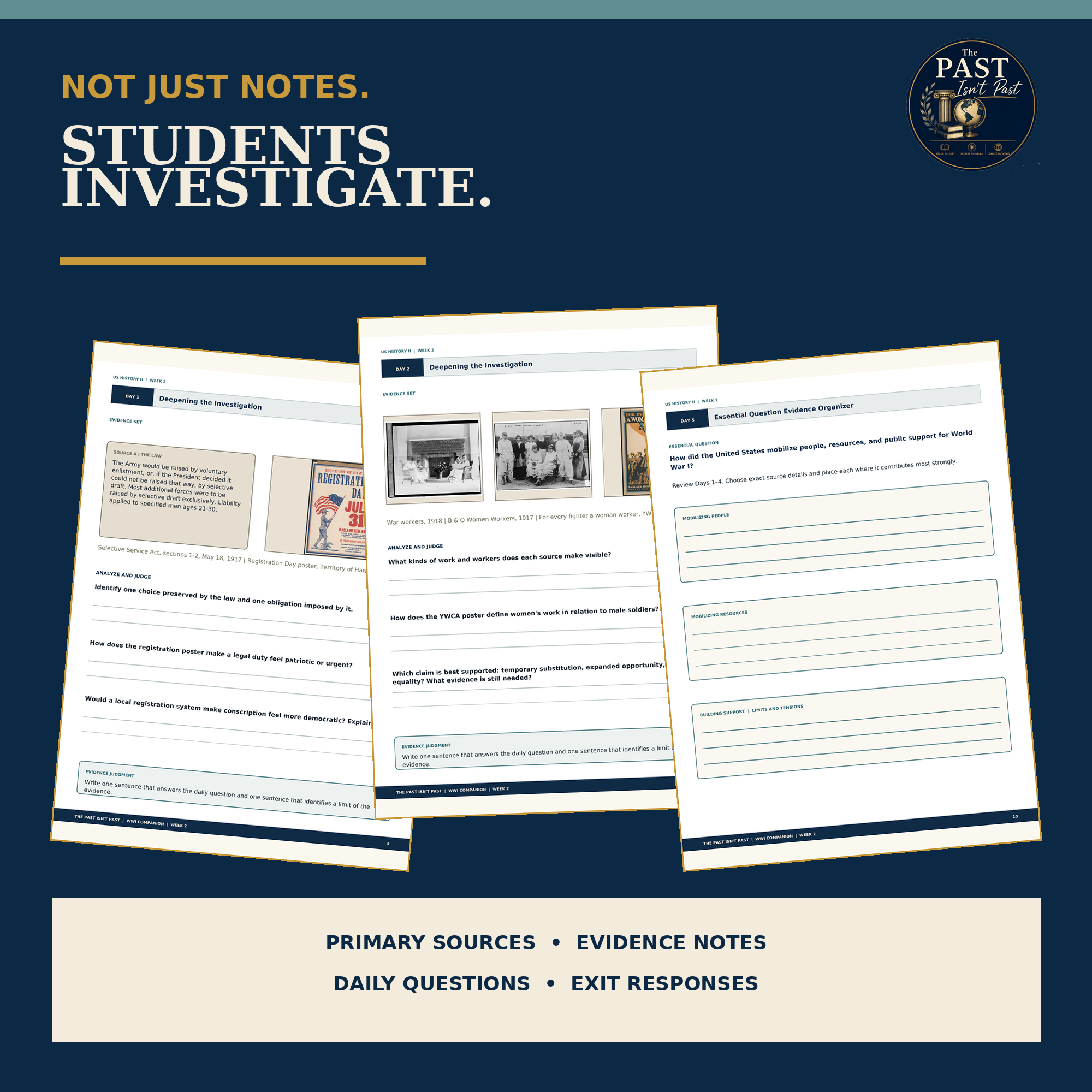 Image 3 of 4
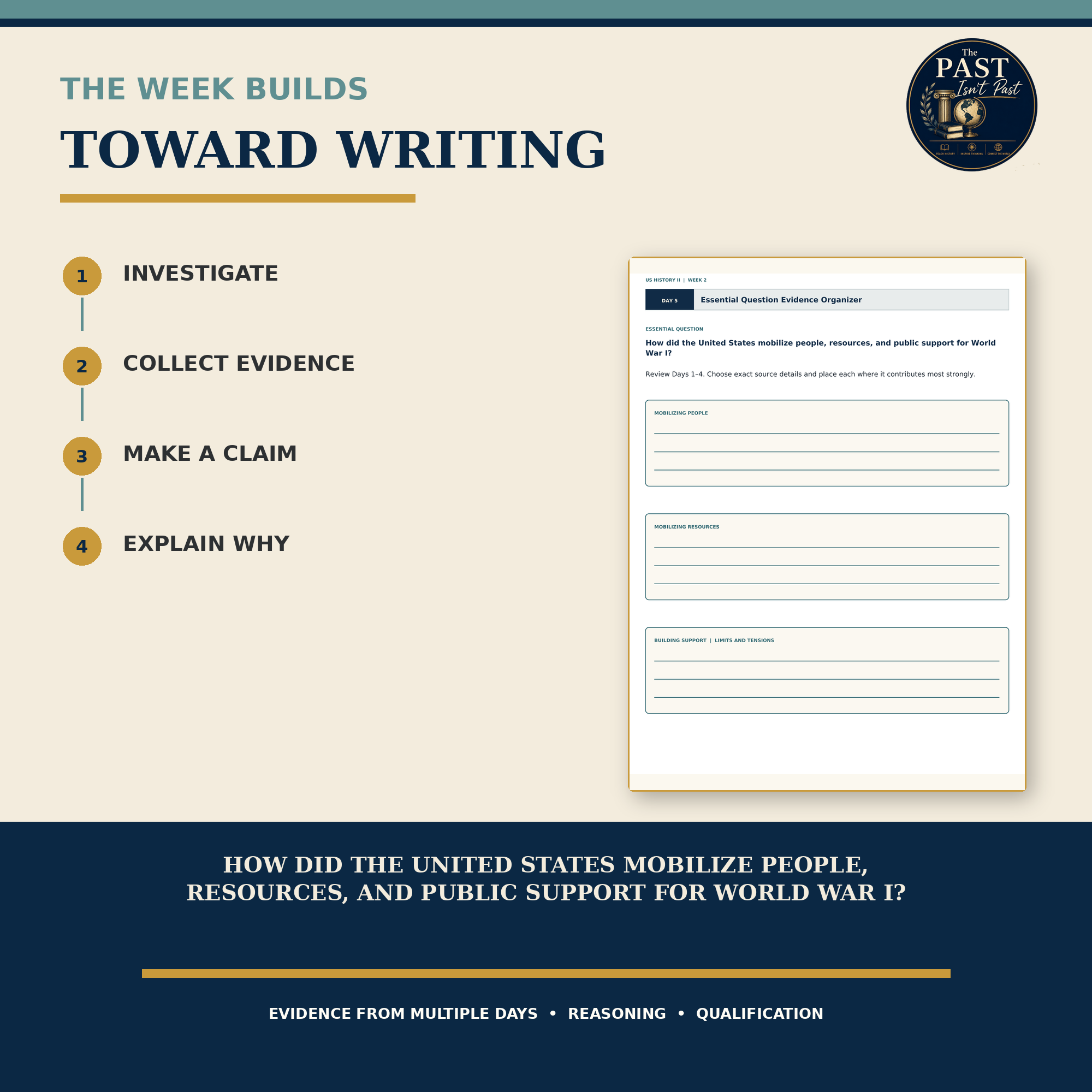 Image 4 of 4
How did the United States mobilize people, resources, and public support for World War I?
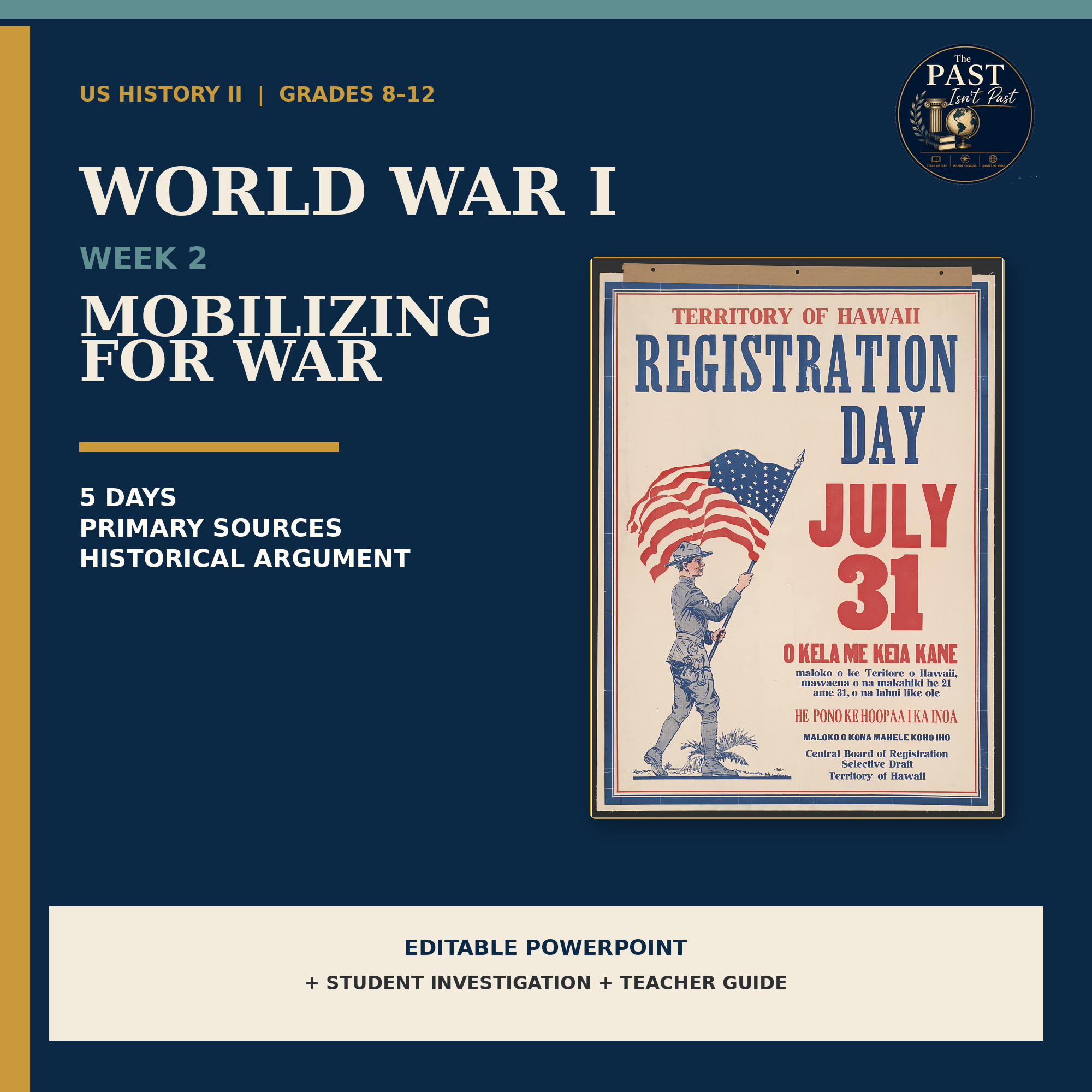
This five-day World War I instructional companion helps students investigate how the United States transformed itself for war through primary sources, historical evidence, discussion, and evidence-based writing.
Designed for Grades 8–12 U.S. History, WWI Week 2: Mobilizing for War moves students beyond simply memorizing wartime policies. Across four days of investigation, students examine how the United States built an army, mobilized workers and the economy, generated public support, and confronted tensions involving propaganda, dissent, and civil liberties.
On Day 5, students bring that evidence together to answer the week's Essential Question and construct their own historical argument.
Rather than replacing your existing textbook or curriculum, this resource is designed to work alongside the materials you already use. Teachers can provide historical context through their adopted textbook, readings, lecture, or other resources while students use this companion to investigate sources, analyze evidence, discuss historical questions, and write.
WHAT'S INCLUDED
Your download includes:
Editable Classroom PowerPoint
Projected Classroom Slides PDF
Student Investigation Packet
Teacher Guide
Five days of instruction
Primary-source analysis
Daily historical questions
Evidence collection and reasoning activities
Day 5 Essential Question synthesis and writing
Teacher guidance and suggested responses
Source and image documentation
THE WEEK AT A GLANCE
Day 1 — Building an Army: Selective Service Act
How should a democracy raise an army for a major war?
Day 2 — Mobilizing the Home Front: Women and Wartime Work
How did mobilization change the work Americans were asked to perform?
Day 3 — Managing the Wartime Economy
How much control should the federal government exercise over the economy during wartime?
Day 4 — Selling the War: Propaganda and Public Opinion
Where is the line between persuasion, patriotism, and propaganda?
Students also consider the tensions created by wartime law, dissent, and restrictions on civil liberties as they prepare for the week's final historical judgment.
DAY 5 — HISTORICAL SYNTHESIS & WRITING
Students return to the Essential Question:
How did the United States mobilize people, resources, and public support for World War I?
Using evidence collected throughout the week, students examine four dimensions of mobilization:
Mobilizing People • Mobilizing Resources • Building Support • Limits and Tensions
Students then develop a claim, select evidence from multiple days, explain their reasoning, address a qualification or counterargument, and construct a final evidence-based response.
No new content is introduced on Day 5. Students use the historical evidence they have already investigated to make and defend a historical judgment.
DESIGNED FOR REAL CLASSROOM FLEXIBILITY
Use the complete five-day sequence or select individual investigations to complement your existing World War I unit.
This resource works especially well for teachers who want to add more:
primary sources • historical thinking • student discussion • evidence-based reasoning • structured historical writing
without abandoning the textbook, readings, or curriculum already used in their classroom.
THE PAST ISN'T PAST
The Past Isn't Past resources are built around a simple idea: students understand history more deeply when they investigate evidence, ask questions, and make historical arguments rather than simply receive information.
Recommended for Grades 8–12 | U.S. History | World War I | Primary Sources | Historical Thinking | DBQ Skills | Evidence-Based Writing
How did the United States mobilize people, resources, and public support for World War I?
This five-day World War I instructional companion helps students investigate how the United States transformed itself for war through primary sources, historical evidence, discussion, and evidence-based writing.
Designed for Grades 8–12 U.S. History, WWI Week 2: Mobilizing for War moves students beyond simply memorizing wartime policies. Across four days of investigation, students examine how the United States built an army, mobilized workers and the economy, generated public support, and confronted tensions involving propaganda, dissent, and civil liberties.
On Day 5, students bring that evidence together to answer the week's Essential Question and construct their own historical argument.
Rather than replacing your existing textbook or curriculum, this resource is designed to work alongside the materials you already use. Teachers can provide historical context through their adopted textbook, readings, lecture, or other resources while students use this companion to investigate sources, analyze evidence, discuss historical questions, and write.
WHAT'S INCLUDED
Your download includes:
Editable Classroom PowerPoint
Projected Classroom Slides PDF
Student Investigation Packet
Teacher Guide
Five days of instruction
Primary-source analysis
Daily historical questions
Evidence collection and reasoning activities
Day 5 Essential Question synthesis and writing
Teacher guidance and suggested responses
Source and image documentation
THE WEEK AT A GLANCE
Day 1 — Building an Army: Selective Service Act
How should a democracy raise an army for a major war?
Day 2 — Mobilizing the Home Front: Women and Wartime Work
How did mobilization change the work Americans were asked to perform?
Day 3 — Managing the Wartime Economy
How much control should the federal government exercise over the economy during wartime?
Day 4 — Selling the War: Propaganda and Public Opinion
Where is the line between persuasion, patriotism, and propaganda?
Students also consider the tensions created by wartime law, dissent, and restrictions on civil liberties as they prepare for the week's final historical judgment.
DAY 5 — HISTORICAL SYNTHESIS & WRITING
Students return to the Essential Question:
How did the United States mobilize people, resources, and public support for World War I?
Using evidence collected throughout the week, students examine four dimensions of mobilization:
Mobilizing People • Mobilizing Resources • Building Support • Limits and Tensions
Students then develop a claim, select evidence from multiple days, explain their reasoning, address a qualification or counterargument, and construct a final evidence-based response.
No new content is introduced on Day 5. Students use the historical evidence they have already investigated to make and defend a historical judgment.
DESIGNED FOR REAL CLASSROOM FLEXIBILITY
Use the complete five-day sequence or select individual investigations to complement your existing World War I unit.
This resource works especially well for teachers who want to add more:
primary sources • historical thinking • student discussion • evidence-based reasoning • structured historical writing
without abandoning the textbook, readings, or curriculum already used in their classroom.
THE PAST ISN'T PAST
The Past Isn't Past resources are built around a simple idea: students understand history more deeply when they investigate evidence, ask questions, and make historical arguments rather than simply receive information.
Recommended for Grades 8–12 | U.S. History | World War I | Primary Sources | Historical Thinking | DBQ Skills | Evidence-Based Writing