
US History II
US History II
Filters
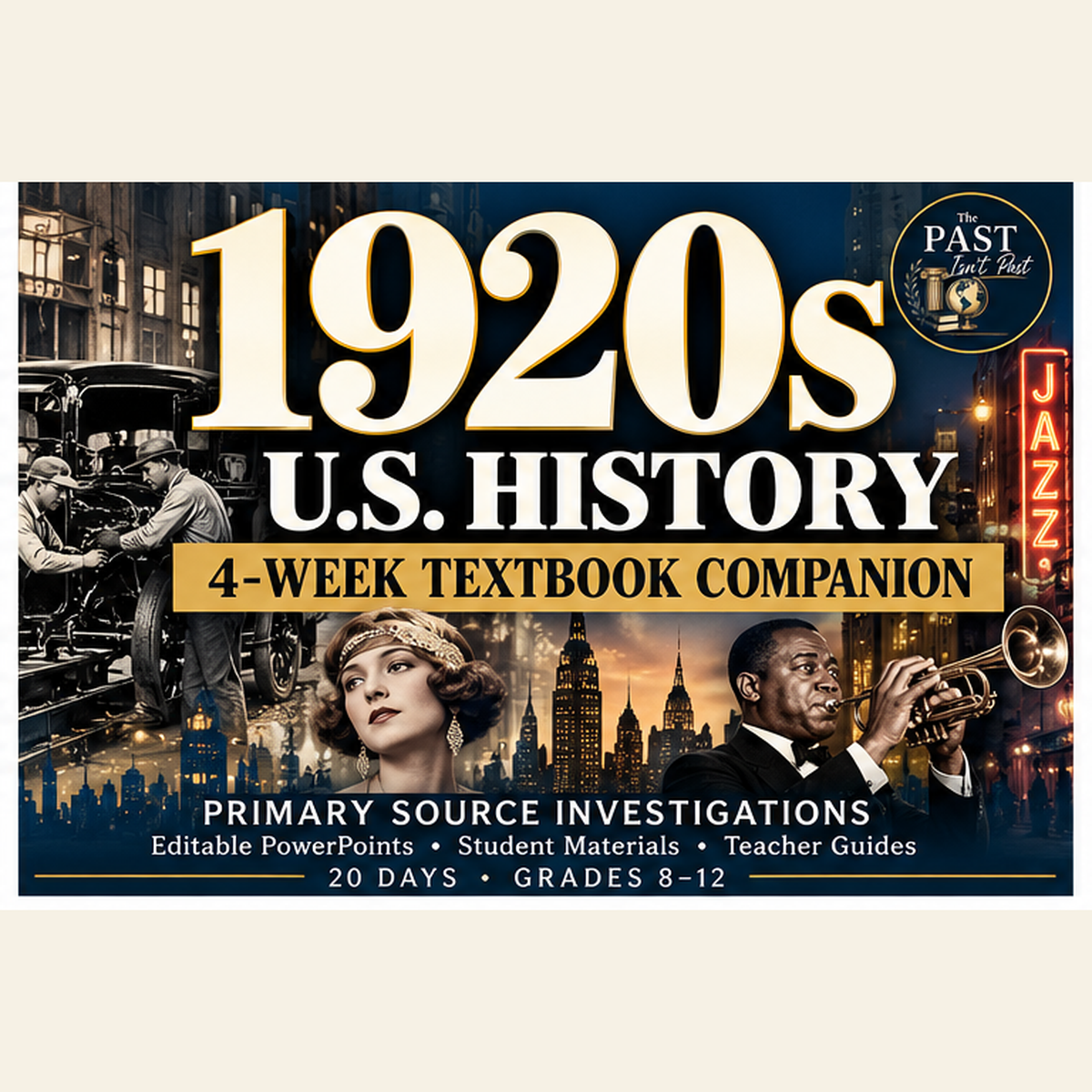
Turn your 1920s textbook unit into four weeks of historical investigation.
This ready-to-teach U.S. History companion gives students the background they need to understand the history—and then puts real historical evidence in their hands.
Across four weeks, students investigate the postwar economy, government and public trust, social conflict, Prohibition, mass culture, the Harlem Renaissance, and more through photographs, advertisements, political cartoons, maps, documents, data, and other historical evidence.
Instead of completing another textbook comprehension worksheet, students ask questions, compare evidence, identify source limitations, make connections, and build historical claims.
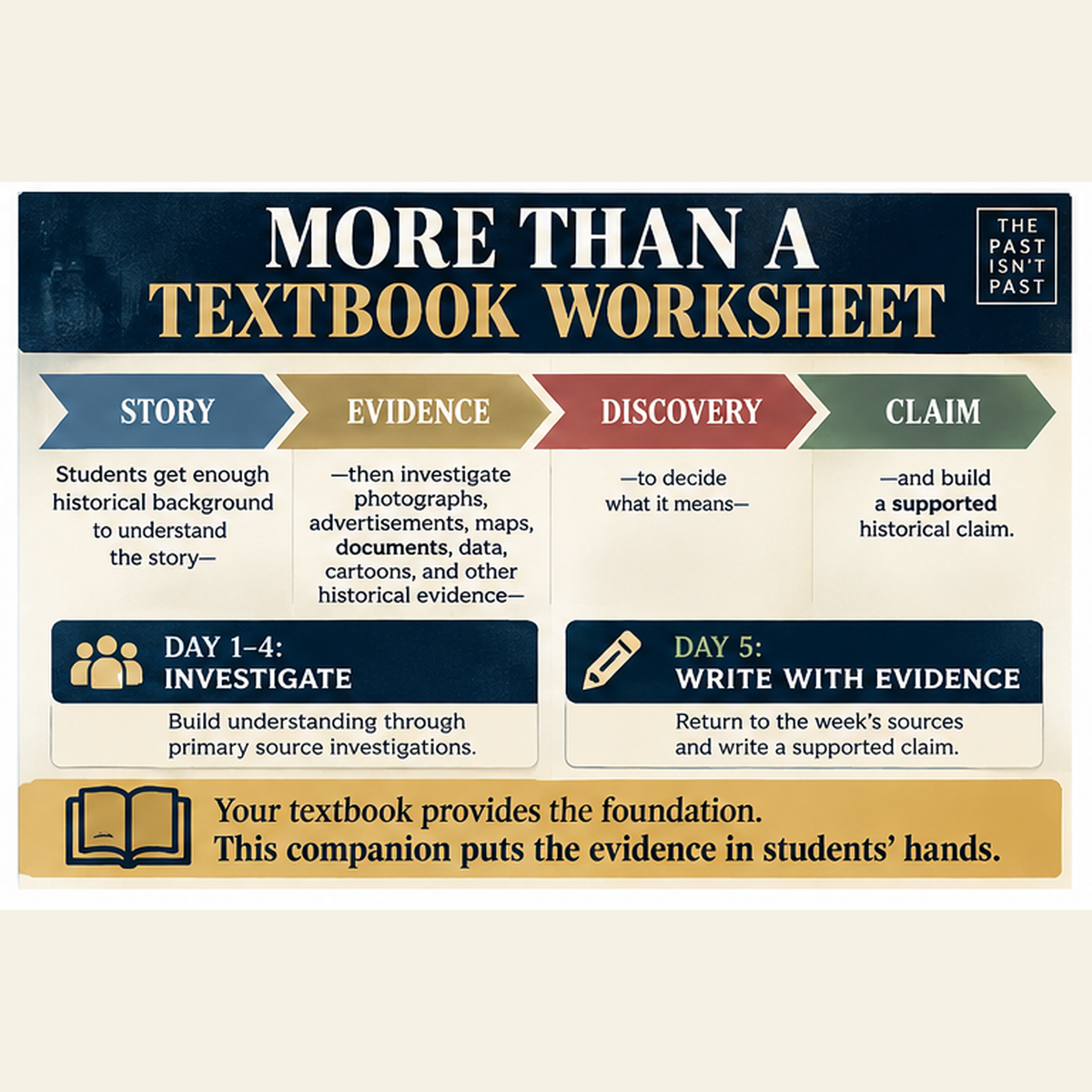
Each week follows a consistent classroom rhythm: Days 1–4 build historical understanding through evidence-based investigations. Day 5 asks students to return to the week's evidence and write a supported historical claim.
THE 4-WEEK UNIT INCLUDES:
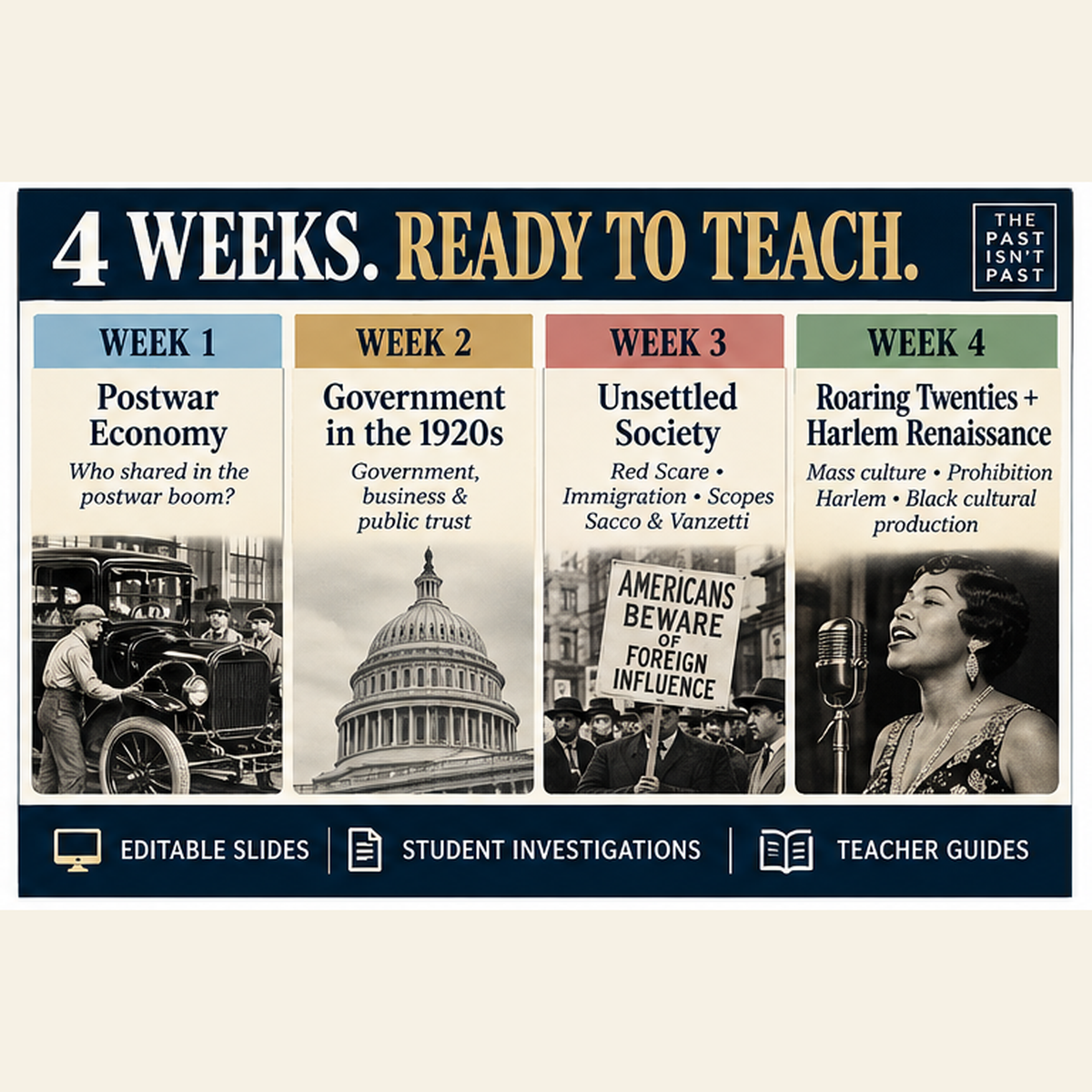
Week 1 — The Postwar Economy
Students investigate mass production, automobiles, advertising, credit, changing communities, and the uneven benefits of 1920s prosperity.
Week 2 — Government in the 1920s
Students examine “normalcy,” government and business, Teapot Dome and public trust, and American involvement in international affairs.
Week 3 — An Unsettled Society
Students investigate the First Red Scare, immigration restriction, the Scopes Trial, and the Sacco and Vanzetti case while considering how fear and rapid change shaped American society.
Week 4 — The Roaring Twenties + Harlem Renaissance
Students examine Prohibition, radio and mass culture, changing images of women, the Great Migration, Harlem, and Black cultural production while questioning who created the new culture of the 1920s and who could participate in it.
WHAT'S INCLUDED
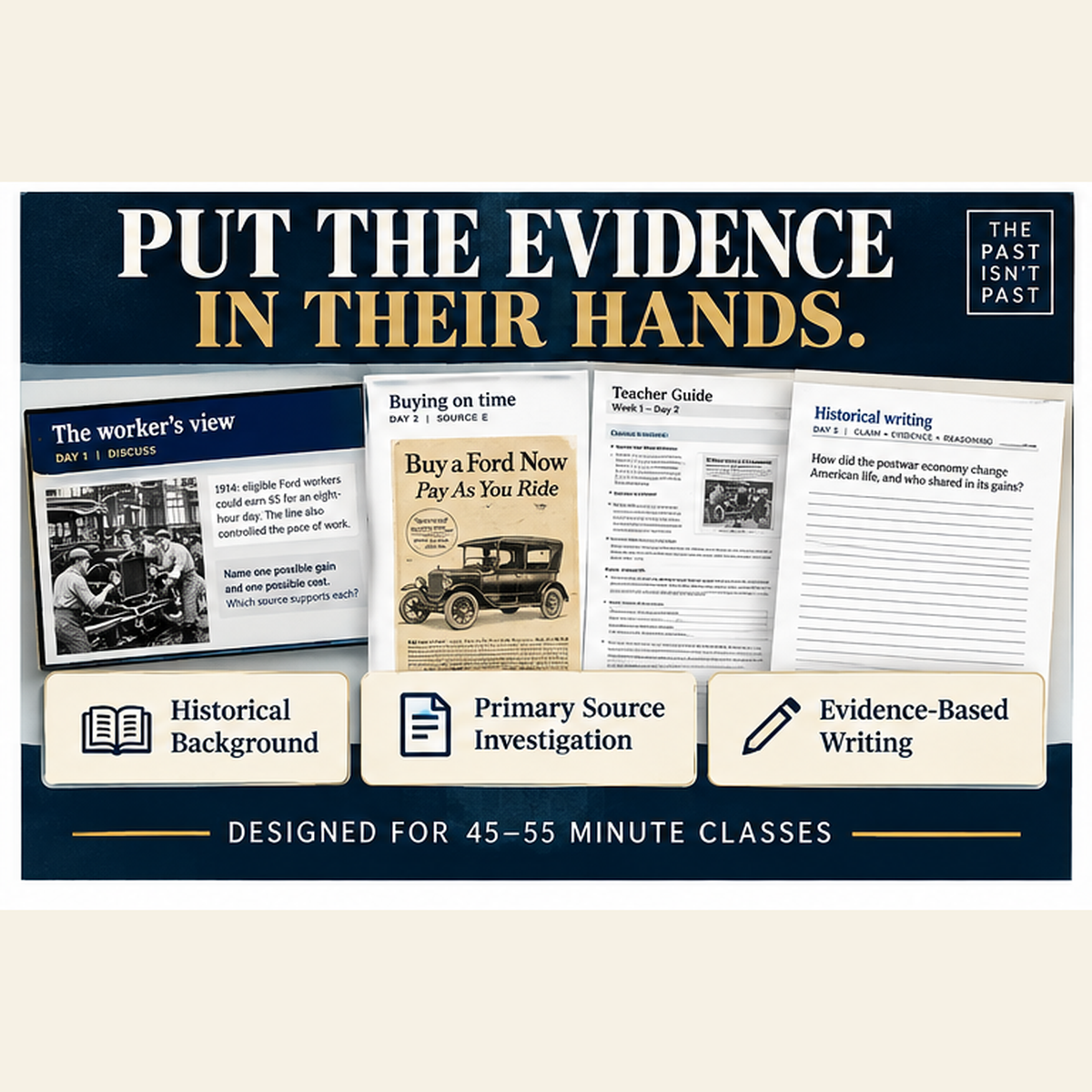
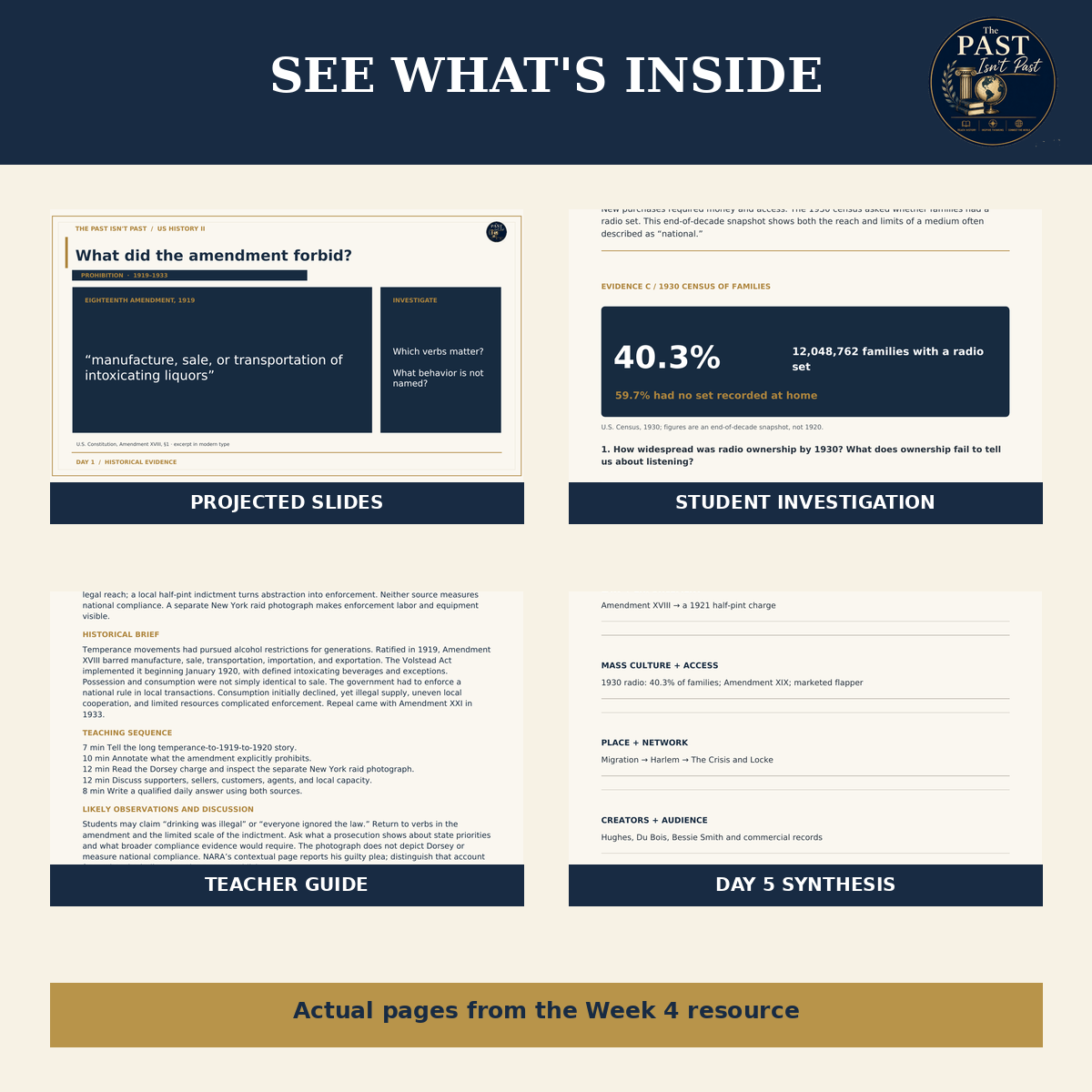
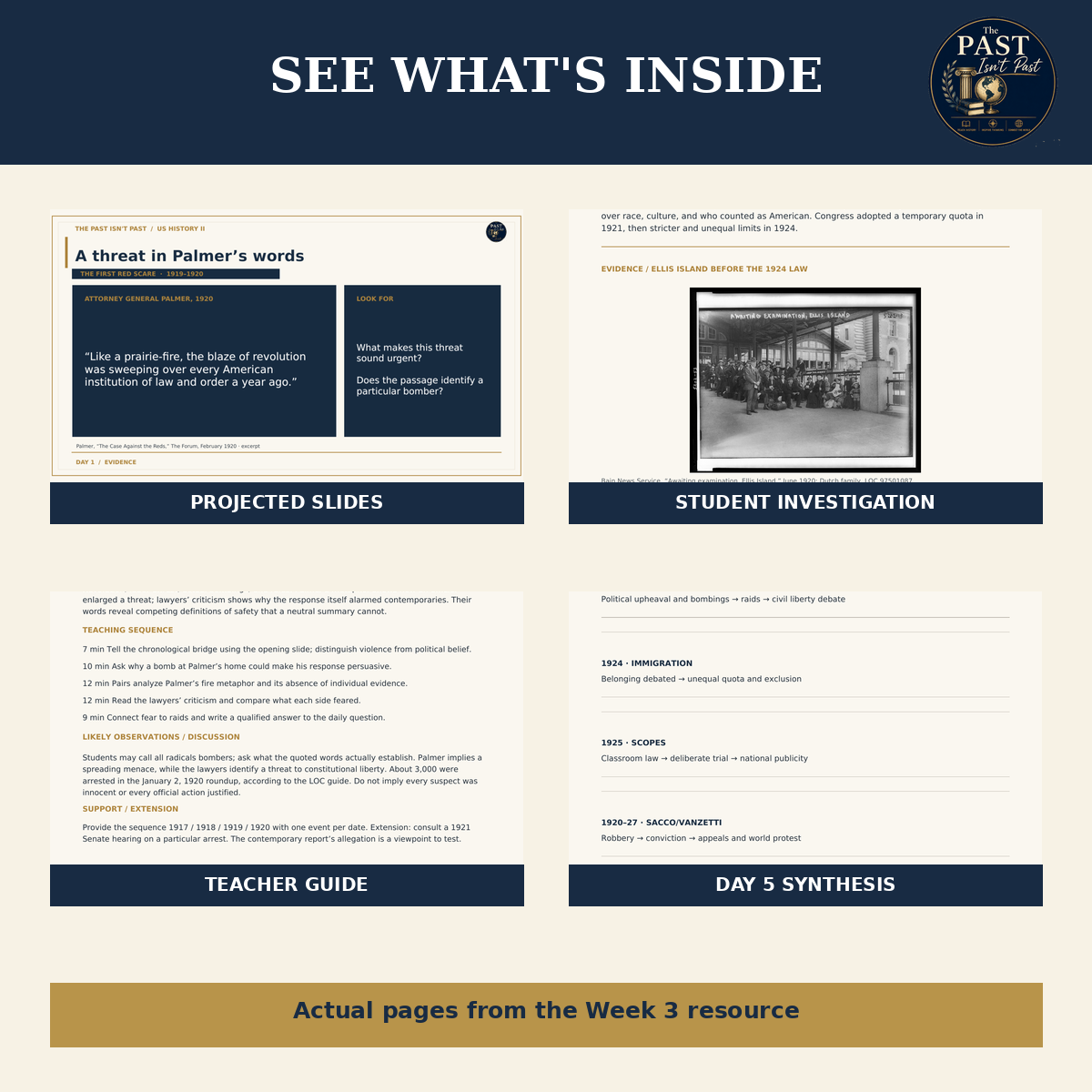
Each of the four weeks includes an editable classroom PowerPoint, projected-slides PDF, printable Student Investigation Packet, and detailed Teacher Guide.
That's 16 ready-to-use classroom files covering approximately 20 class periods.
Teacher guides include historical background, instructional guidance, source context, likely student observations, discussion support, differentiation, writing guidance, and source information—so teachers have the context they need without conducting hours of additional research.
DESIGNED FOR REAL CLASSROOMS
Materials are designed around approximately 45–55 minute periods and primarily for Grade 10 U.S. History, with flexibility for Grades 8–12.
The unit emphasizes historical thinking while remaining accessible to students who are encountering these topics for the first time.
Students move from:
Historical Story → Question → Evidence → Interpretation → Claim
The textbook provides a shared foundation.
This companion puts the evidence in students' hands.
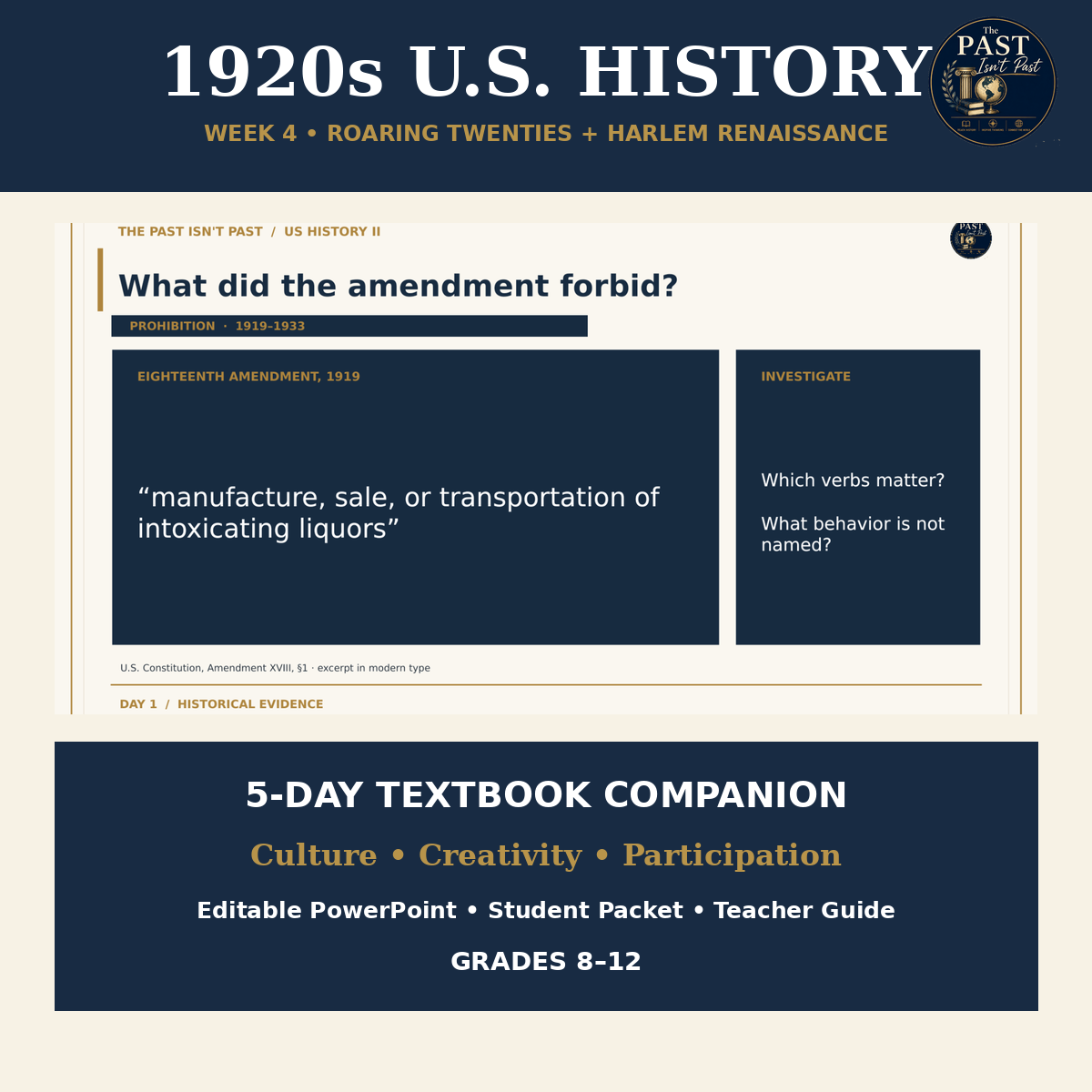
Roaring Twenties & Harlem Renaissance | Prohibition, Women, Music & Culture
The 1920s are often remembered through familiar images: speakeasies, flappers, jazz, automobiles, movies, and crowded dance halls. But who actually created the culture we now call the “Roaring Twenties”? And did everyone experience the decade in the same way?
Turn your textbook’s coverage of the Roaring Twenties and Harlem Renaissance into a five-day historical investigation.
In this ready-to-teach U.S. History companion, students receive the historical background they need and then work with primary sources and other historical evidence to investigate Prohibition, mass culture, changing expectations for women, Harlem, Black cultural achievement, and the artists and creators who helped reshape American culture.
Throughout the week, students return to a larger question: Who participated in the cultural changes of the 1920s, who helped create them, and whose experiences complicate the familiar image of a decade that was “roaring” for everyone?
Essential Question
Who shaped the new culture of the 1920s, and who could participate in it?
What Students Investigate
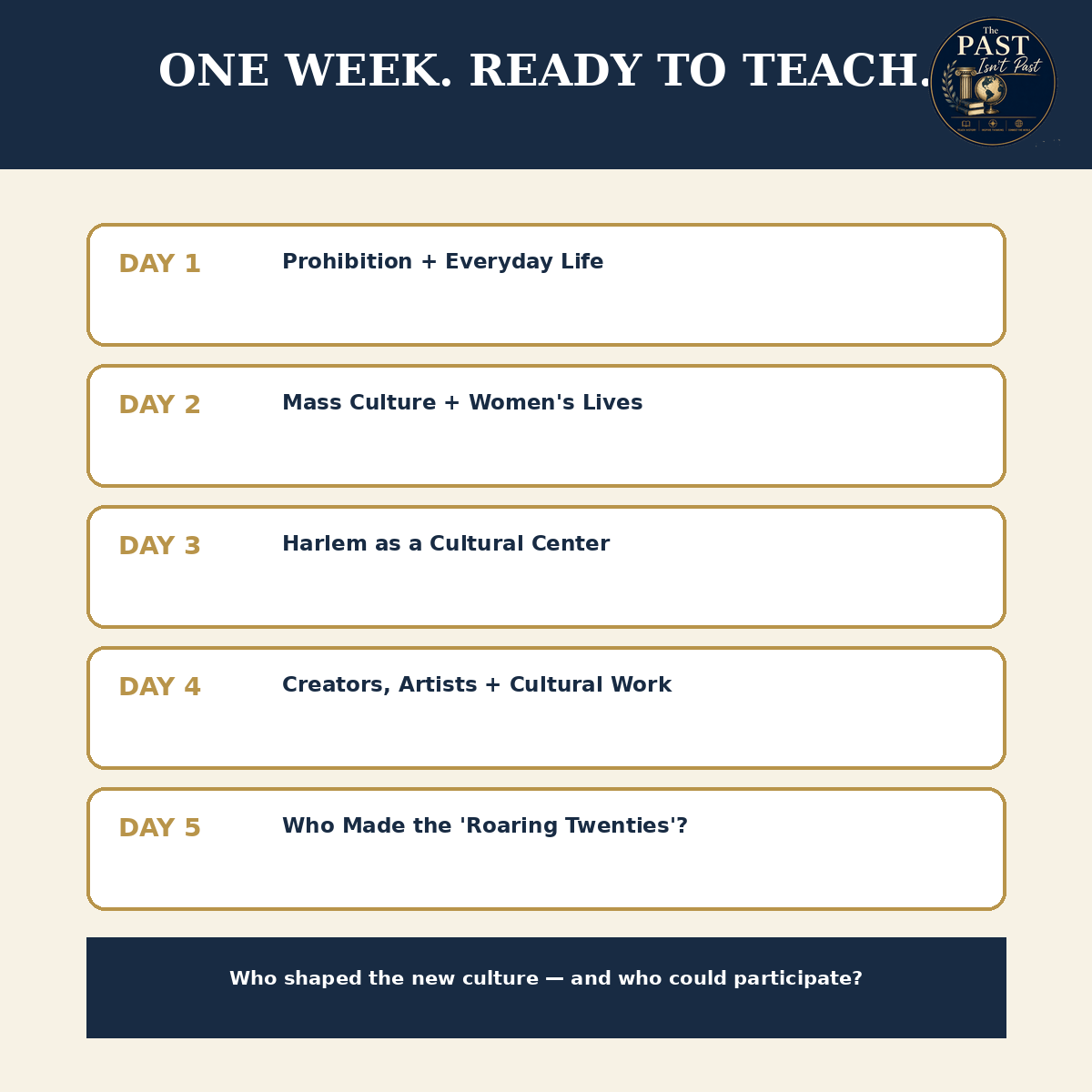
Day 1 — Prohibition and Everyday Life
Students investigate what happened when the United States attempted to prohibit the manufacture and sale of alcoholic beverages. Rather than treating Prohibition simply as a story of speakeasies and organized crime, students examine the law, enforcement, public behavior, and evidence of how Americans experienced Prohibition in everyday life.
Day 2 — Mass Culture and Women’s Lives
Students explore the growth of mass culture and changing expectations surrounding women during the 1920s. Evidence helps students investigate changing fashions, leisure, consumer culture, media, and public life while avoiding the misleading idea that every American woman suddenly became a “flapper.”
Day 3 — Harlem as a Cultural Center
Students investigate why Harlem became an important center of Black cultural and intellectual life during the 1920s. Historical context connects the growth of Harlem to the Great Migration and helps students understand the people and communities behind what became known as the Harlem Renaissance.
Day 4 — Creators, Artists, and Cultural Work
Students turn their attention to the writers, musicians, artists, performers, and other creators who helped shape the decade. Rather than encountering the Harlem Renaissance simply as a list of famous names, students examine cultural work as historical evidence and consider what these creators communicated about Black life, identity, opportunity, and America.
Day 5 — Who Really Made the “Roaring Twenties”?
Students return to evidence from across the week and reconsider the familiar image of the decade. They identify who helped create and spread the new culture, consider who could participate in it, and use evidence to construct a supported historical claim about the meaning and limits of the term “Roaring Twenties.”
What’s Included
✓ Editable classroom PowerPoint
✓ Projected-slides PDF
✓ Printable Student Investigation Packet
✓ Detailed Teacher Guide
✓ Primary-source and historical evidence activities
✓ Student-friendly historical background and orientation
✓ Source context and analysis questions
✓ Suggested responses and likely student observations
✓ Discussion and differentiation guidance
✓ Evidence-based synthesis and writing support
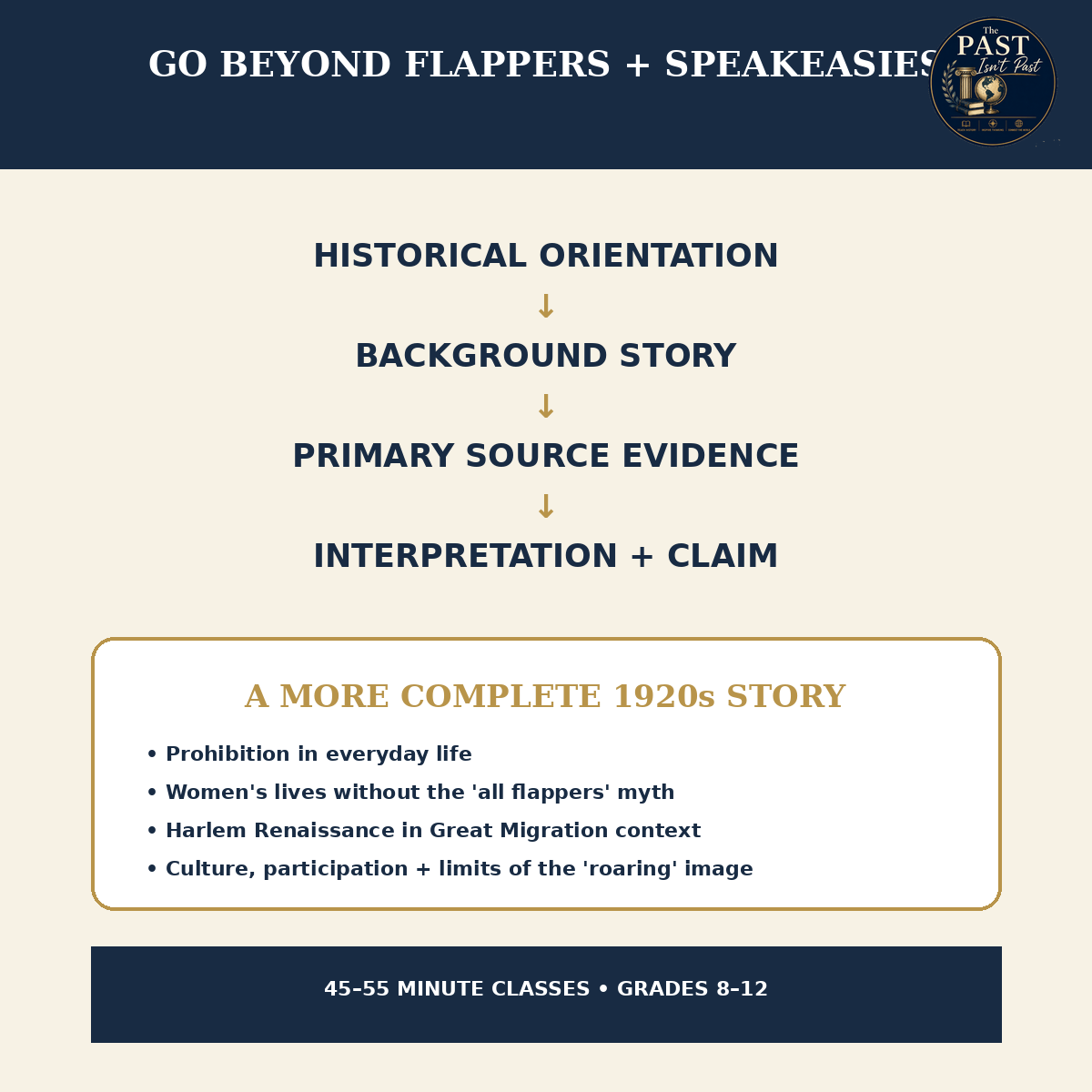
Go Beyond the Familiar Images of the 1920s
Students often enter this unit already recognizing the imagery of the decade: jazz, flappers, speakeasies, radios, movies, and Harlem.
This investigation asks them to go further.
Students receive enough historical background to understand what was happening and why it mattered before they are asked to analyze unfamiliar evidence. They then use that evidence to investigate the people behind the cultural changes of the decade and to consider how experiences differed according to race, gender, class, geography, and opportunity.
The goal is not simply to tell students that the 1920s were complicated. The evidence allows them to discover that complexity themselves.
Teacher Support for Inquiry-Based History
The Teacher Guide provides additional historical background, source context, likely student observations, suggested responses, discussion guidance, and support for the final evidence-based synthesis.
Because these are inquiry-based investigations, many questions allow more than one defensible response. Rather than a rigid answer key, the Teacher Guide helps teachers recognize historically supported interpretations and guide students toward claims grounded in evidence.
Designed for Real Classrooms
The week is designed around approximately 45–55 minute class periods and is centered on Grade 10 U.S. History, with flexibility for Grades 8–12.
Students move through a scaffolded historical-thinking process:
Historical Orientation → Background Story → Question → Evidence → Interpretation → Connection → Claim
Use the investigations alongside your existing U.S. History textbook or curriculum.
Your textbook provides the foundation. This companion puts the evidence in students’ hands.
Need the Complete 1920s Unit?
Week 4 is also included in the 4-Week 1920s U.S. History Textbook Companion Bundle, which takes students from the postwar economic boom through government, social conflict, the Roaring Twenties, and the Harlem Renaissance.
Approximately 5 class periods | Grades 8–12 | Editable + Printable
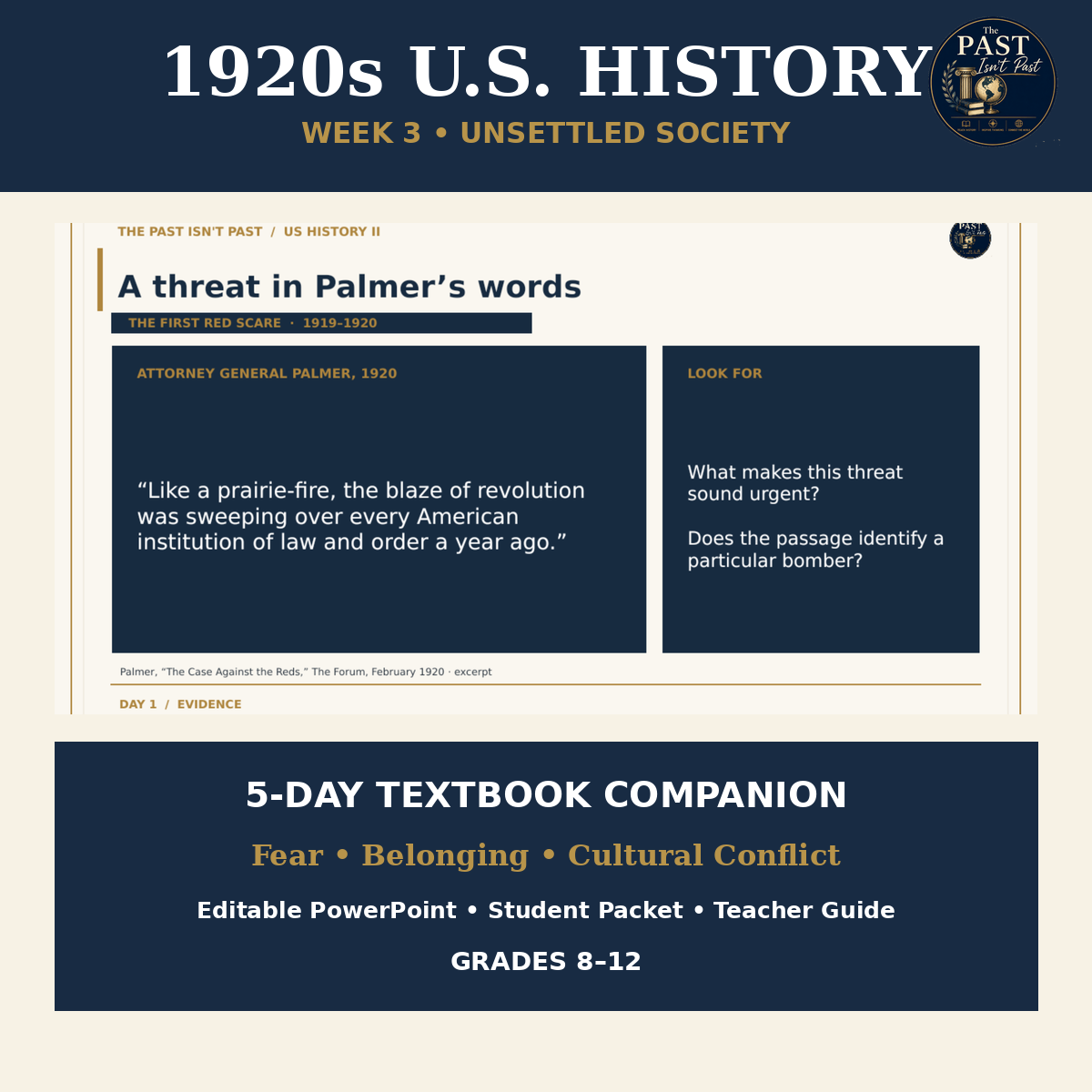
The 1920s were not simply “roaring.” They were also a decade of fear, conflict, rapid change, and difficult questions about who belonged in America.
Turn your textbook’s coverage of the unsettled society of the 1920s into a five-day historical investigation.
In this ready-to-teach U.S. History companion, students receive the historical background they need before working with primary sources and other historical evidence. Across the week, they investigate the First Red Scare, immigration restriction and exclusion, the Scopes Trial, and the Sacco and Vanzetti case to consider why political, demographic, and cultural change felt threatening to some Americans.
Rather than asking students simply to identify what happened, the investigations ask them to examine how fear shaped American responses to change and what those responses meant for individuals, communities, and ideas about belonging.
Essential Question:
Why did some Americans see the changes of the 1920s as threatening?
What Students Investigate
Day 1 — The First Red Scare
Students begin with the upheaval following World War I and investigate how revolution, labor unrest, anarchist violence, immigration, and fear of radicalism contributed to the First Red Scare. Evidence helps students distinguish between real events and the broader climate of fear that followed.
Day 2 — Immigration Restriction and Exclusion
Students examine growing nativism and the movement toward immigration restriction, including the 1924 immigration law. They investigate how ideas about nationality, race, culture, and “Americanism” shaped arguments over who should be allowed to enter and belong in the United States.
Day 3 — The Scopes Trial
Students investigate how a Tennessee classroom became the center of a national debate. Historical background and evidence help students move beyond a simple “science versus religion” interpretation to consider public education, law, cultural authority, modernity, tradition, and the role of the national media.
Day 4 — Sacco and Vanzetti
Students examine the controversial case of Nicola Sacco and Bartolomeo Vanzetti in the context of immigration, anarchism, the Red Scare, and questions about fairness in the American justice system. Students investigate why the case generated such intense debate without being directed toward a predetermined verdict about guilt or innocence.
Day 5 — Evidence-Based Synthesis
Students return to evidence from across the week, compare cases, identify patterns, and construct a supported historical explanation of why change created fear and how Americans responded.
What’s Included
✓ Editable classroom PowerPoint
✓ Projected-slides PDF
✓ Printable Student Investigation Packet
✓ Detailed Teacher Guide
✓ Primary-source and historical evidence activities
✓ Student-friendly historical background and orientation
✓ Source context and analysis questions
✓ Suggested responses and likely student observations
✓ Discussion and differentiation guidance
✓ Evidence-based synthesis and writing support
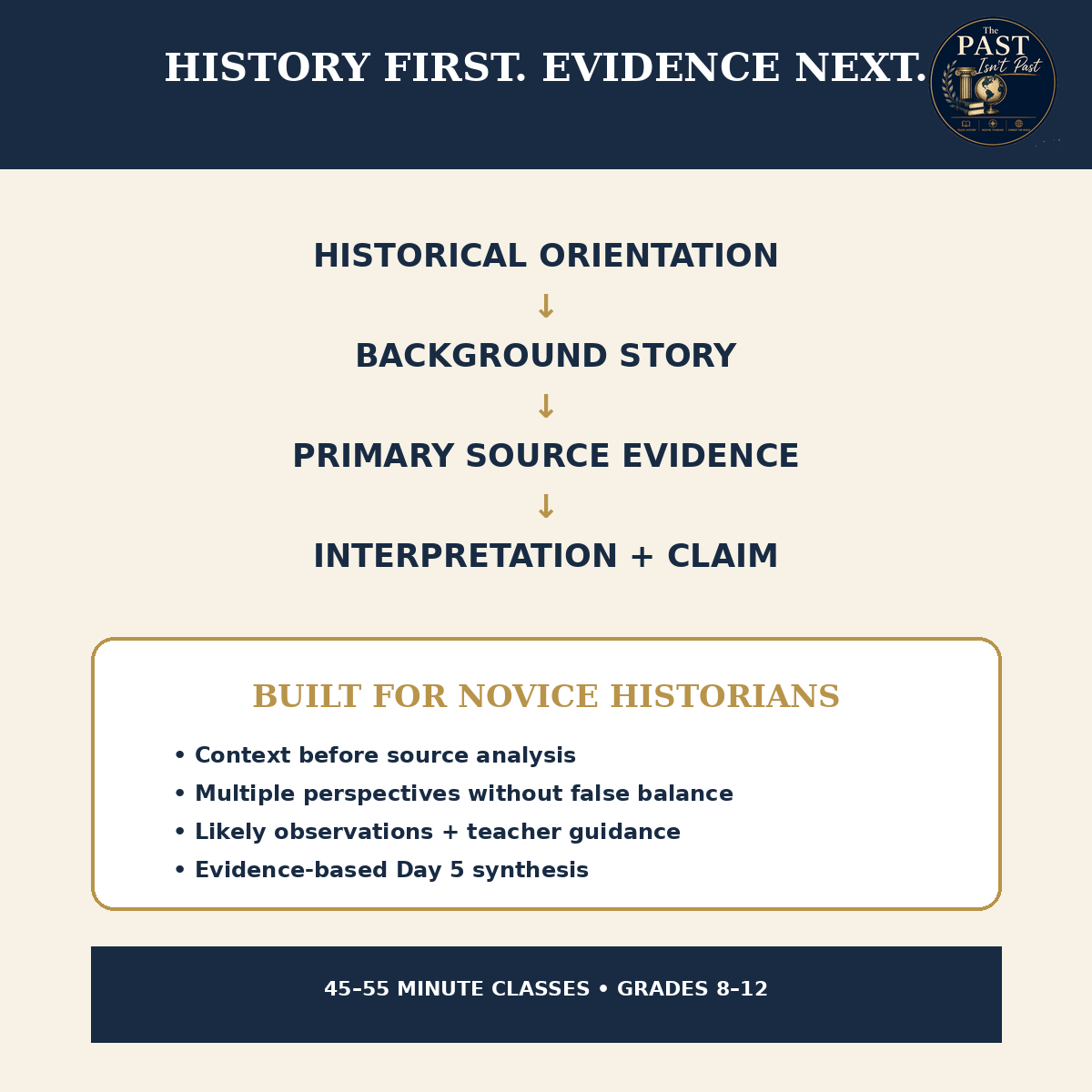
History First. Evidence Next.
These investigations are designed for students who may be encountering these events for the first time.
Students are not expected to somehow discover the basic history from an unfamiliar document. Instead, each investigation provides enough historical orientation for the evidence to make sense. Students can then use that evidence to go deeper: to question, connect, interpret, compare, and construct historical claims.
The Teacher Guide provides additional historical background so teachers can approach complicated topics confidently without spending hours conducting their own research.
Because these are inquiry-based investigations, many questions allow more than one defensible response. Rather than a rigid answer key, the Teacher Guide provides likely student observations, suggested responses, source limitations, discussion guidance, defensible interpretations, and support for the final synthesis.
Designed for Real Classrooms
The week is designed around approximately 45–55 minute class periods and is centered on Grade 10 U.S. History, with flexibility for Grades 8–12.
Students move through a scaffolded historical-thinking process:
Historical Orientation → Background Story → Question → Evidence → Interpretation → Connection → Claim
Use the investigations alongside your existing U.S. History textbook or curriculum.
Your textbook provides the foundation. This companion puts the evidence in students’ hands.
Need the complete 1920s unit?
Week 3 is also included in the 4-Week 1920s U.S. History Textbook Companion Bundle, covering the Postwar Economy, Government in the 1920s, an Unsettled Society, the Roaring Twenties, and the Harlem Renaissance.
Approximately 5 class periods | Grades 8–12 | Editable + Printable
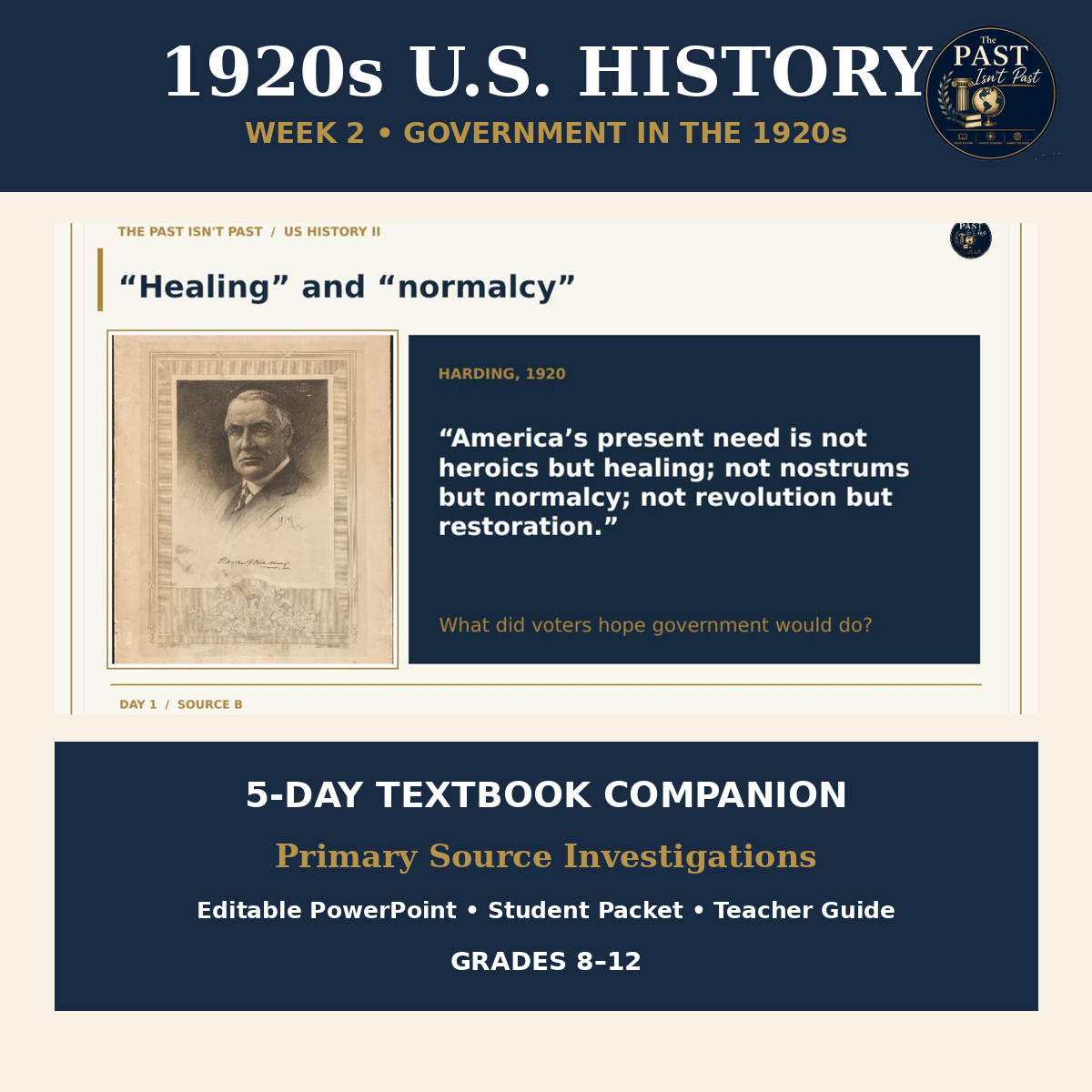
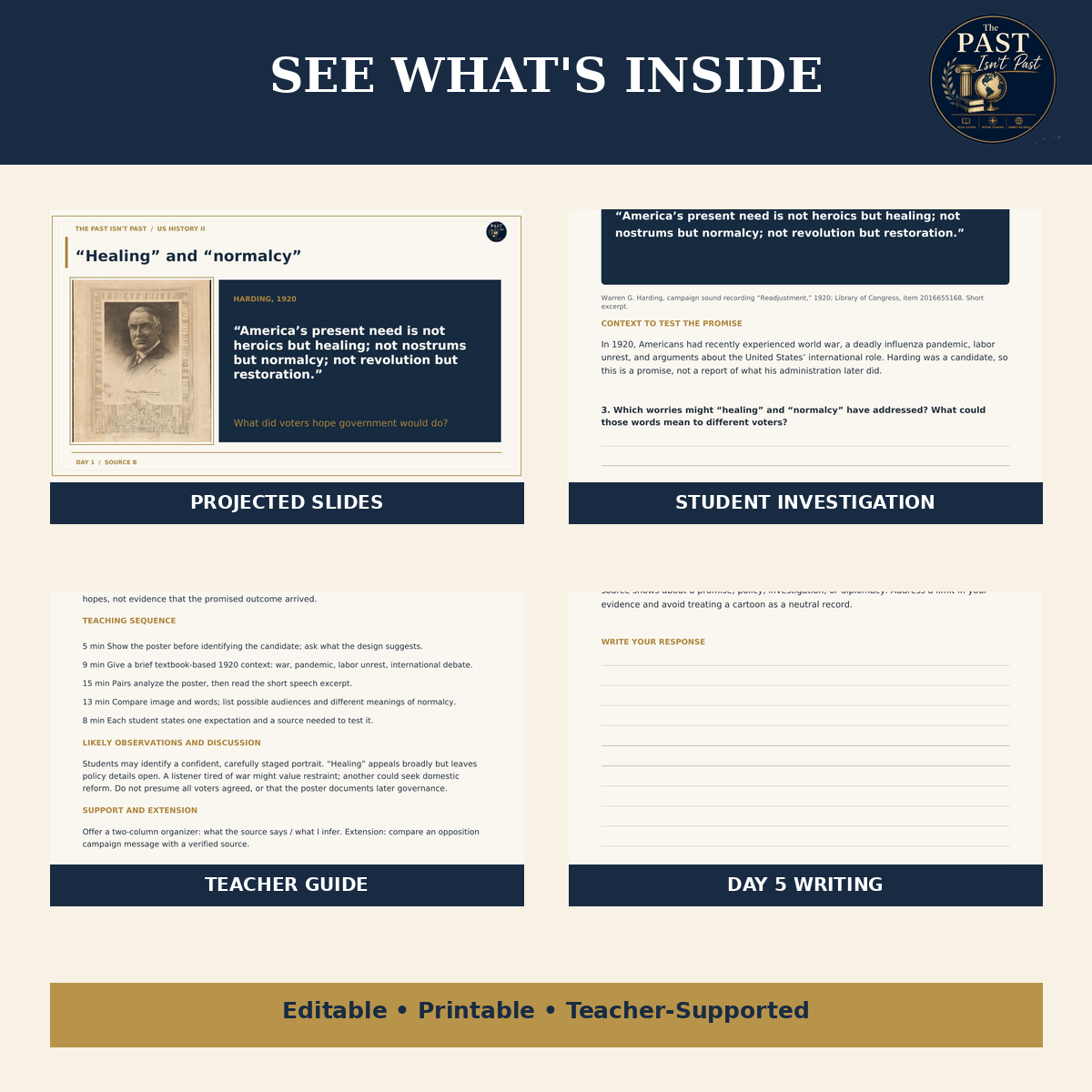
Turn your textbook’s coverage of government in the 1920s into a five-day historical investigation.
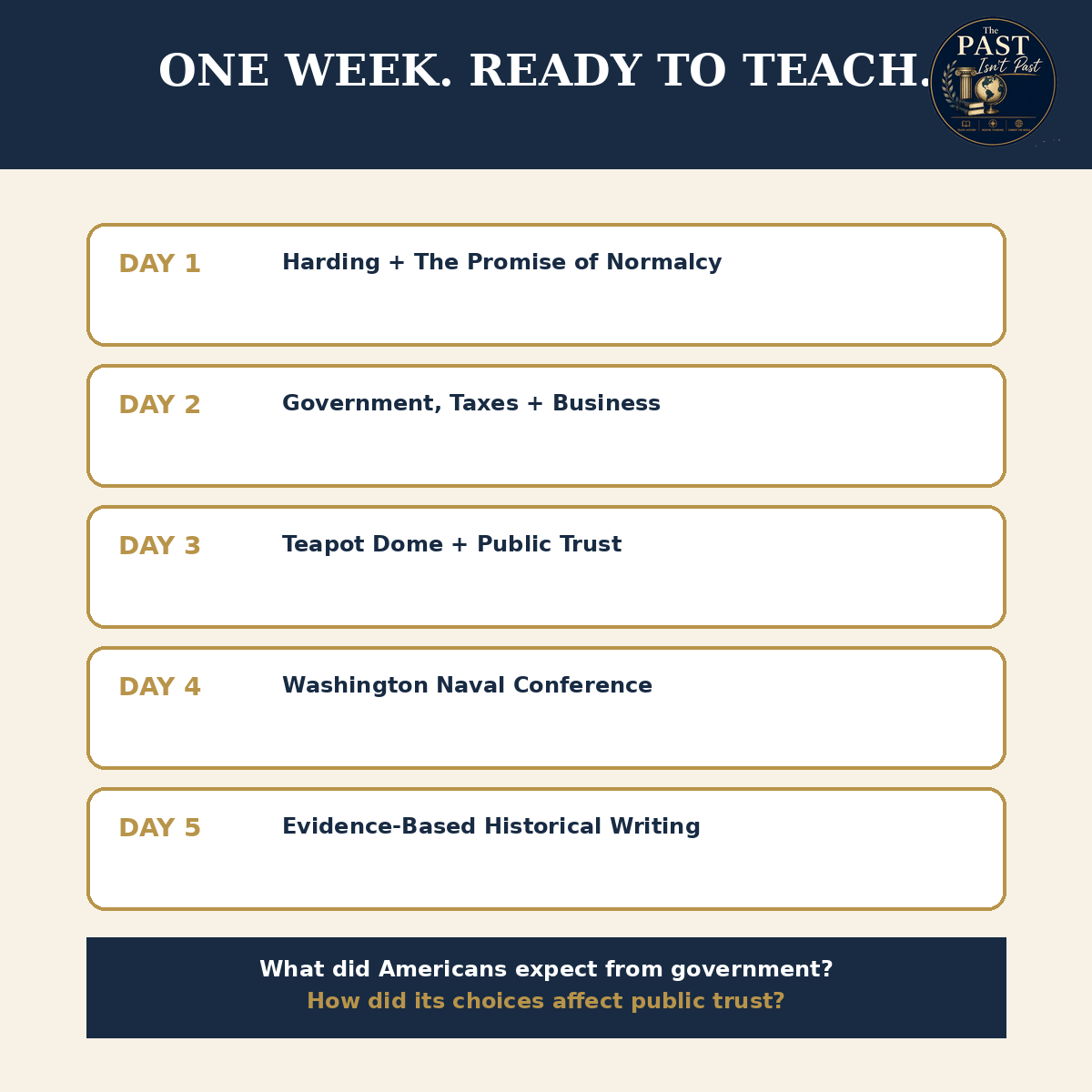
This ready-to-teach U.S. History companion asks students to investigate what Americans expected from their government after World War I and then examine what the federal government actually did. Using political imagery, speeches, photographs, government records, and other historical evidence, students explore Harding’s promise of “normalcy,” tax policy and business, the Teapot Dome scandal, and American diplomacy before constructing an evidence-based historical claim.
Essential Question:
What did Americans expect their government to do in the 1920s, and how did its choices affect public trust?
What Students Investigate
Day 1 — The Promise of Normalcy
Students examine Warren G. Harding’s 1920 campaign message and consider what “normalcy” promised Americans after war and upheaval.
Day 2 — Government and Business
Students investigate tax policy and the relationship between government and business, distinguishing between political arguments about taxation and evidence of actual government action.
Day 3 — Teapot Dome and Public Trust
Students examine the Teapot Dome scandal and consider how misconduct, investigation, and government accountability affected public trust.
Day 4 — The United States and the World
Students investigate the Washington Naval Conference and consider how the United States participated in international affairs during a decade often associated with “isolationism.”
Day 5 — Evidence-Based Historical Writing
Students return to evidence from across the week, compare government promises with government actions, and construct a supported response to the essential question.
What’s Included
✓ Editable classroom PowerPoint
✓ Projected-slides PDF
✓ Printable Student Investigation Packet
✓ Detailed Teacher Guide
✓ Primary-source and historical evidence activities
✓ Historical background and source context
✓ Suggested responses and likely student observations
✓ Discussion and differentiation guidance
✓ Evidence-based writing support
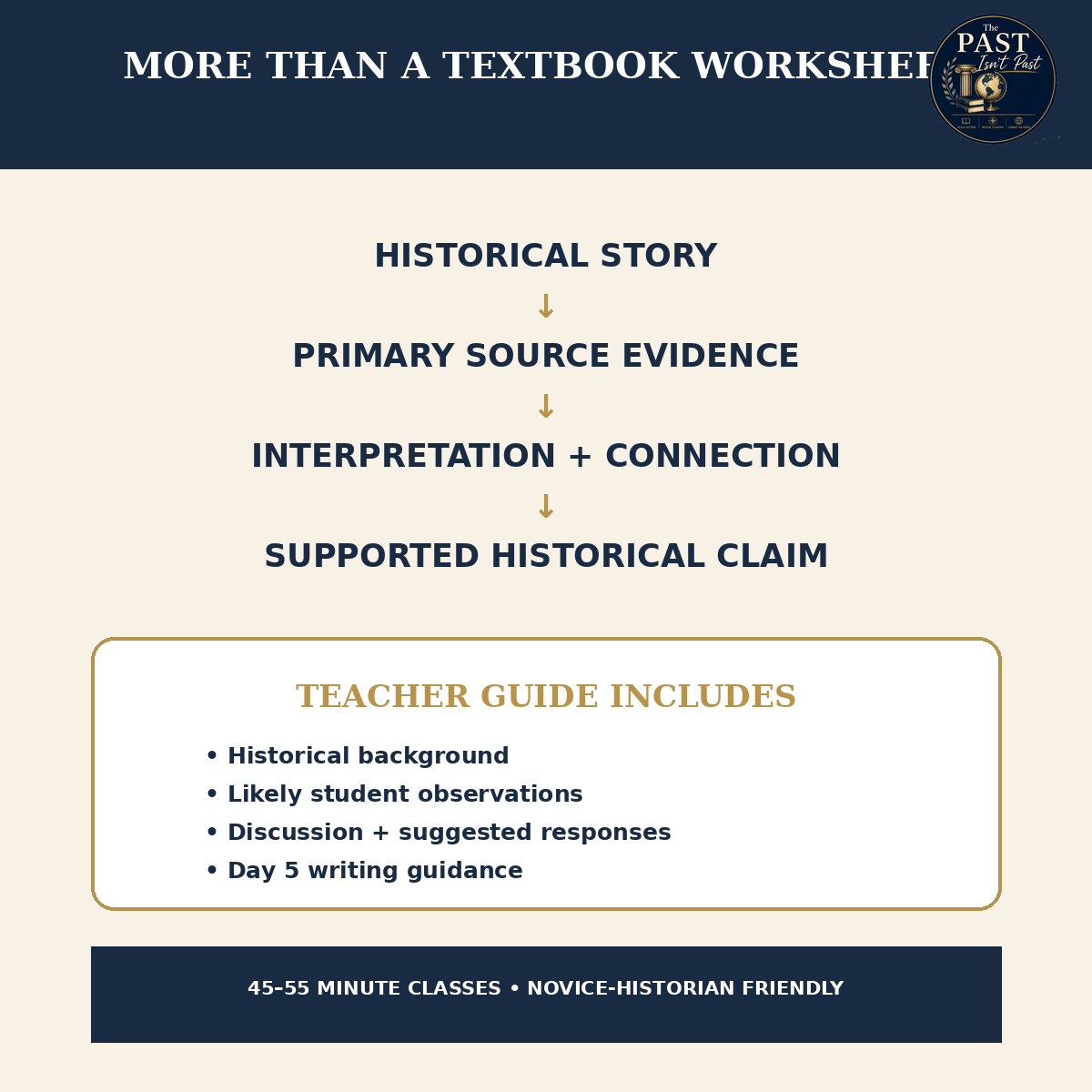
The Teacher Guide provides the historical background and instructional support teachers need to teach the investigations confidently without spending hours conducting additional research.
Because these are inquiry-based investigations, students may reach different conclusions when the evidence supports them. Rather than relying on a single rigid answer key, the Teacher Guide includes likely observations, suggested responses, source limitations, defensible interpretations, and guidance for evaluating students’ historical reasoning.
Designed for Real Classrooms
The week is designed around approximately 45–55 minute class periods and is centered on Grade 10 U.S. History, with flexibility for Grades 8–12.
Students move through a consistent historical-thinking process:
Historical Story → Question → Evidence → Interpretation → Claim
Use the investigations alongside your existing U.S. History textbook or curriculum. The textbook provides students with the foundation; these lessons put the historical evidence in their hands.
Need the complete 1920s unit?
This resource is also included in the 4-Week 1920s U.S. History Textbook Companion Bundle, covering the Postwar Economy, Government in the 1920s, an Unsettled Society, the Roaring Twenties, and the Harlem Renaissance.
Approximately 5 class periods | Grades 8–12 | Editable + Printable
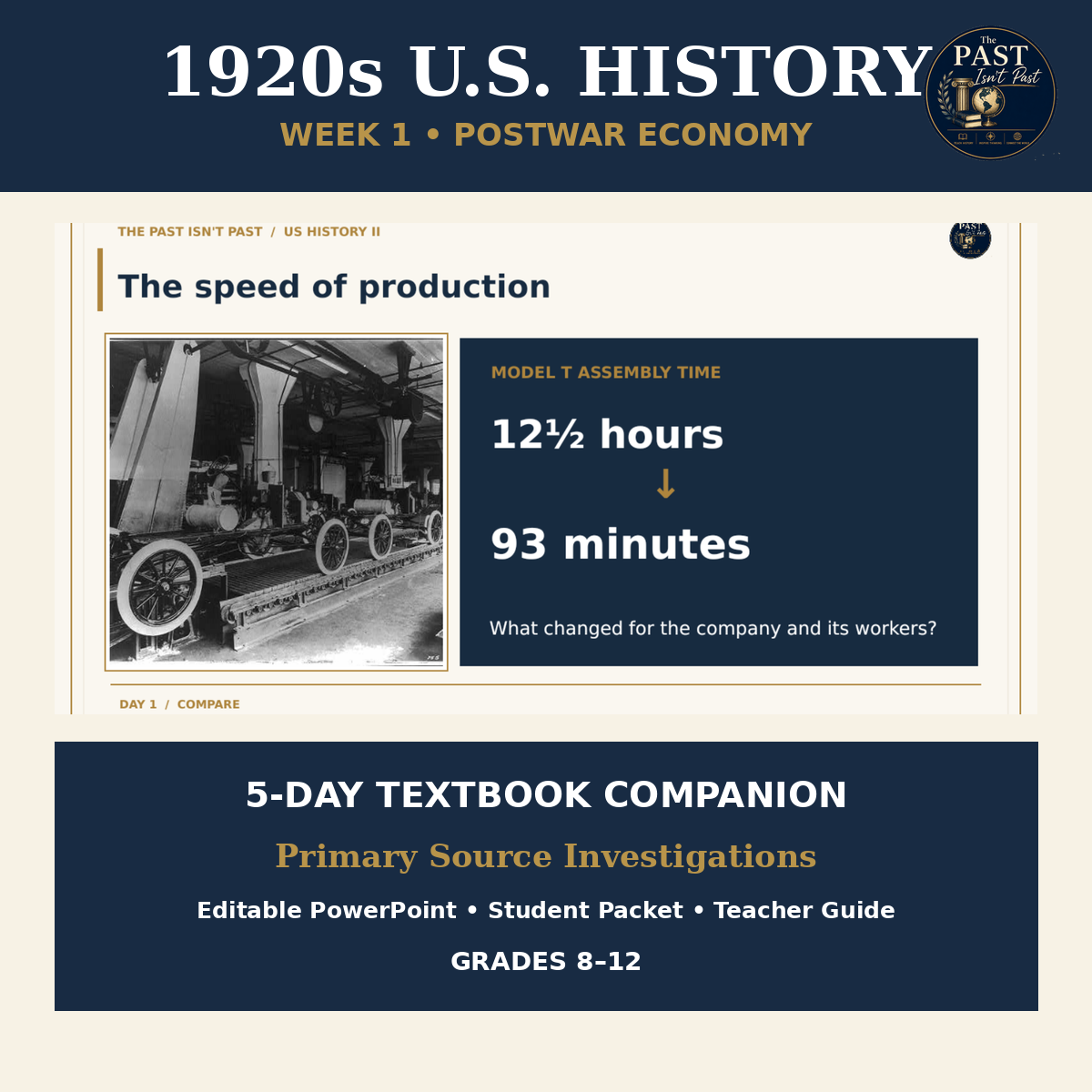
1920s Postwar Economy — 5-Day Primary Source Investigation
Turn your textbook’s 1920s postwar economy chapter into a five-day historical investigation.
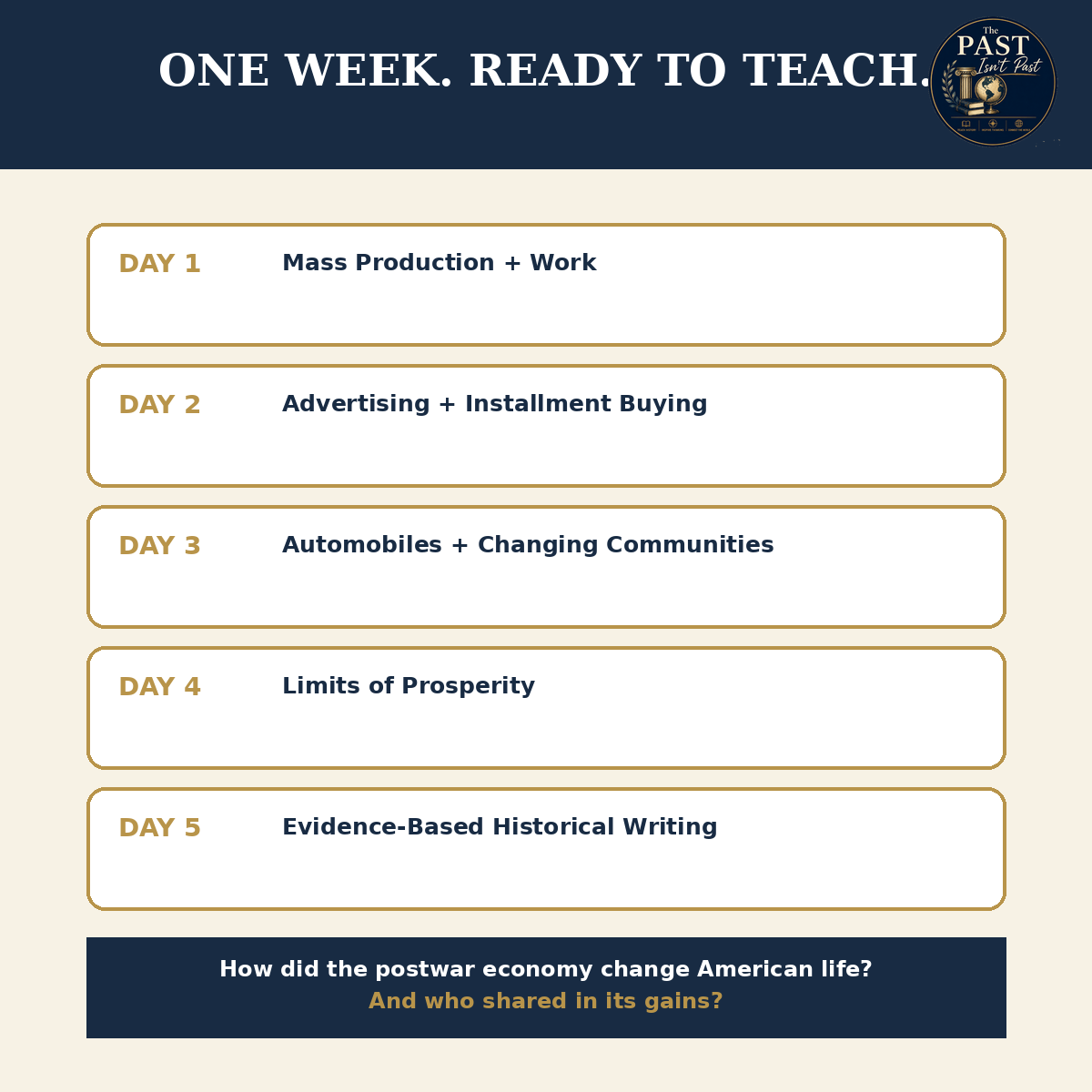
This ready-to-teach U.S. History companion gives students the background they need to understand the economic changes of the 1920s, then puts historical evidence in their hands. Students investigate mass production and work, advertising and installment buying, automobiles and changing communities, and the limits of prosperity before using evidence from the week to write a supported historical claim.
Essential Question:
How did the postwar economy change American life, and who shared in its gains?
What Students Investigate
Day 1 — Mass Production and Work
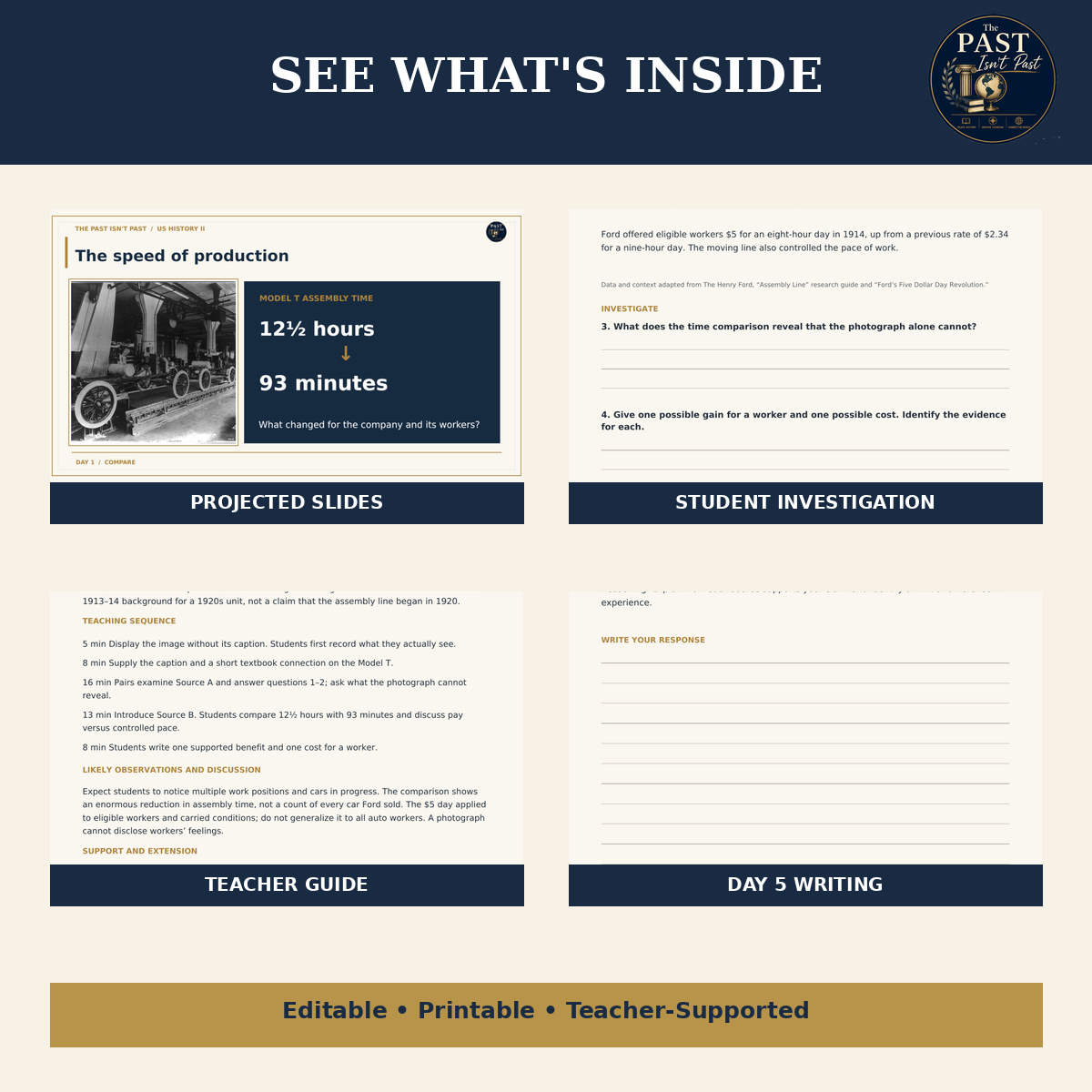
Students examine evidence from automobile production to consider how mass production changed work and manufacturing.
Day 2 — Advertising and Installment Buying
Students investigate how businesses encouraged Americans to buy and how new ways of purchasing goods affected consumer life.
Day 3 — Automobiles and Changing Communities
Students use historical evidence to explore how growing automobile ownership changed mobility, businesses, and communities.
Day 4 — Limits of Prosperity
Students complicate the familiar story of the “Roaring Twenties” by examining agricultural decline and considering whose experiences may be missing from evidence of prosperity.
Day 5 — Evidence-Based Historical Writing
Students return to evidence from across the week, select their strongest sources, and construct a supported response to the essential question.
What’s Included
✓ Editable classroom PowerPoint
✓ Projected-slides PDF
✓ Printable Student Investigation Packet
✓ Detailed Teacher Guide
✓ Primary-source and historical evidence activities
✓ Historical background and source context
✓ Suggested responses and likely student observations
✓ Discussion and differentiation guidance
✓ Evidence-based writing support
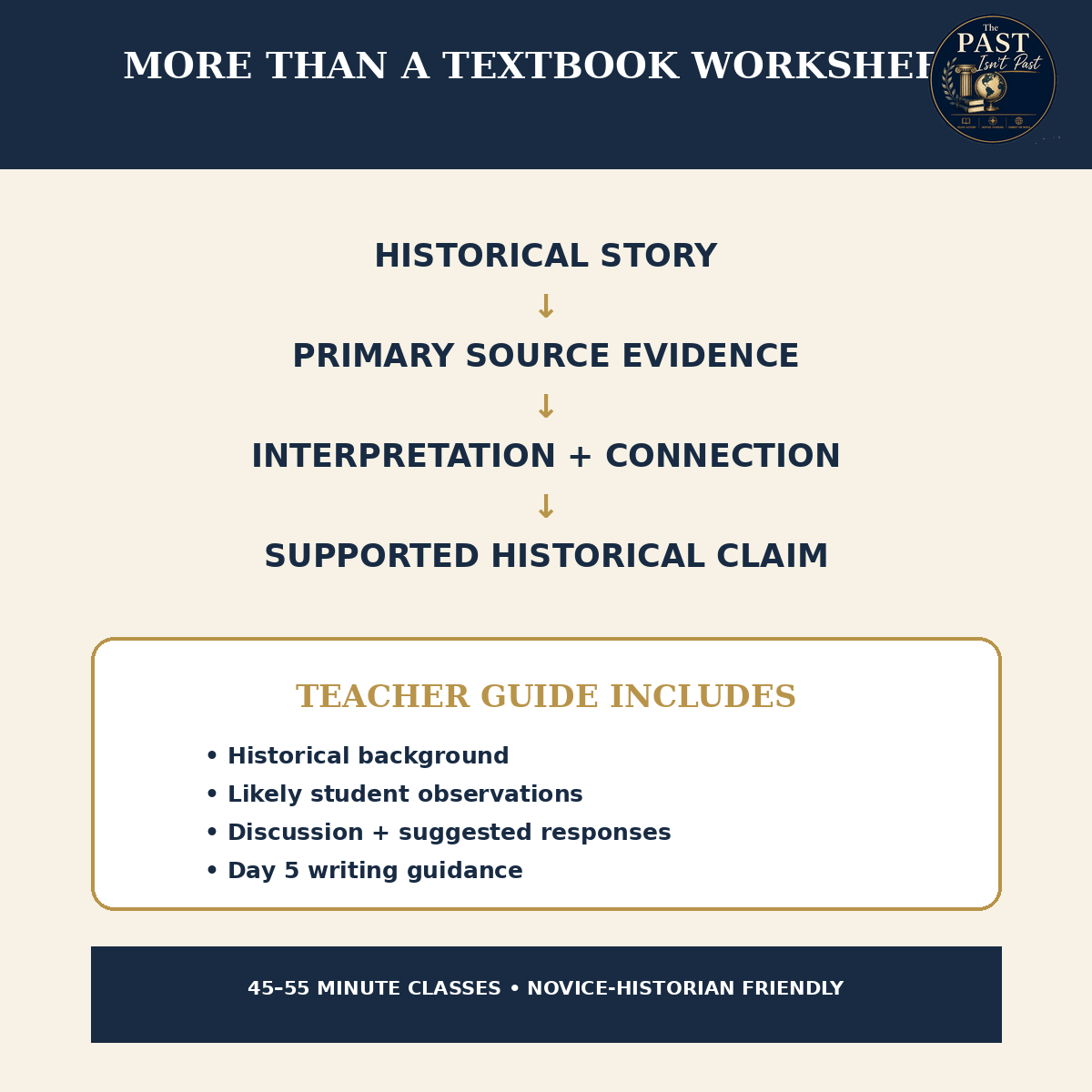
The Teacher Guide is designed so teachers have the historical context and instructional support they need without spending hours doing additional research.
Because these are inquiry-based investigations, many questions allow more than one defensible answer. Rather than a rigid answer key, the Teacher Guide provides likely observations, suggested responses, source limitations, example claims, and guidance for evaluating students’ historical reasoning.
Designed for Real Classrooms
The week is designed around approximately 45–55 minute class periods and is centered on Grade 10 U.S. History, with flexibility for Grades 8–12.
Students move through a consistent historical-thinking process:
Historical Story → Question → Evidence → Interpretation → Claim
Use the investigations alongside your existing U.S. History textbook or curriculum. The textbook provides students with a shared foundation; these lessons give them the opportunity to work with evidence and think like historians.
Need more than one week?
This resource is also included in the complete 4-Week 1920s U.S. History Textbook Companion Bundle, covering the Postwar Economy, Government in the 1920s, an Unsettled Society, the Roaring Twenties, and the Harlem Renaissance.
Approximately 5 class periods | Grades 8–12 | Editable + Printable
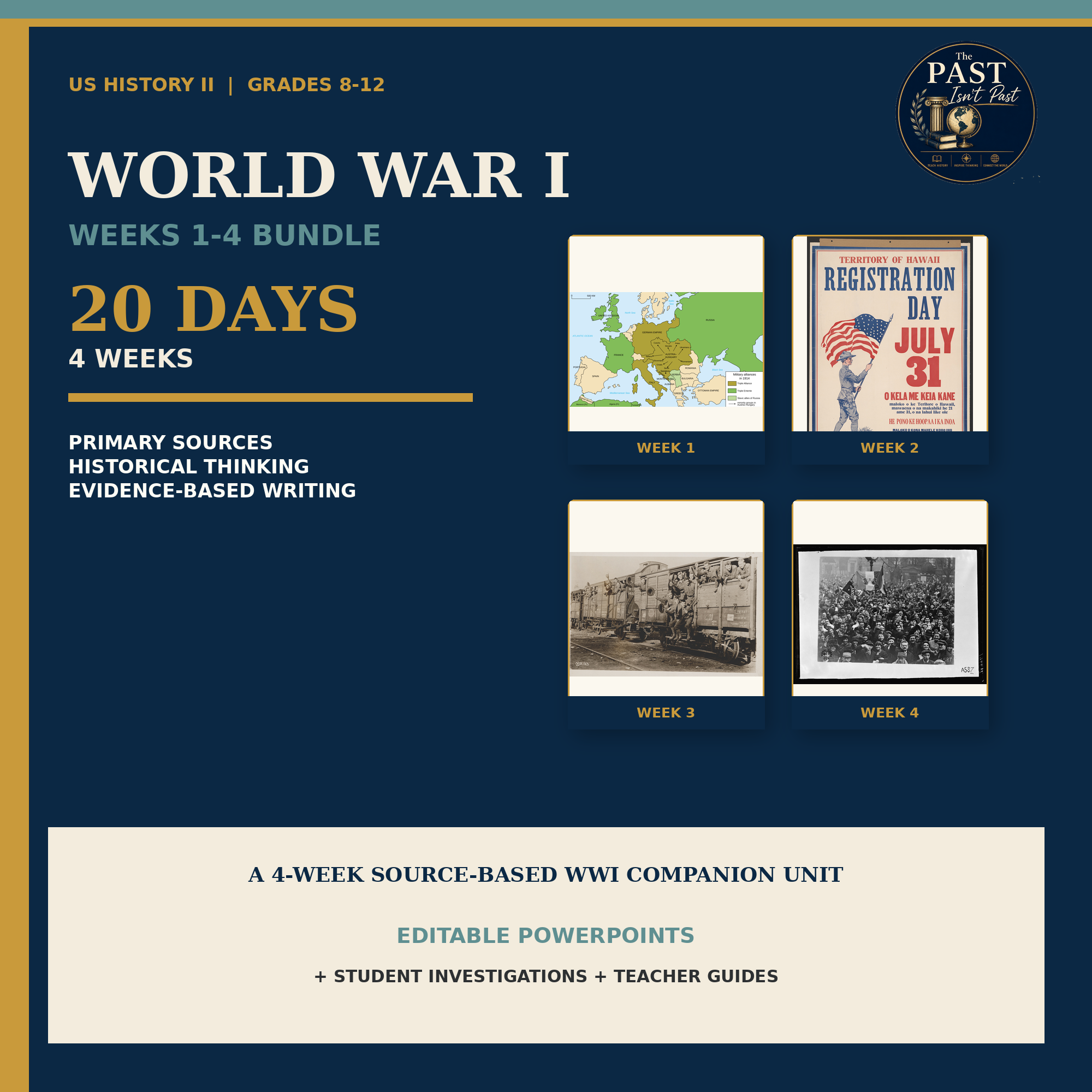
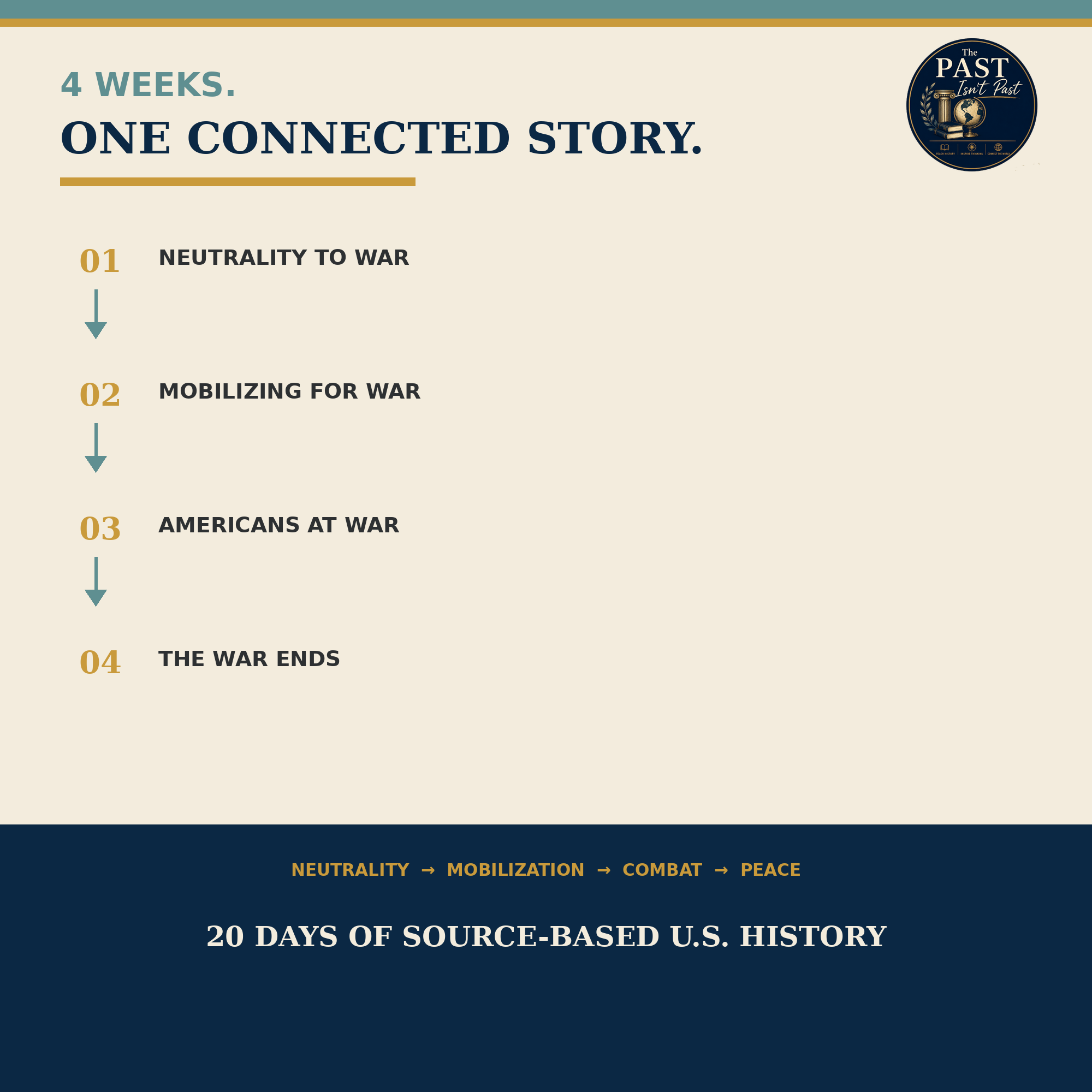
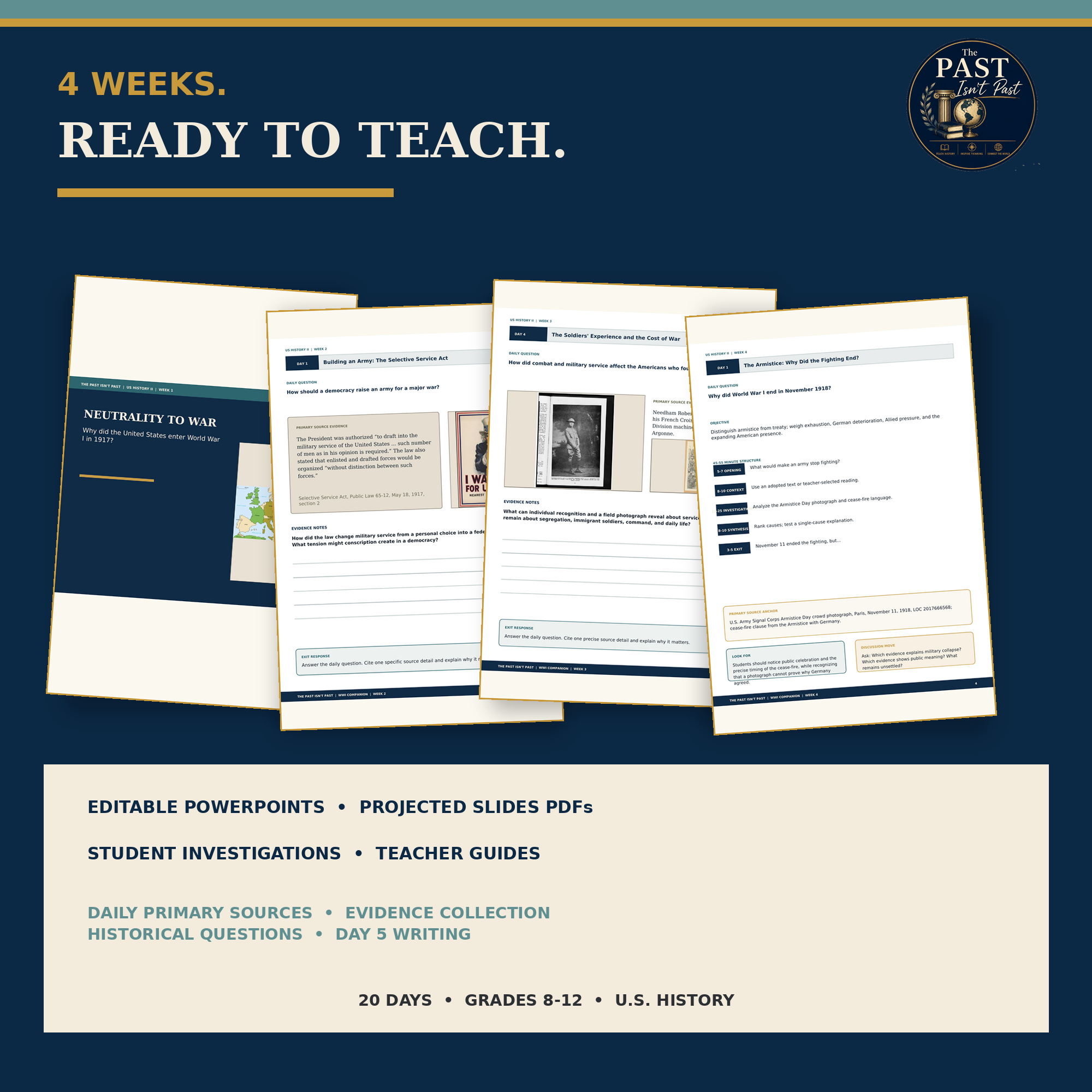
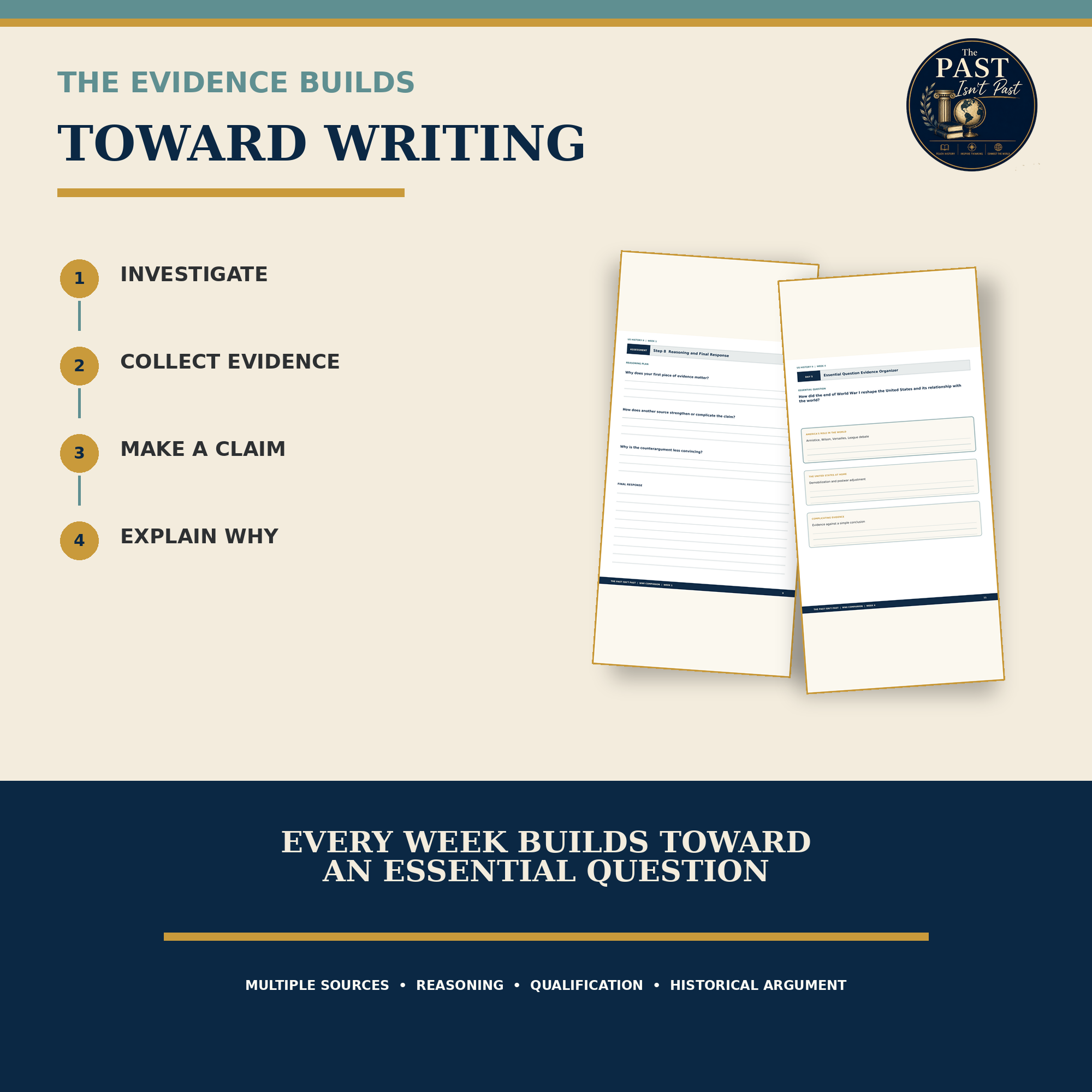
Bring World War I into your classroom with four weeks of ready-to-teach, inquiry-based US History II lessons from The Past Isn't Past.
Designed for high school history classrooms, this curriculum helps students investigate historical questions, analyze authentic primary sources, and develop evidence-based historical arguments.
The four-week bundle includes:
Editable classroom PowerPoint presentations
Projected slide PDFs
Student investigation packets
Detailed teacher guides
Source and rights documentation
Daily investigations leading to weekly evidence-based writing
Designed for Grades 8–12, with Grade 10 as the primary audience.
Students learn history by investigating it—not simply memorizing it.
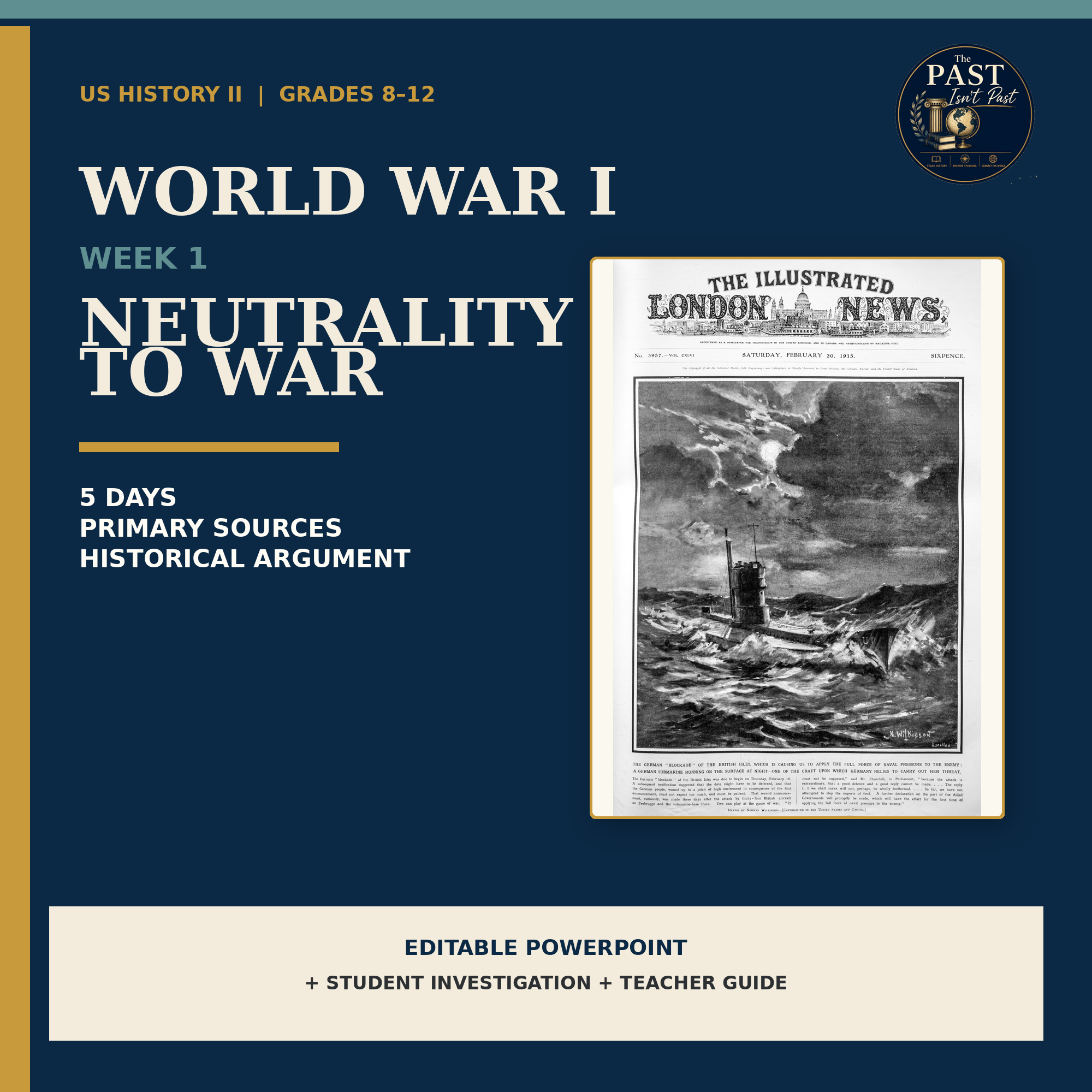
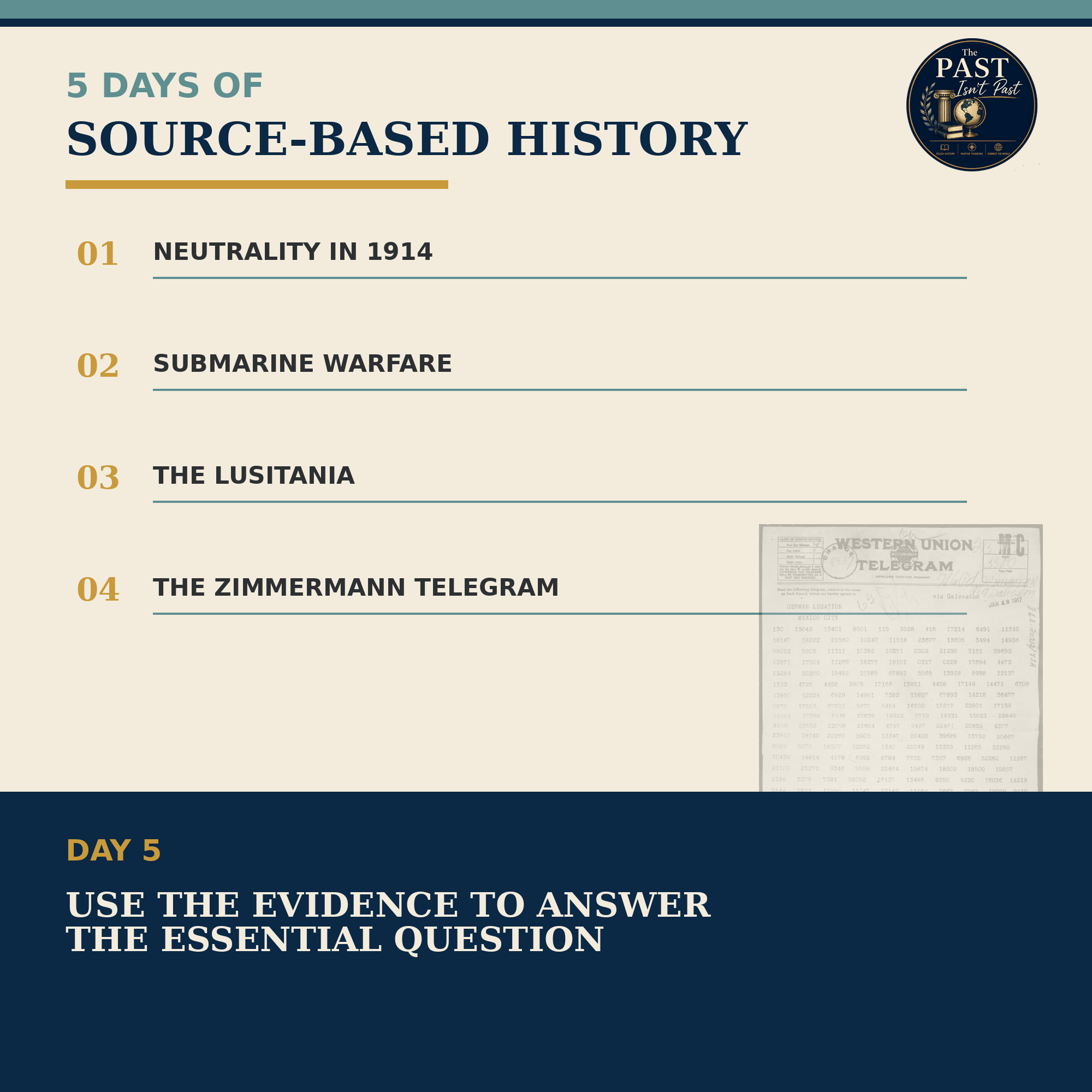
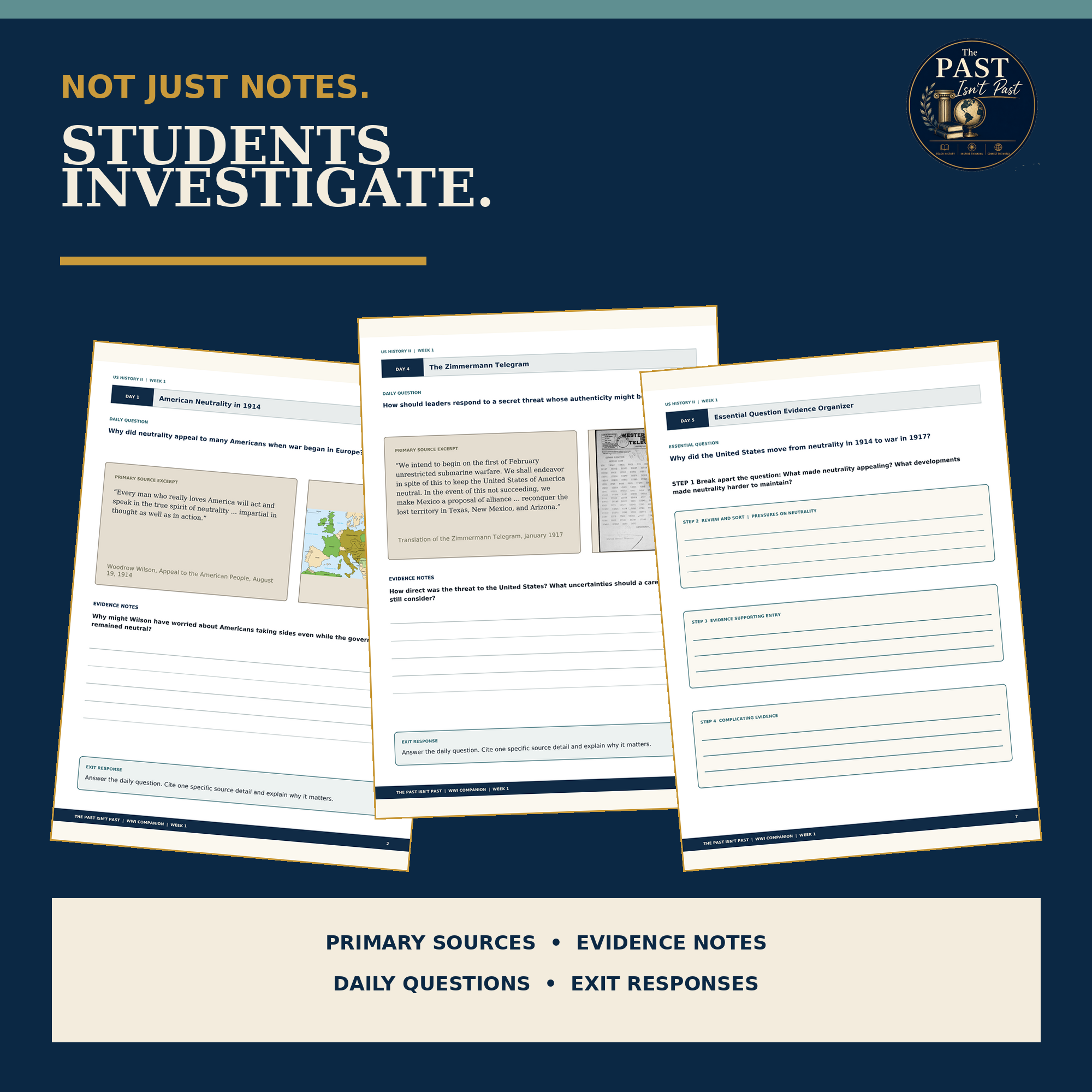
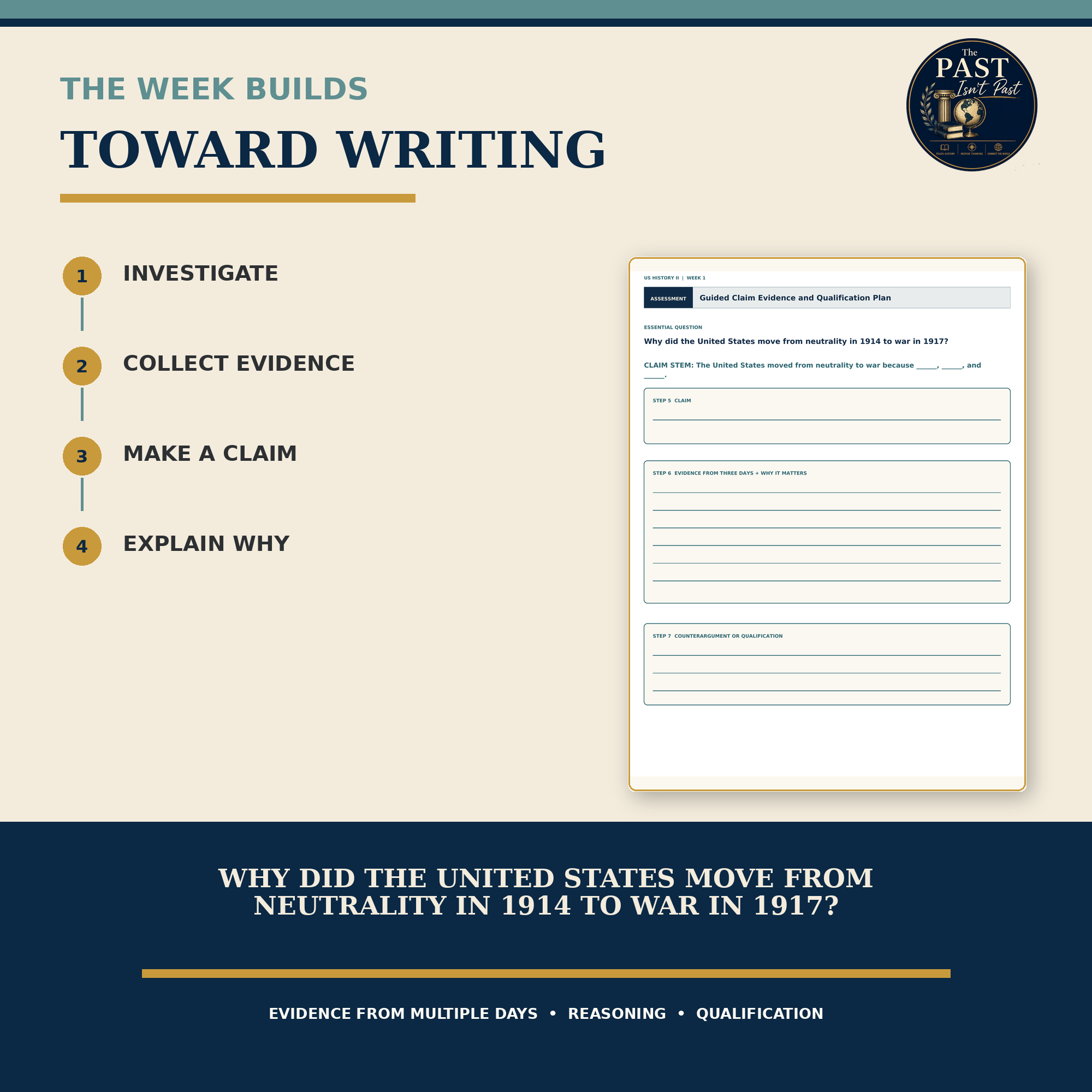
WWI Week 1: Neutrality to War | Primary Sources, Editable PowerPoint & Activities
Why did the United States move from neutrality in 1914 to war in 1917?
This five-day World War I instructional companion helps students investigate that question through primary sources, historical evidence, discussion, and evidence-based writing.
Designed for middle and high school U.S. History classrooms, WWI Week 1: Neutrality to War moves students beyond simply memorizing the causes of American entry into World War I. Across four days of investigation, students examine how American neutrality was challenged and gather evidence they will use on Day 5 to construct their own historical argument.
Rather than replacing your existing textbook or curriculum, this resource is designed to work alongside the materials you already use. Teachers can provide historical context through their adopted textbook, readings, lecture, or other resources while students use this companion to investigate sources, analyze evidence, discuss historical questions, and write.
WHAT'S INCLUDED
Your download includes:
Editable Classroom PowerPoint
Projected Classroom Slides PDF
Student Investigation Packet
Teacher Guide
Five days of instruction
Primary-source analysis
Daily historical questions
Evidence collection and reasoning activities
Day 5 Essential Question synthesis and writing
Teacher guidance and suggested responses
Source and image documentation
THE WEEK AT A GLANCE
Days 1–4: Investigation & Evidence Collection
Students investigate the changing circumstances that moved the United States from neutrality toward participation in World War I. Each day's work contributes evidence to the week's larger historical question.
Day 5: Historical Synthesis & Writing
Students return to the Essential Question:
Why did the United States move from neutrality in 1914 to war in 1917?
Using evidence collected throughout the week, students develop a claim, select evidence from multiple days, explain their reasoning, consider a qualification or counterargument, and construct a final evidence-based response.
No new content is introduced on Day 5. Students use the historical evidence they have already investigated to make and defend a historical judgment.
DESIGNED FOR REAL CLASSROOM FLEXIBILITY
Use the complete five-day sequence or select individual investigations to complement your existing World War I unit.
This resource works especially well for teachers who want to add more:
primary sources • historical thinking • student discussion • evidence-based reasoning • structured historical writing
without abandoning the textbook, readings, or curriculum already used in their classroom.
THE PAST ISN'T PAST
The Past Isn't Past resources are built around a simple idea: students understand history more deeply when they investigate evidence, ask questions, and make historical arguments rather than simply receive information.
Recommended for Grades 8–12 | U.S. History | World War I | Primary Sources | Historical Thinking | DBQ Skills | Evidence-Based Writing
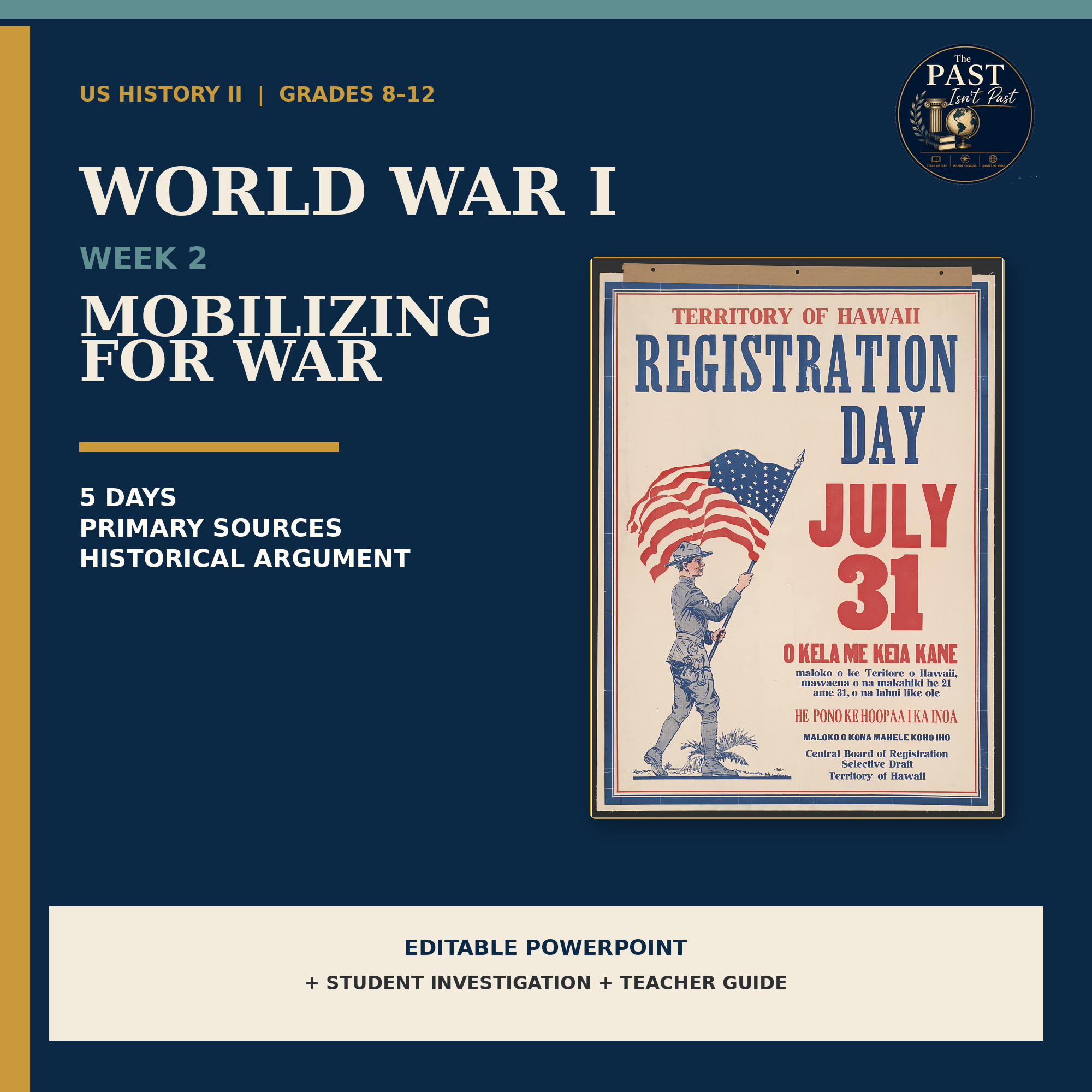
WWI Week 2: Mobilizing for War | Primary Sources & Editable PowerPoint
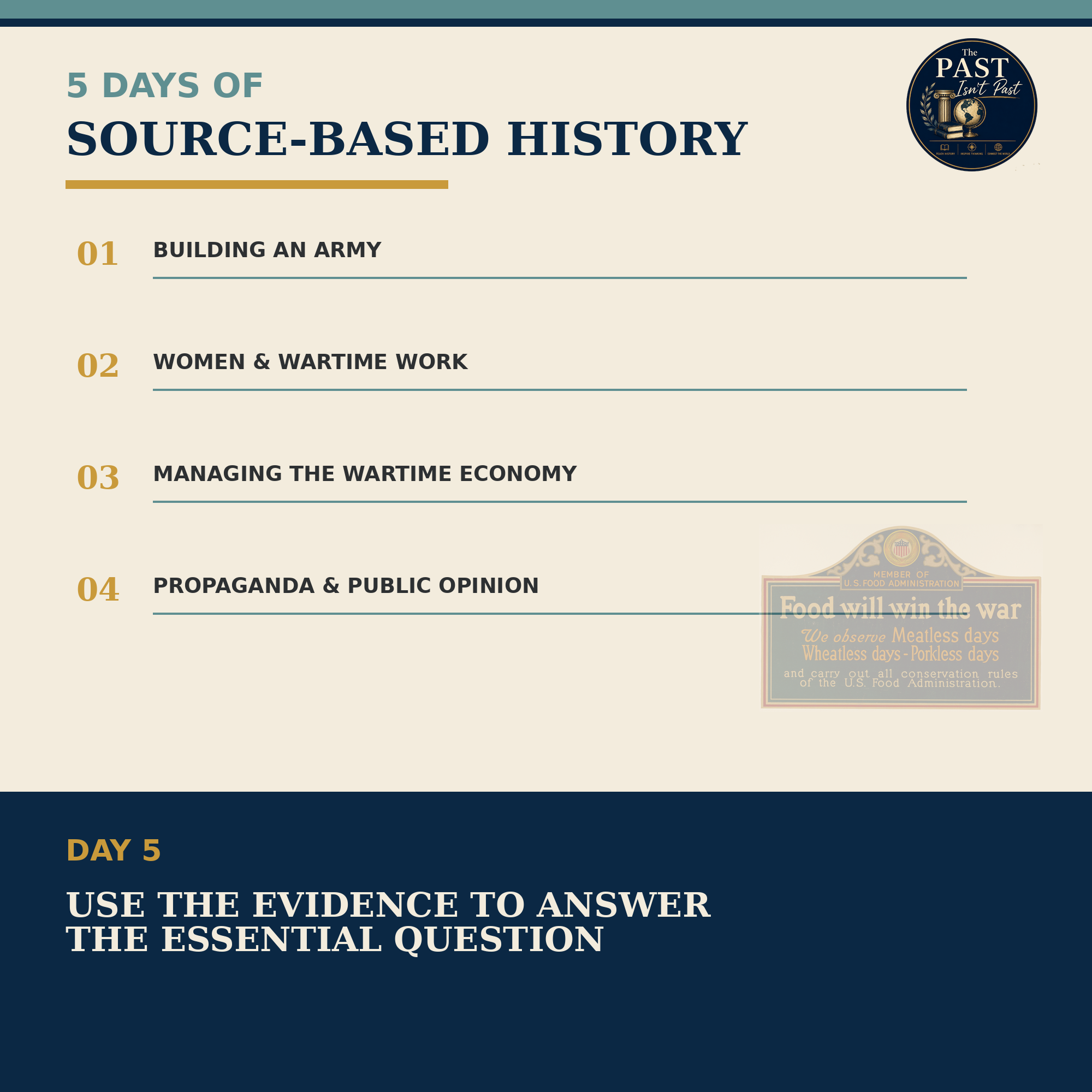
How did the United States mobilize people, resources, and public support for World War I?
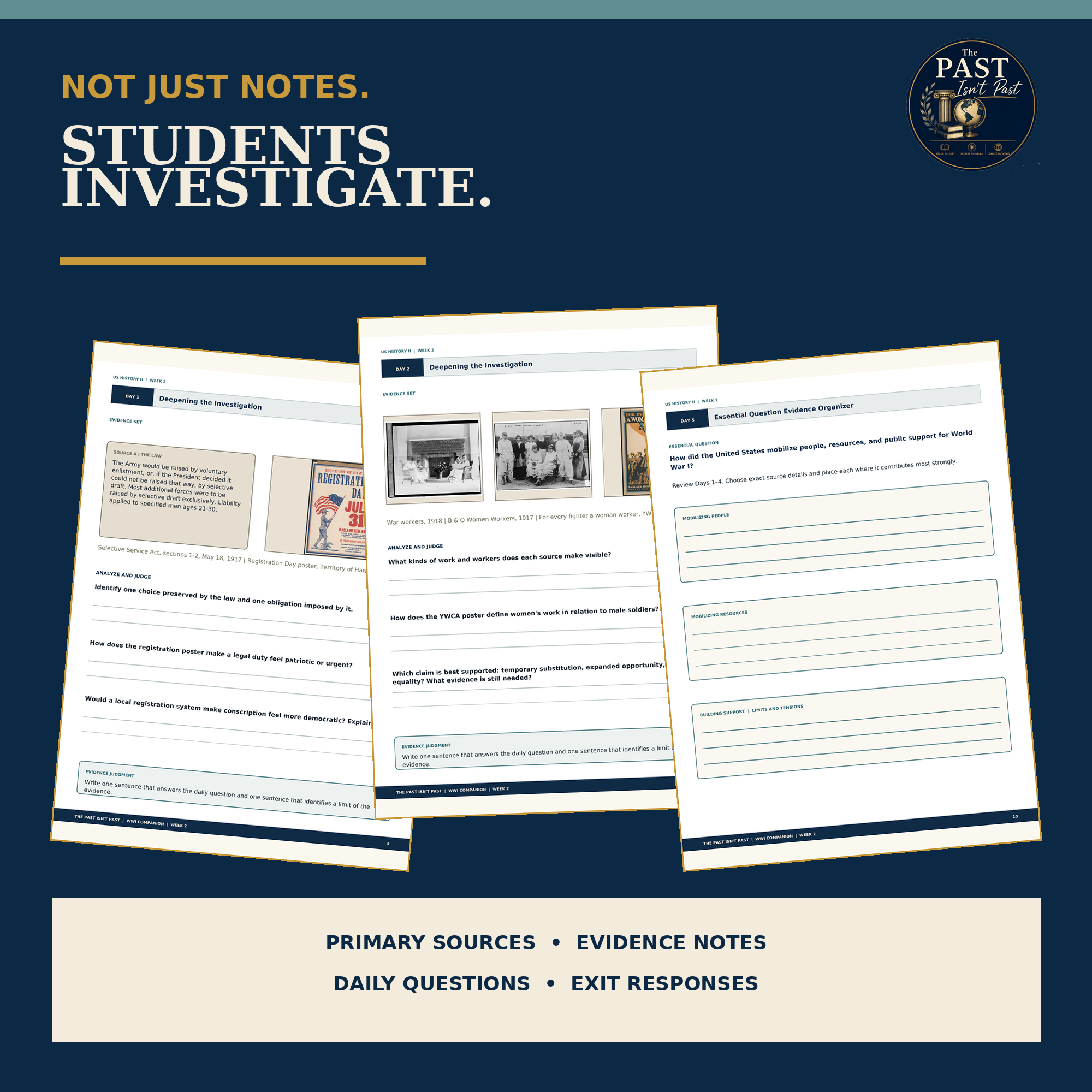
This five-day World War I instructional companion helps students investigate how the United States transformed itself for war through primary sources, historical evidence, discussion, and evidence-based writing.
Designed for Grades 8–12 U.S. History, WWI Week 2: Mobilizing for War moves students beyond simply memorizing wartime policies. Across four days of investigation, students examine how the United States built an army, mobilized workers and the economy, generated public support, and confronted tensions involving propaganda, dissent, and civil liberties.
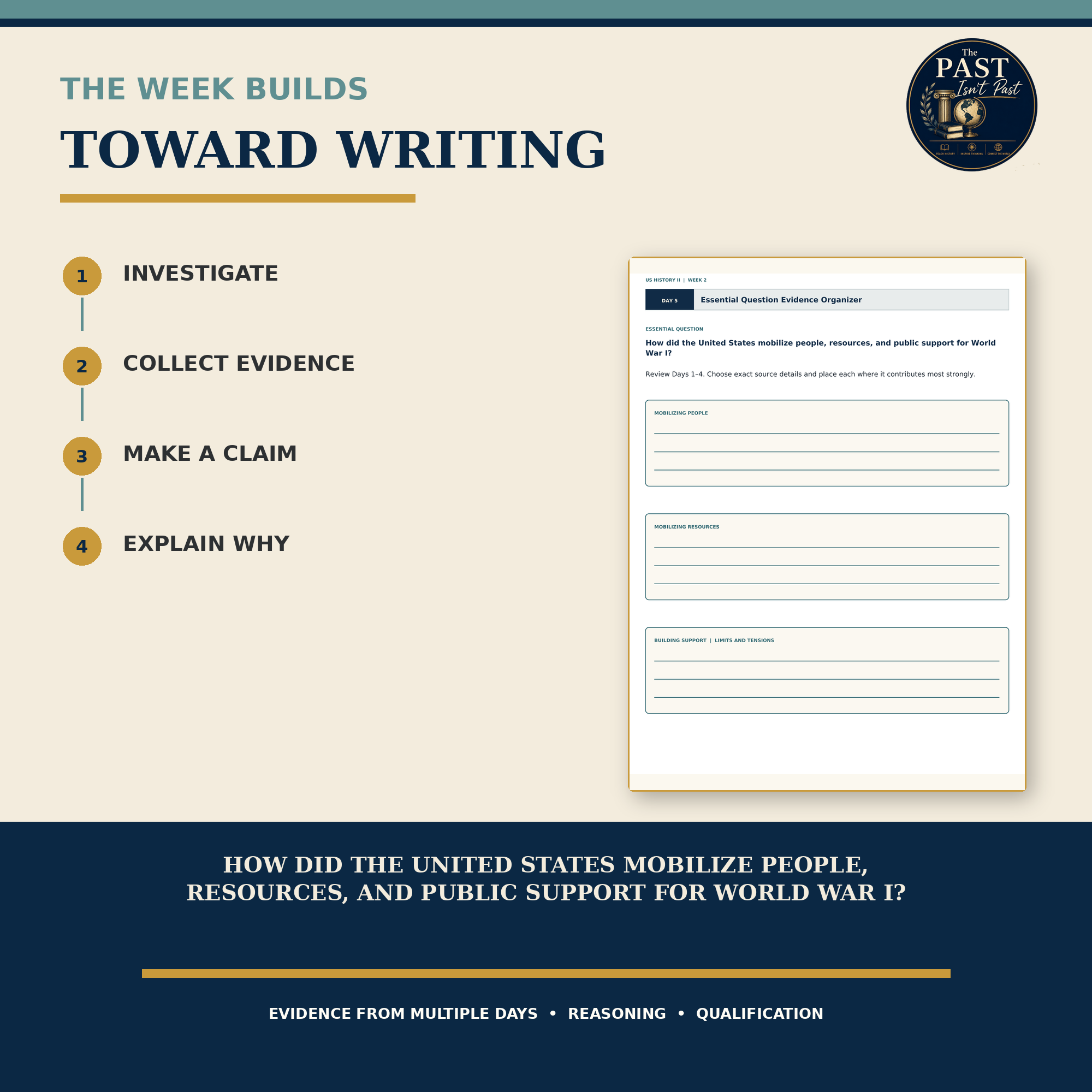
On Day 5, students bring that evidence together to answer the week's Essential Question and construct their own historical argument.
Rather than replacing your existing textbook or curriculum, this resource is designed to work alongside the materials you already use. Teachers can provide historical context through their adopted textbook, readings, lecture, or other resources while students use this companion to investigate sources, analyze evidence, discuss historical questions, and write.
WHAT'S INCLUDED
Your download includes:
Editable Classroom PowerPoint
Projected Classroom Slides PDF
Student Investigation Packet
Teacher Guide
Five days of instruction
Primary-source analysis
Daily historical questions
Evidence collection and reasoning activities
Day 5 Essential Question synthesis and writing
Teacher guidance and suggested responses
Source and image documentation
THE WEEK AT A GLANCE
Day 1 — Building an Army: Selective Service Act
How should a democracy raise an army for a major war?
Day 2 — Mobilizing the Home Front: Women and Wartime Work
How did mobilization change the work Americans were asked to perform?
Day 3 — Managing the Wartime Economy
How much control should the federal government exercise over the economy during wartime?
Day 4 — Selling the War: Propaganda and Public Opinion
Where is the line between persuasion, patriotism, and propaganda?
Students also consider the tensions created by wartime law, dissent, and restrictions on civil liberties as they prepare for the week's final historical judgment.
DAY 5 — HISTORICAL SYNTHESIS & WRITING
Students return to the Essential Question:
How did the United States mobilize people, resources, and public support for World War I?
Using evidence collected throughout the week, students examine four dimensions of mobilization:
Mobilizing People • Mobilizing Resources • Building Support • Limits and Tensions
Students then develop a claim, select evidence from multiple days, explain their reasoning, address a qualification or counterargument, and construct a final evidence-based response.
No new content is introduced on Day 5. Students use the historical evidence they have already investigated to make and defend a historical judgment.
DESIGNED FOR REAL CLASSROOM FLEXIBILITY
Use the complete five-day sequence or select individual investigations to complement your existing World War I unit.
This resource works especially well for teachers who want to add more:
primary sources • historical thinking • student discussion • evidence-based reasoning • structured historical writing
without abandoning the textbook, readings, or curriculum already used in their classroom.
THE PAST ISN'T PAST
The Past Isn't Past resources are built around a simple idea: students understand history more deeply when they investigate evidence, ask questions, and make historical arguments rather than simply receive information.
Recommended for Grades 8–12 | U.S. History | World War I | Primary Sources | Historical Thinking | DBQ Skills | Evidence-Based Writing
WWI Week 3: Americans at War | Primary Sources & Editable PowerPoint
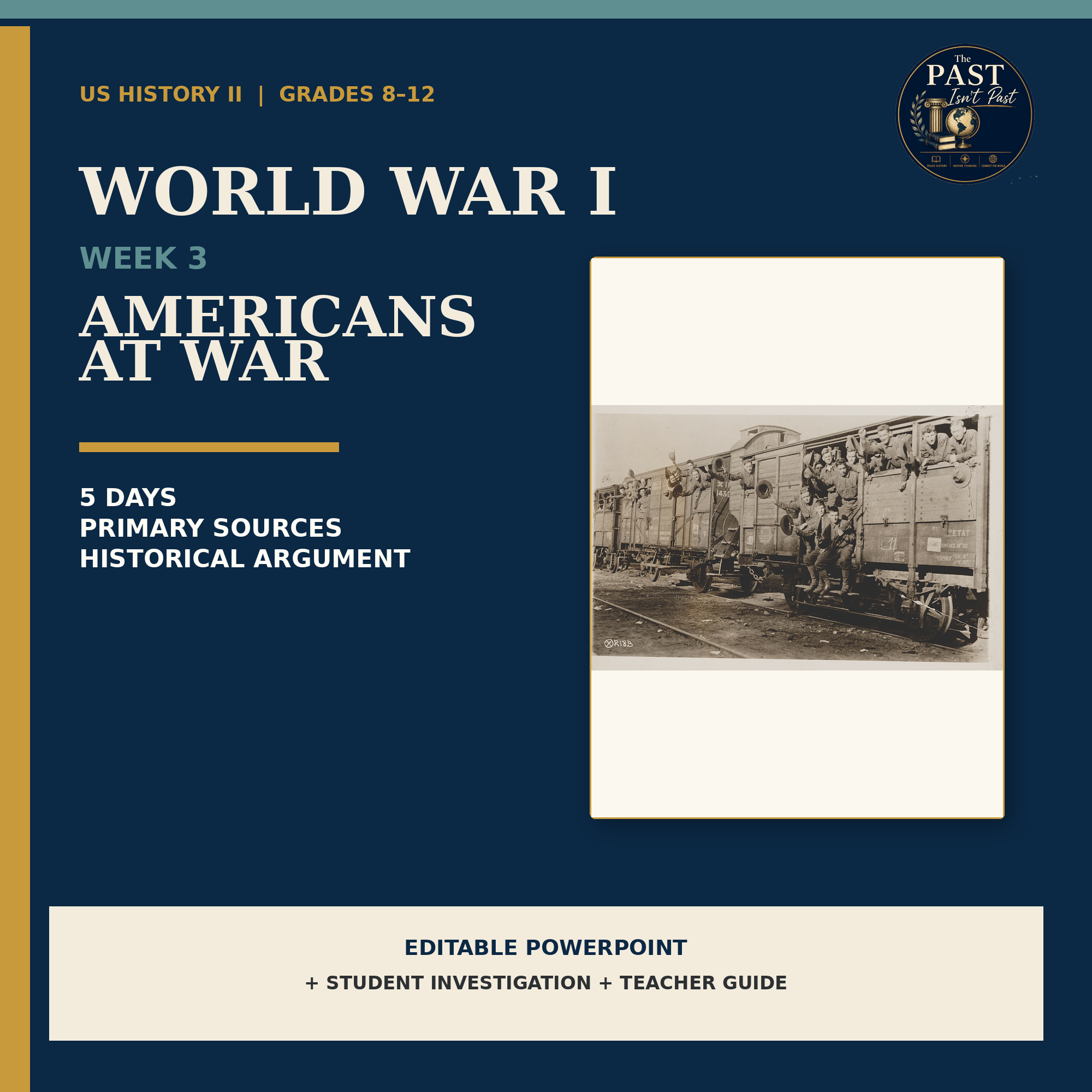
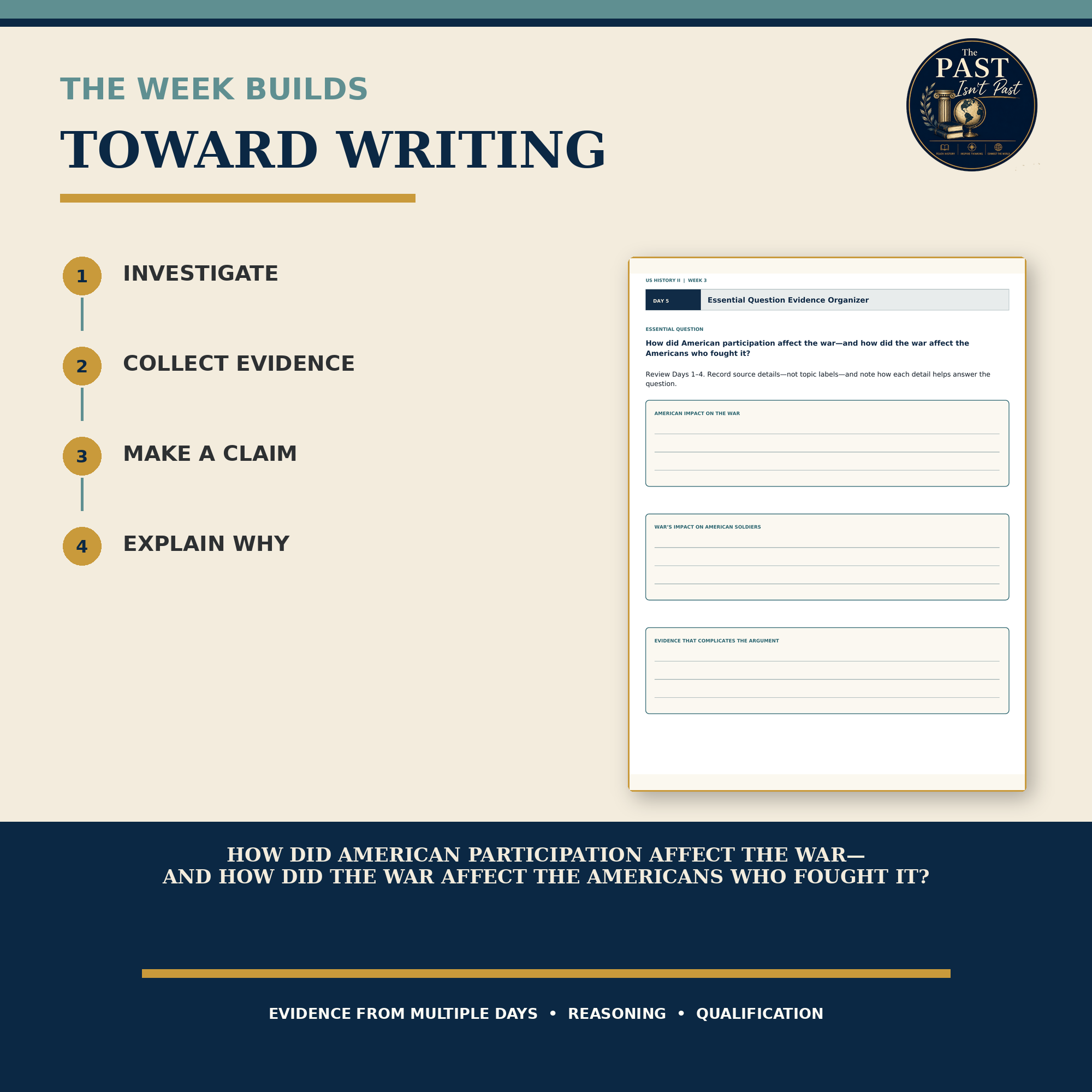
How did American participation affect the war—and how did the war affect the Americans who fought it?
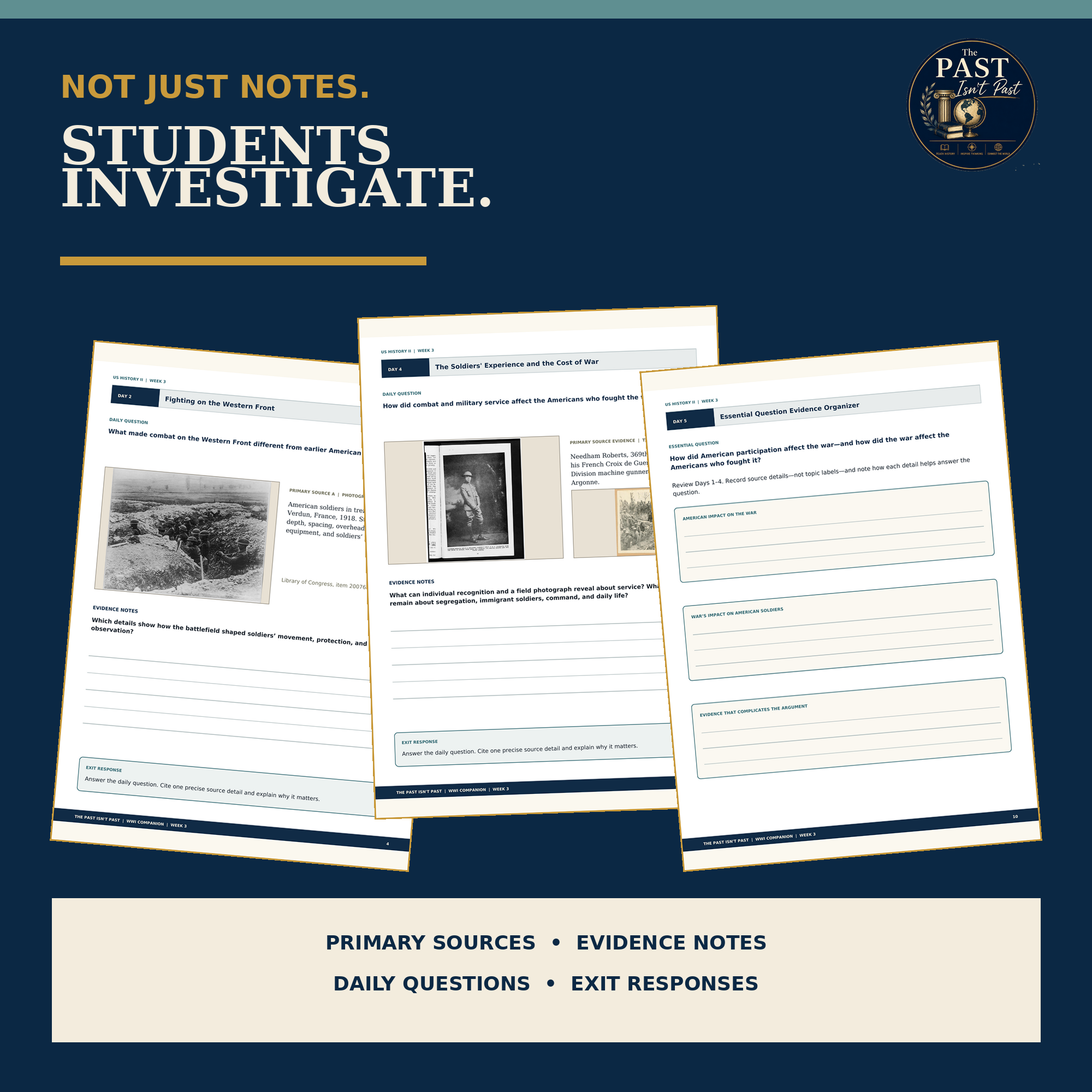
This five-day World War I instructional companion helps students investigate the American experience in World War I through primary sources, historical evidence, discussion, and evidence-based writing.
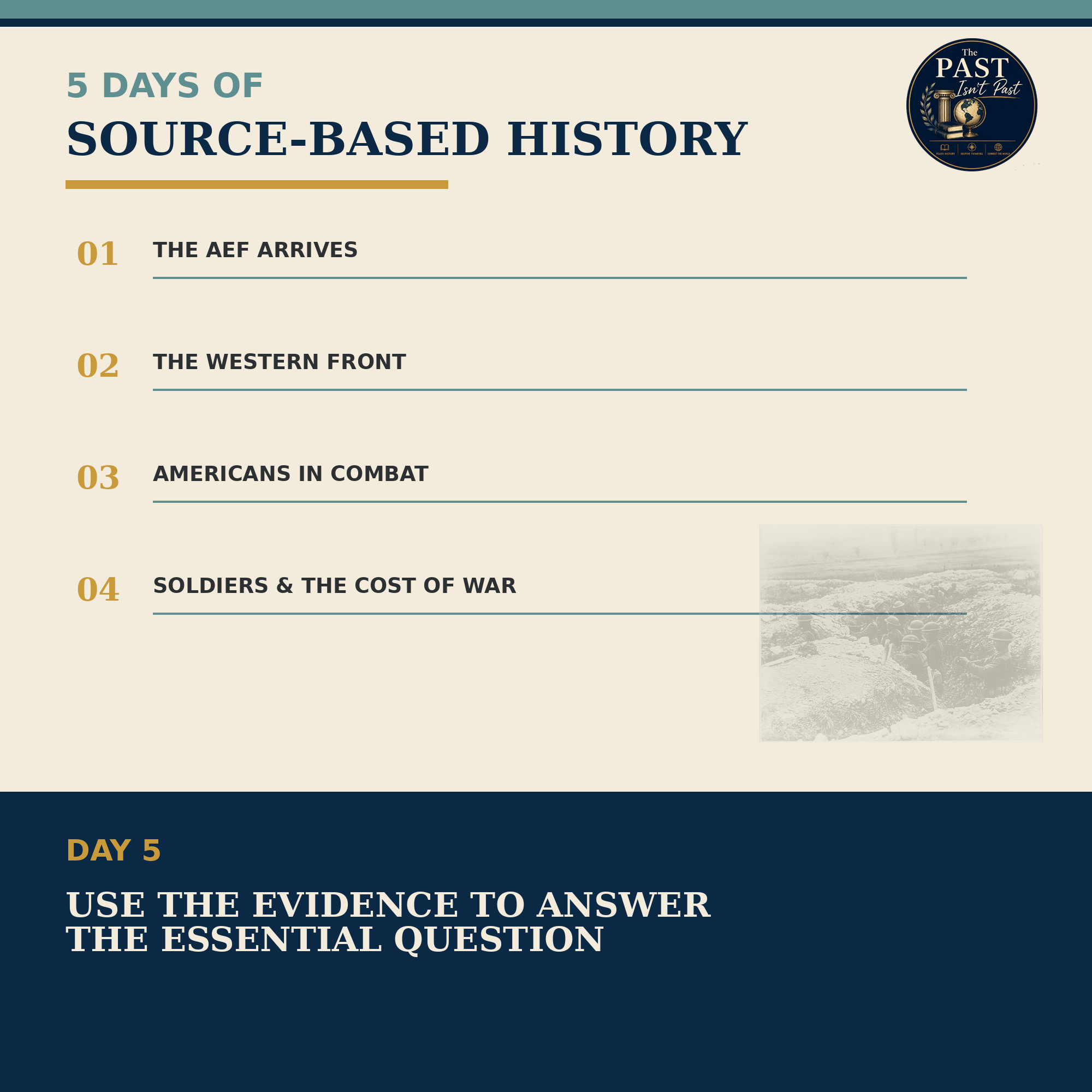
Designed for Grades 8–12 U.S. History, WWI Week 3: Americans at War takes students from the arrival of the American Expeditionary Forces to the realities of combat and the human cost of the war.
Across four days of investigation, students examine evidence about American forces in Europe, conditions on the Western Front, American soldiers in combat, and the experiences of the men who fought. Rather than simply asking whether American participation mattered, students consider a more complex question: How did Americans affect the war, and what did the war do to them?
On Day 5, students bring evidence from across the week together to construct their own historical argument.
Rather than replacing your existing textbook or curriculum, this resource is designed to work alongside the materials you already use. Teachers can provide historical context through an adopted textbook, readings, lecture, or other resources while students use this companion to investigate sources, analyze evidence, discuss historical questions, and write.
WHAT'S INCLUDED
Your download includes:
Editable Classroom PowerPoint
Projected Classroom Slides PDF
Student Investigation Packet
Teacher Guide
Five days of instruction
Primary-source analysis
Daily historical questions
Evidence collection and reasoning activities
Day 5 Essential Question synthesis and writing
Teacher guidance and suggested responses
Source and image documentation
THE WEEK AT A GLANCE
Day 1 — The American Expeditionary Forces Arrive
Students investigate the arrival and growing role of American forces in Europe.
Day 2 — Fighting on the Western Front
Students examine evidence about the conditions and realities of fighting on the Western Front.
Day 3 — American Soldiers in Combat
Students investigate American participation in combat and evaluate evidence about its significance.
Day 4 — The Soldiers' Experience and the Cost of War
Students examine soldiers' experiences and the human cost of the conflict through firsthand evidence and casualty data.
DAY 5 — HISTORICAL SYNTHESIS & WRITING
Students return to the Essential Question:
How did American participation affect the war—and how did the war affect the Americans who fought it?
Using evidence collected throughout the week, students develop a claim, select evidence from multiple days, explain their reasoning, consider a qualification or counterargument, and construct a final evidence-based response.
Students must consider both dimensions of the question—the effect of American participation on the war and the effect of the war on the Americans who experienced it.
No new content is introduced on Day 5. Students use the historical evidence they have already investigated to make and defend a historical judgment.
DESIGNED FOR REAL CLASSROOM FLEXIBILITY
Use the complete five-day sequence or select individual investigations to complement your existing World War I unit.
This resource works especially well for teachers who want to add more:
primary sources • historical thinking • student discussion • evidence-based reasoning • structured historical writing
without abandoning the textbook, readings, or curriculum already used in their classroom.
THE PAST ISN'T PAST
The Past Isn't Past resources are built around a simple idea: students understand history more deeply when they investigate evidence, ask questions, and make historical arguments rather than simply receive information.
Recommended for Grades 8–12 | U.S. History | World War I | American Expeditionary Forces | Western Front | Primary Sources | Historical Thinking | DBQ Skills | Evidence-Based Writing
WWI Week 4: The War Ends | Primary Sources & Editable PowerPoint
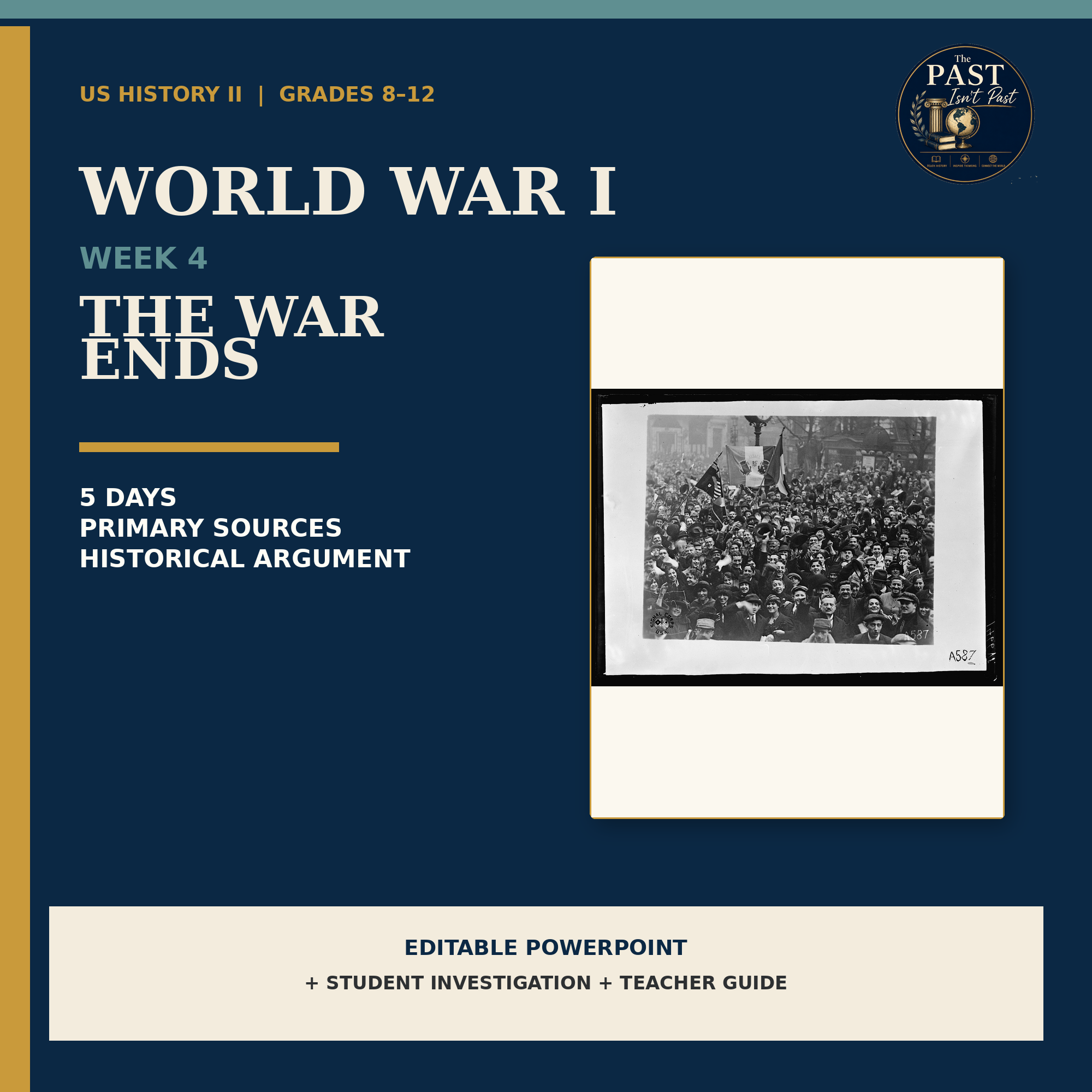
How did the end of World War I reshape the United States and its relationship with the world?
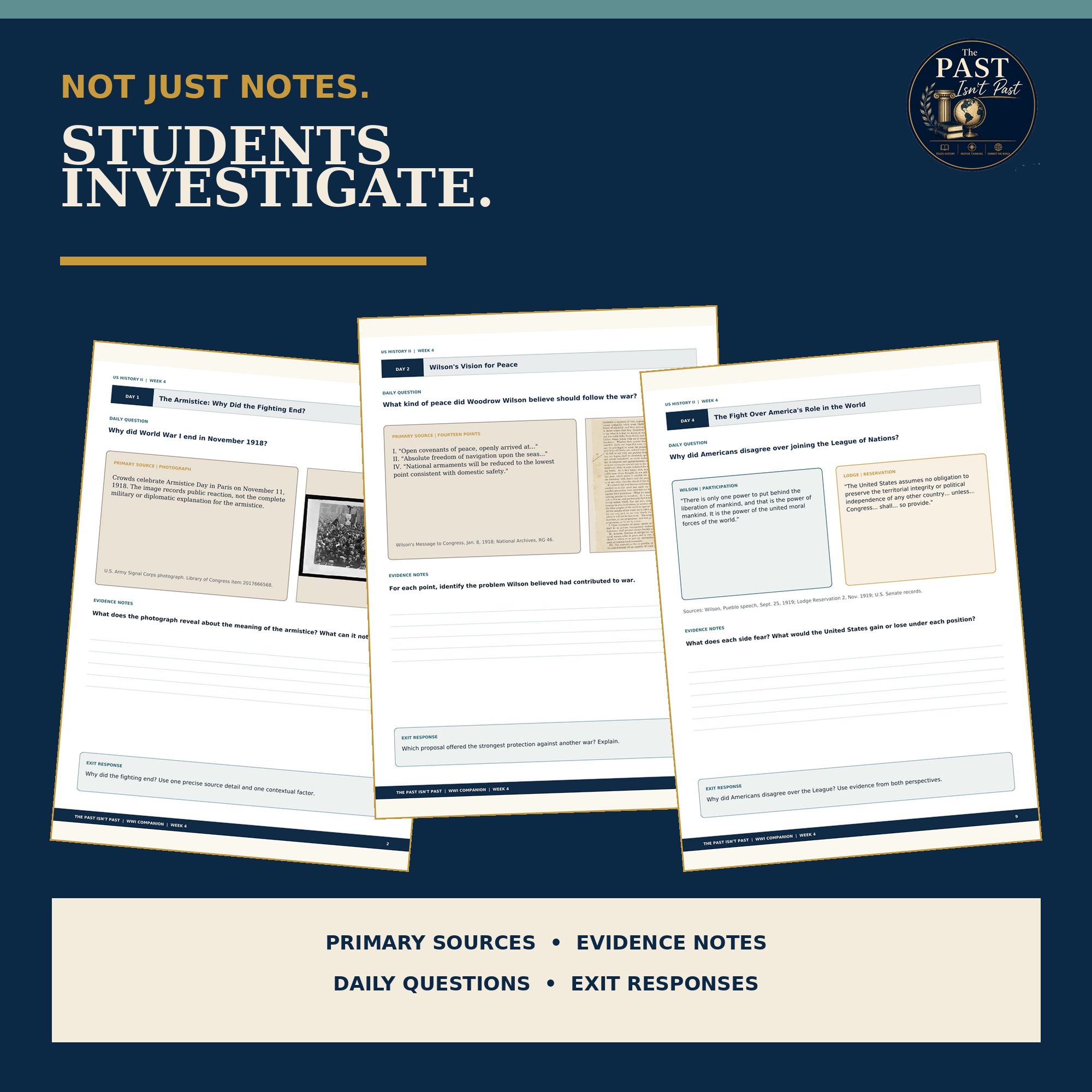
This five-day World War I instructional companion helps students investigate the end of World War I, the struggle to create a lasting peace, and the debate over America's postwar role through primary sources, historical evidence, discussion, and evidence-based writing.
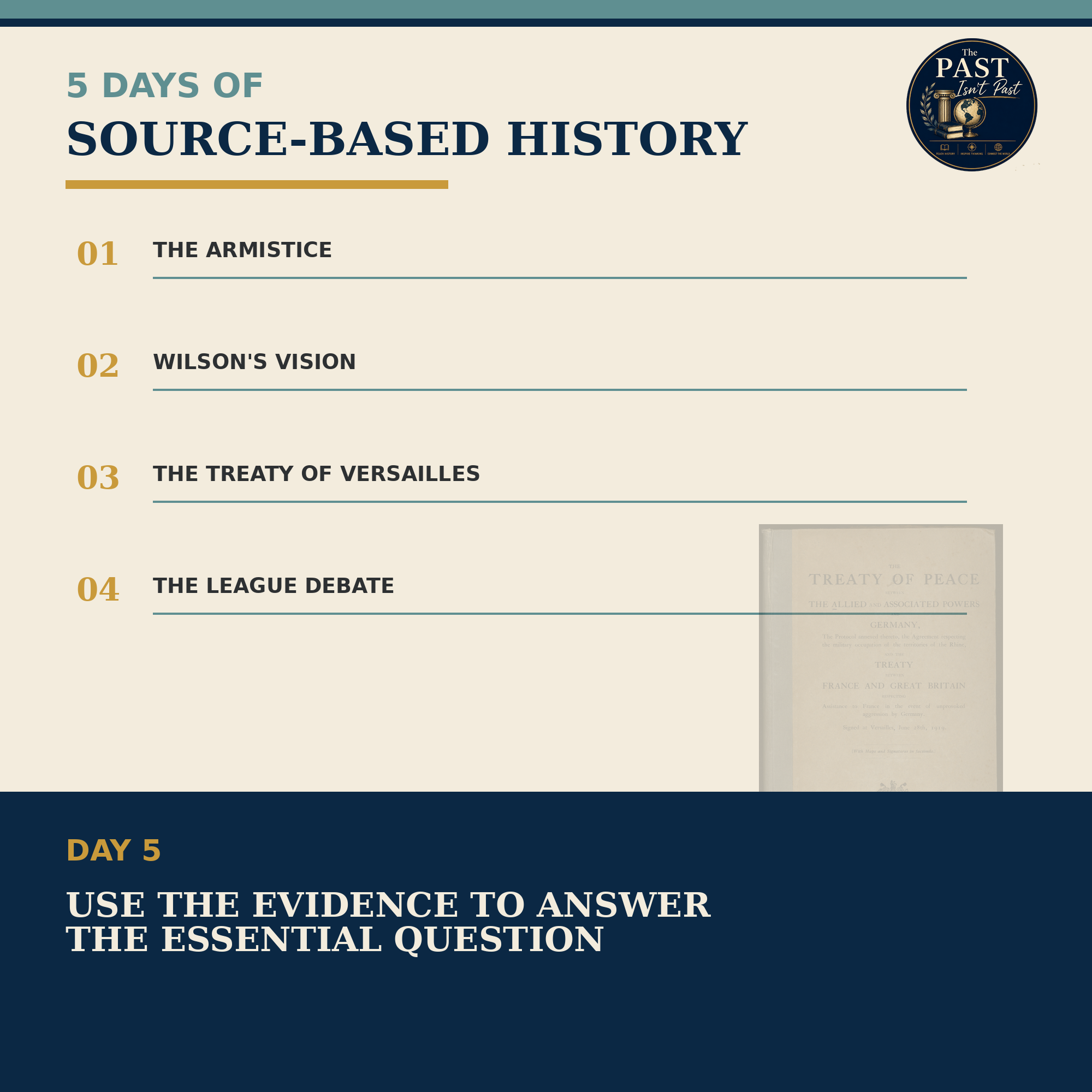
Designed for Grades 8–12 U.S. History, WWI Week 4: The War Ends moves students beyond simply memorizing the Armistice, Wilson's Fourteen Points, or the Treaty of Versailles. Across four days of investigation, students examine why the fighting ended, Wilson's vision for peace, the settlement created at Versailles, and the American debate over joining the League of Nations.
Along the way, students confront important historical distinctions: an armistice was not a peace treaty, Wilson's Fourteen Points were not the same as the Treaty of Versailles, and the debate over the League reflected competing ideas about America's responsibilities in the world.
On Day 5, students bring evidence from across the week together to construct their own historical argument.
Rather than replacing your existing textbook or curriculum, this resource is designed to work alongside the materials you already use. Teachers can provide historical context through an adopted textbook, readings, lecture, or other resources while students use this companion to investigate sources, analyze evidence, discuss historical questions, and write.
WHAT'S INCLUDED
Your download includes:
Editable Classroom PowerPoint
Projected Classroom Slides PDF
Student Investigation Packet
Teacher Guide
Five days of instruction
Primary-source analysis
Daily historical questions
Evidence collection and reasoning activities
Day 5 Essential Question synthesis and writing
Teacher guidance and suggested responses
Source and image documentation
THE WEEK AT A GLANCE
Day 1 — Armistice: Why Did Fighting End?
Students investigate the combination of military, political, and economic pressures that brought the fighting to an end in November 1918 while distinguishing the Armistice from the peace settlement that followed.
Day 2 — Wilson's Vision for Peace
Students examine Woodrow Wilson's Fourteen Points and investigate the principles he believed should shape the postwar world.
Day 3 — Versailles: What Kind of Peace Was Actually Made?
Students compare Wilson's vision with the Treaty of Versailles and examine provisions involving Germany, reparations, territorial changes, military restrictions, and the League of Nations.
Day 4 — The Fight Over America's Role in the World
Students investigate competing arguments over U.S. participation in the League of Nations and consider questions of national sovereignty, international responsibility, and America's future role in world affairs.
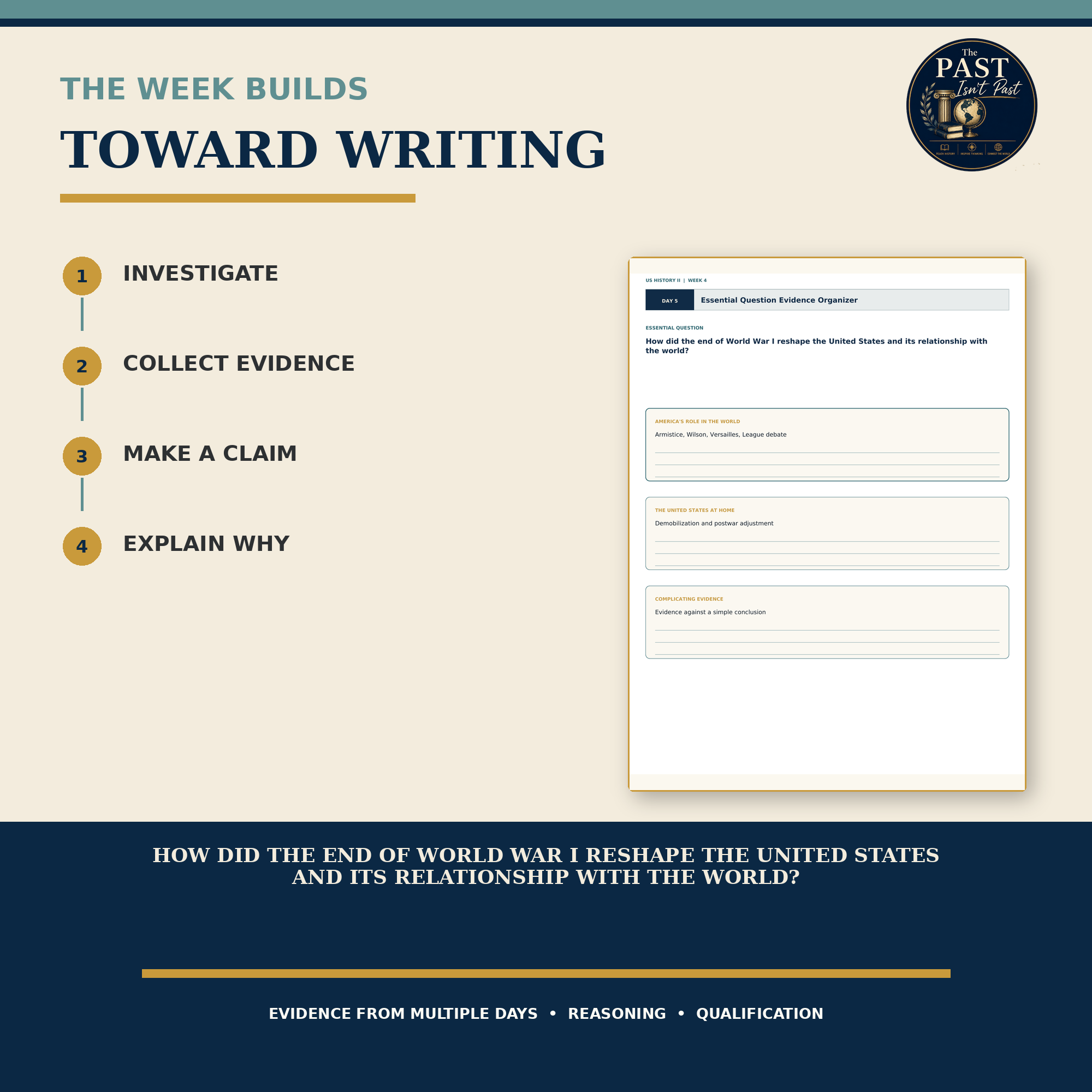
DAY 5 — HISTORICAL SYNTHESIS & WRITING
Students return to the Essential Question:
How did the end of World War I reshape the United States and its relationship with the world?
Using evidence collected throughout the week, students develop a claim, select evidence from multiple days, explain their reasoning, consider a qualification or counterargument, and construct a final evidence-based response.
Students consider both changes within the United States and America's changing relationship with the world as they make their historical judgment.
No new content is introduced on Day 5. Students use the historical evidence they have already investigated to make and defend an argument.
DESIGNED FOR REAL CLASSROOM FLEXIBILITY
Use the complete five-day sequence or select individual investigations to complement your existing World War I unit.
This resource works especially well for teachers who want to add more:
primary sources • historical thinking • student discussion • evidence-based reasoning • structured historical writing
without abandoning the textbook, readings, or curriculum already used in their classroom.
THE PAST ISN'T PAST
The Past Isn't Past resources are built around a simple idea: students understand history more deeply when they investigate evidence, ask questions, and make historical arguments rather than simply receive information.
Recommended for Grades 8–12 | U.S. History | World War I | Armistice | Fourteen Points | Treaty of Versailles | League of Nations | Primary Sources | Historical Thinking | DBQ Skills | Evidence-Based Writing
No results found
No results match your search. Try removing a few filters.